- Home
- ISLAMIC RESISTANCE
- SECRETARY-GENERAL
-
Full Speeches
- Speeches-2000
- Speeches-2006
- Speeches-2007
- Speeches-2008
- Speeches-2009
- Speeches-2010
- Speeches-2011
- Speeches-2012
- Speeches-2013
- Speeches-2014
- Speeches-2015
- Speeches-2016
- Speeches-2017
- Speeches-2018
- Speeches-2019
- Speeches-2020
- Speeches-2021
- Speeches-2022
- Speeches-2023
- Speeches-2024
- Speeches-2025
- Speeches-2026
- Speech-Reports
- SG
-
Full Speeches
- Voices
- Ten Day Dawn
- The Biggest Crime
- Martyr Leaders

CENTCOM Warns Trump: Iran Bombing Has Limits
By Staff, Agencies
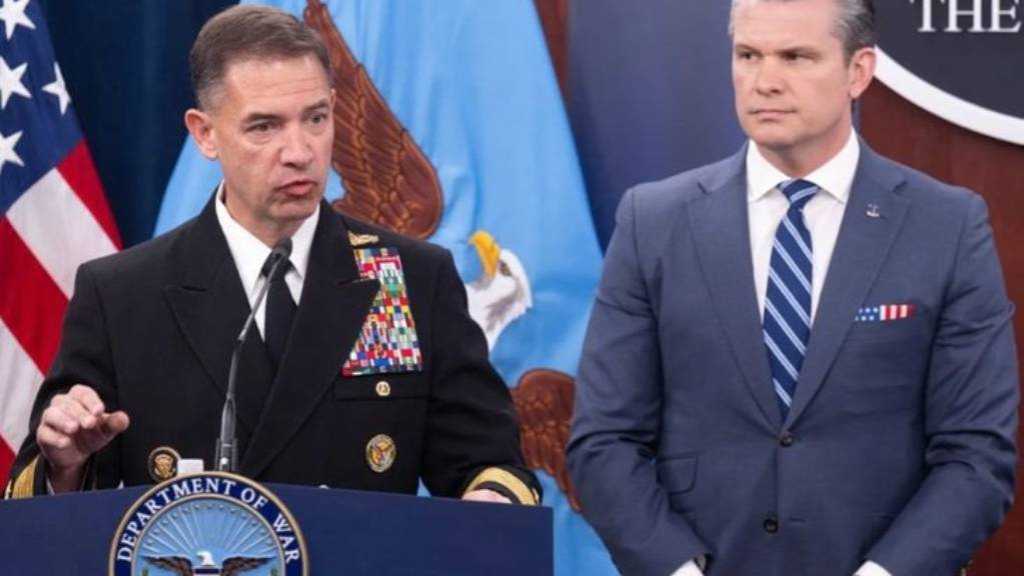
United States Central Command (CENTCOM) advised the Trump administration to halt strikes near the Strait of Hormuz after concluding that further attacks on Iran were unlikely to deliver significant additional military gains, Axios reported.
Citing two sources familiar with the matter, the outlet said CENTCOM commander Adm. Brad Cooper delivered the assessment to the Pentagon, the Joint Chiefs of Staff, and the White House earlier this week.
His recommendation reportedly contributed to US President Donald Trump’s decision on Friday to halt attacks along the country’s southern coastline and around the strategic waterway.
The pause marked the first day in two weeks that US forces did not conduct strikes in the area.
According to the report, Cooper assessed that two weeks of US bombardment had damaged Iran’s capacity to attack vessels passing through the Strait of Hormuz.
However, he also warned that most of the targets assigned to the limited campaign had already been struck, leaving few objectives whose destruction would not materially alter the situation.
Cooper reportedly told senior officials that maintaining the same scale of attacks would serve little military purpose unless Trump was prepared to authorize a return to broader combat operations.
Such an escalation could involve attacking the remaining 20% of targets identified by the US military but left untouched during Operation Epic Fury.
Absent approval for a wider offensive, Cooper concluded that there was no justification for continuing the more restricted campaign carried out over the previous two weeks.
CENTCOM spokesperson Capt. Tim Hawkins declined to comment on the report.
Trump had reportedly been considering a renewed escalation earlier in the week. His position began shifting on Thursday evening before he decided the following day not to approve a new strike plan presented by military officials and senior advisers.
The recommendation reflected growing recognition among Trump’s military and civilian advisors that air power alone had reached the limits of what it could achieve against Iran.
Meanwhile, Chairman of the Joint Chiefs of Staff Gen. Dan Caine also reportedly raised concerns about Washington’s ability to protect its military bases and regional allies if the confrontation intensified.
Caine warned Trump and War Secretary Pete Hegseth that shortages of air-defense interceptors could restrict the US military’s capacity to respond to further Iranian retaliatory operations.
A spokesperson for Caine declined to comment “on confidential military advice the Chairman provides the President."
The reported warning highlights the pressure placed on US missile-defense inventories during the confrontation, as Washington attempts to protect its forces while sustaining offensive operations against Iran.
The military pause came as Iran and Oman negotiated a Strait of Hormuz arrangement to restore commercial shipping, while Tehran and Washington maintained a temporary "quiet for quiet" amid ongoing diplomacy and the risk of renewed escalation.
Comments
- Related News