- Home
- ISLAMIC RESISTANCE
- SECRETARY-GENERAL
-
Full Speeches
- Speeches-2000
- Speeches-2006
- Speeches-2007
- Speeches-2008
- Speeches-2009
- Speeches-2010
- Speeches-2011
- Speeches-2012
- Speeches-2013
- Speeches-2014
- Speeches-2015
- Speeches-2016
- Speeches-2017
- Speeches-2018
- Speeches-2019
- Speeches-2020
- Speeches-2021
- Speeches-2022
- Speeches-2023
- Speeches-2024
- Speeches-2025
- Speeches-2026
- Speech-Reports
- SG
-
Full Speeches
- Voices
- Ten Day Dawn
- The Biggest Crime
- Martyr Leaders

Qalibaf: Iran Holds Firm in Decisive Phase
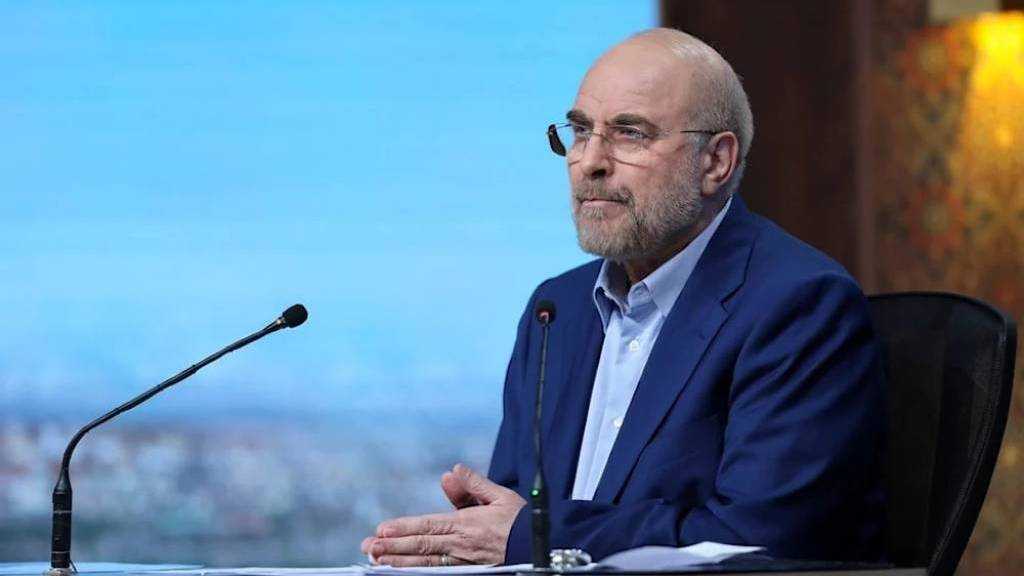
By Staff, Agencies
Iranian Parliament Speaker Mohammad Baqer Qalibaf said Sunday that the Islamic Republic is navigating one of its most sensitive historical phases, stressing Iran’s central role in shaping regional and global security.
Qalibaf said Iran's position has become particularly significant amid ongoing hostile action from the United States and the broader regional struggle surrounding it.
“The world has fully realized that Iran does not give up,” he said, arguing that Iran's resilience rests on national unity across political, social, and institutional spheres.
He added that “national unity in all areas, under the leadership of the Leader, forces any enemy to submit.”
The remarks place national cohesion at the center of Tehran's response to external pressure, with Qalibaf presenting Iran's ability to withstand war as a strategic asset rather than merely a military calculation.
The Parliament Speaker's assessment came as Iran continues to strengthen its defense capabilities and develop a more autonomous industrial base.
Iranian officials say the country’s defense sector is undergoing a broader industrial transformation, shifting beyond individual missile and drone production toward faster, more cost-effective and battlefield-oriented systems, driven by domestic technology and knowledge-based companies.
The effort seeks to strengthen Iran’s self-reliance and resilience amid longstanding US sanctions and restrictions on advanced technologies, turning political resistance into sustainable technological and industrial capabilities.
Qalibaf's remarks also came amid Washington's continuing calculations over how to deal with Tehran.
US President Donald Trump has alternated between threats of further military action, economic pressure and offers of negotiations with Iran, underscoring Washington’s difficulty in achieving its objectives through coercion.
Tehran, meanwhile, maintains that any negotiations must respect Iran’s national interests and cannot take place under pressure.
Qalibaf previously described Washington's war on the nation as an existential war, saying the US objective extends beyond challenging Iran's political system to threatening the country's territorial unity.
He also stressed Iran’s readiness to confront military pressure while preserving diplomacy in line with national interests, framing national unity and Iran’s “unparalleled” strategic role as key sources of strength.
Iran’s strategic position links it to security dynamics across the Gulf, Iraq, Lebanon, Yemen and Palestine. Maintaining autonomy amid US pressure remains key to its regional influence, deterrence and economic resilience.
Qalibaf's message that Iran “does not give up” consequently goes beyond a statement of political resolve. It presents national unity, technological development, and strategic independence as interconnected components of Tehran's response to ongoing aggression from Washington.
Comments
- Related News