Sheikh Qassem: The Resistance Changed the Equation and Will Not Accept Surrender or Foreign Guardianship
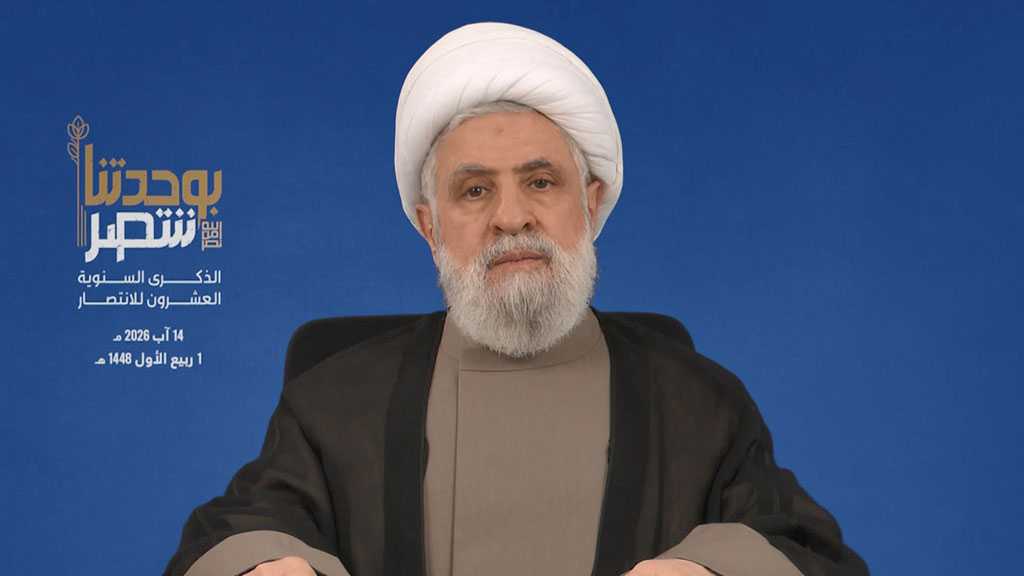
Translated by Al-Ahed News, Live Coverage
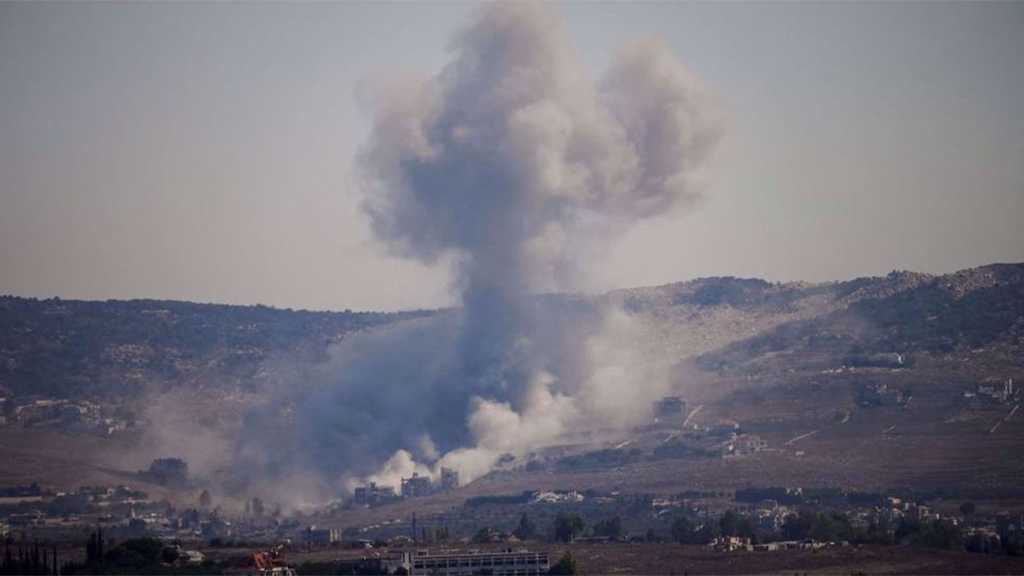
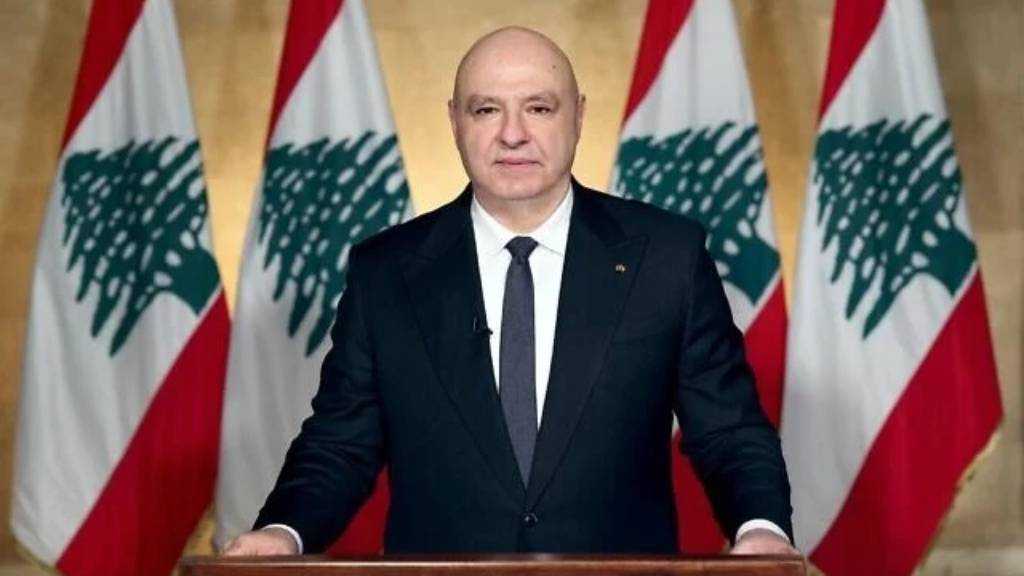
Hezbollah Secretary General His Eminence Sheikh Naim Qassem began his speech marking the 20th anniversary of the July 2006 victory by recalling the circumstances surrounding the war, its broader regional implications, and what he described as the continued confrontation with the “Israeli” occupation.
Referring to the 2006 conflict, His Eminence said the Resistance had called it the “True Promise War,” stressing that it came in response to a broad and extensive “Israeli” aggression against Lebanon.
“The operation to capture the two soldiers did not warrant a war,” Sheikh Qassem said, noting that it subsequently became clear that the “Israeli” side, in coordination with the Americans, had already been preparing for a major war that was expected to begin in September. He added that one of the key outcomes of the operation was the eventual release of detainees.
According to the Hezbollah Secretary General, the war was also connected to a much broader regional project being advanced at the time. “The project at the time was a major one—the ‘New Middle East’ project—but it failed and ultimately collapsed,” he said.
He further stressed that the outcome of the war demonstrated the ability of the Resistance and the Lebanese people to withstand a major military assault. “The enemy ultimately yielded to this Resistance, to this people, and to a steadfast Lebanon that confronted the aggression,” His Eminence said. He added that the events of 2006 proved that “the Resistance is capable of changing the equation.”
Turning to the more recent conflict, Sheikh Qassem linked what he described as the Resistance’s “Battle of the Mighty” to the November 2024 agreement, which he said called for the withdrawal of the enemy. “One of the outcomes of the Battle of the Mighty was the November 2024 agreement, which called for the enemy’s withdrawal. Therefore, this aggression was supposed to end under the terms of that agreement,” he said.
His Eminence then criticized the Lebanese authorities, accusing them of failing to cooperate with the Resistance. “The Lebanese authorities were not cooperating with the Resistance,” he said, adding that the authorities had been guided by “another consideration,” had other commitments, and were operating under what he described as guardianship—something he said later became evident through subsequent developments.
He argued that the outbreak of the war had been inevitable regardless of the timing. “Had the war not been opened on March 2, it would have been opened afterward,” Sheikh Qassem said.
Describing the conflict as both aggressive and existential, the Hezbollah chief said the Resistance had confronted it accordingly. “For us, this war is an aggressive and existential war. Therefore, we confronted it with a Karbala-style confrontation,” he said.
He maintained that the Resistance had prevented the enemy from achieving its objectives and would continue to pursue its chosen course. “The Resistance prevented the enemy from achieving its objectives, and it is continuing along its chosen path. Whoever bets on surrender is betting on a mirage,” His Eminence said.
Addressing the framework agreement, Sheikh Qassem described it as an arrangement dictated by the “Israeli” side and endorsed by the Lebanese authorities. “The framework agreement is based on ‘Israeli’ dictates, written with ‘Israeli’ ink and signed by the Lebanese authorities,” he said.
He also placed responsibility for the scale of the aggression on the United States, arguing that the campaign would not have unfolded in the same manner without US backing. “The enemy would not have carried out all this aggression were it not for the Americans,” he said.
Reflecting on the scene in Washington surrounding the framework agreement, the Secretary General said it revealed, in his view, a fundamental imbalance between the parties. “Everyone who watched the scene in Washington under the title of the framework agreement saw one team—the ‘Israeli’-American team—while the Lebanese team appeared subordinate,” he said.
Sheikh Qassem said the Resistance’s objections to the agreement went beyond the issue of negotiations themselves. “Our objection to the agreement is, first, to the principle of direct negotiations, and second, to the agreement’s entire content, from beginning to end,” he said.
He called on the Lebanese authorities to reassess their approach and rely on what he described as the country’s sources of strength when dealing with the “Israeli” enemy. “The authorities must return to their people and make use of the elements of strength available to Lebanon in confronting the arrogant enemy,” His Eminence said.
The Resistance Leader further argued that the continuation of attacks during negotiations demonstrated that the “Israeli” side was not giving weight to the Lebanese authorities. “The aggressive attacks are intensifying during negotiations, demonstrating that the ‘Israeli’ side does not care about the Lebanese authorities,” he said.
Sheikh Qassem also challenged what he described as the creation of so-called “experimental zones” under the framework agreement. “What is this invention that you have called ‘experimental zones’?” he asked.
Addressing the Lebanese authorities directly, he criticized what he portrayed as restrictions being placed on the Lebanese Army. “How can you accept the humiliation of the army instead of being the ones protecting it?” His Eminence asked.
He specifically cited Zawtar Al-Gharbiyah, arguing that the area should not be treated as occupied territory subject to “Israeli” permission. “Zawtar Al-Gharbiyah is not occupied. So how can it be considered an experimental zone that you can enter only with ‘Israel’s’ permission?” Sheikh Qassem asked, addressing the authorities.
He also stated that the framework agreement had restricted Lebanon’s ability to pursue legal action against the enemy. “The framework agreement deprived the authorities of the right to pursue the enemy before the courts,” he said.
Turning again to the Lebanese leadership, Sheikh Qassem questioned whether it had formally responded to statements by “Israeli” officials. “At the very least, did you respond to Katz and Netanyahu with a clear position?” he asked.
He urged the authorities to reconsider the course they had taken. “You must reverse the mistake you have made,” His Eminence said, warning that, in his assessment, the current situation amounted to capitulation. “What is happening amounts to surrender, and we do not accept it,” he declared.
The Resistance Leader also called on the authorities to draw lessons from developments across the region, particularly in Gaza, Palestine, and Syria. “If the authorities do not learn from what is happening in Gaza, Palestine, and Syria without any justification, then there is a problem,” he said.
He concluded this part of his remarks by warning that what he described as a series of failures was having increasingly serious consequences for Lebanon. “The accumulation of failures, both domestically and at the level of sovereignty, is destroying the country,” he said.
The Hezbollah Secretary General also accused the authorities of failing to address the country’s economic and social difficulties. “You have failed to confront the economic and social challenges,” he said, questioning the government’s progress on the commitments it had publicly made.
“Where are the solutions you promised in the ministerial statement? And where are the solutions set out in the inaugural address?” His Eminence asked.
The Resistance Leader further argued that the continuation of attacks during negotiations demonstrated that the “Israeli” side was not giving weight to the Lebanese authorities. “The aggressive attacks are intensifying during negotiations, demonstrating that the ‘Israeli’ side does not care about the Lebanese authorities,” he said.
Sheikh Qassem also challenged what he described as the creation of so-called “experimental zones” under the framework agreement. “What is this invention that you have called ‘experimental zones’?” he asked.
Addressing the Lebanese authorities directly, he criticized what he portrayed as restrictions being placed on the Lebanese Army. “How can you accept the humiliation of the army instead of being the ones protecting it?” His Eminence asked.
He specifically cited Zawtar Al-Gharbiyah, arguing that the area should not be treated as occupied territory subject to “Israeli” permission. “Zawtar Al-Gharbiyah is not occupied. So how can it be considered an experimental zone that you can enter only with ‘Israel’s’ permission?” Sheikh Qassem asked, addressing the authorities.
He also stated that the framework agreement had restricted Lebanon’s ability to pursue legal action against the enemy. “The framework agreement deprived the authorities of the right to pursue the enemy before the courts,” he said.
Turning again to the Lebanese leadership, Sheikh Qassem questioned whether it had formally responded to statements by “Israeli” officials. “At the very least, did you respond to Katz and Netanyahu with a clear position?” he asked.
He urged the authorities to reconsider the course they had taken. “You must reverse the mistake you have made,” His Eminence said, warning that, in his assessment, the current situation amounted to capitulation. “What is happening amounts to surrender, and we do not accept it,” he declared.
The Resistance Leader also called on the authorities to draw lessons from developments across the region, particularly in Gaza, Palestine, and Syria. “If the authorities do not learn from what is happening in Gaza, Palestine, and Syria without any justification, then there is a problem,” he said.
He concluded this part of his remarks by warning that what he described as a series of failures was having increasingly serious consequences for Lebanon. “The accumulation of failures, both domestically and at the level of sovereignty, is destroying the country,” he said.
The Hezbollah Secretary General also accused the authorities of failing to address the country’s economic and social difficulties. “You have failed to confront the economic and social challenges,” he said, questioning the government’s progress on the commitments it had publicly made.
“Where are the solutions you promised in the ministerial statement? And where are the solutions set out in the inaugural address?” His Eminence asked.
Moving to the broader political situation, Sheikh Qassem rejected what he described as US guardianship over Lebanon and its future. “We will not accept American guardianship deciding to steal the country and its future,” he said.
He stressed that the current circumstances would not determine the ultimate outcome. “Falsehood has its turn, and truth has its turns,” His Eminence said, adding that the return of the people had been made possible by the Islamabad Agreement. “What brought the people back was the Islamabad Agreement,” he said.
The Hezbollah Secretary General reiterated that the Resistance’s primary source of strength remained the people and those who support its cause. “Our bet is on the Resistance, the people, the supporters, and the patriots,” he said. “Despite the pain, we will continue.”
Sheikh Qassem also linked the framework agreement to what he described as the subsequent occupation of additional Lebanese territory. “The framework agreement led to the occupation of Al-Mansouri and Zawtar Al-Gharbiya,” he said.
He placed the Resistance’s present position within the legacy of Imam Musa al-Sadr, emphasizing the latter’s longstanding position toward “Israel.” “Our position today is that we stand on the path of the missing Imam Musa al-Sadr, who declared that ‘Israel’ is absolute evil,” His Eminence said.
Turning to the Lebanese people, Sheikh Qassem offered a tribute to what he described as their sacrifices and steadfastness. “Whatever we say cannot amount to even a fraction of what you have given in sacrifices,” he said, addressing what he called the great people.
“You are the crown of our heads, and we tell you that we will die for you and fight until the last drop of blood,” the Resistance Leader added.
Addressing the people directly, the Hezbollah chief urged them to maintain their resolve while speaking of their anger as a force that could eventually find expression. “We ask you to hold on to your anger. Its time will come, and it may erupt,” he said.
He then warned those who, in his words, might attempt to act against the Resistance and its supporters. “As for how it erupts, let those who do not know how to act, and who try to act against the Resistance and its people, bear the consequences,” Sheikh Qassem said.
His Eminence stressed at the same time that the South must remain Lebanon’s central concern while emphasizing the importance of preserving domestic stability. “The South must be the central issue today, and we are keen on maintaining internal stability,” he said.
The Hezbollah Secretary General also praised the spirit of solidarity within Lebanese society, calling for it to be strengthened. “I would like to commend the spirit of social solidarity in our society, and we must strengthen it,” he said.
Addressing the Resistance fighters in particular, Sheikh Qassem praised their role and sacrifices. “You are the crown of our heads, symbols of dignity, and an example of dedication and sacrifice, as well as the lights of liberation and independence,” he told the fighters.
He further described them as victorious in both this life and the hereafter, saying: “You are victorious in this world and the hereafter, and we are honored to stand together in the battle for liberation, dignity, and human dignity.”
Sheikh Qassem concluded his tribute by honoring the Resistance’s martyrs and wounded, placing their sacrifices within a broader Lebanese and regional context. “Our martyrs are an honorable symbol at the level of Lebanon, the Palestinian cause, and the entire world. They are a model of sacrifice and giving, as are our wounded,” he said.