- Home
- ISLAMIC RESISTANCE
- SECRETARY-GENERAL
-
Full Speeches
- Speeches-2000
- Speeches-2006
- Speeches-2007
- Speeches-2008
- Speeches-2009
- Speeches-2010
- Speeches-2011
- Speeches-2012
- Speeches-2013
- Speeches-2014
- Speeches-2015
- Speeches-2016
- Speeches-2017
- Speeches-2018
- Speeches-2019
- Speeches-2020
- Speeches-2021
- Speeches-2022
- Speeches-2023
- Speeches-2024
- Speeches-2025
- Speeches-2026
- Speech-Reports
- SG
-
Full Speeches
- Voices
- Ten Day Dawn
- The Biggest Crime
- Martyr Leaders

Infectious Diseases Reported Among Migrants in Overcrowded Spanish Enclave
By Staff, Agencies
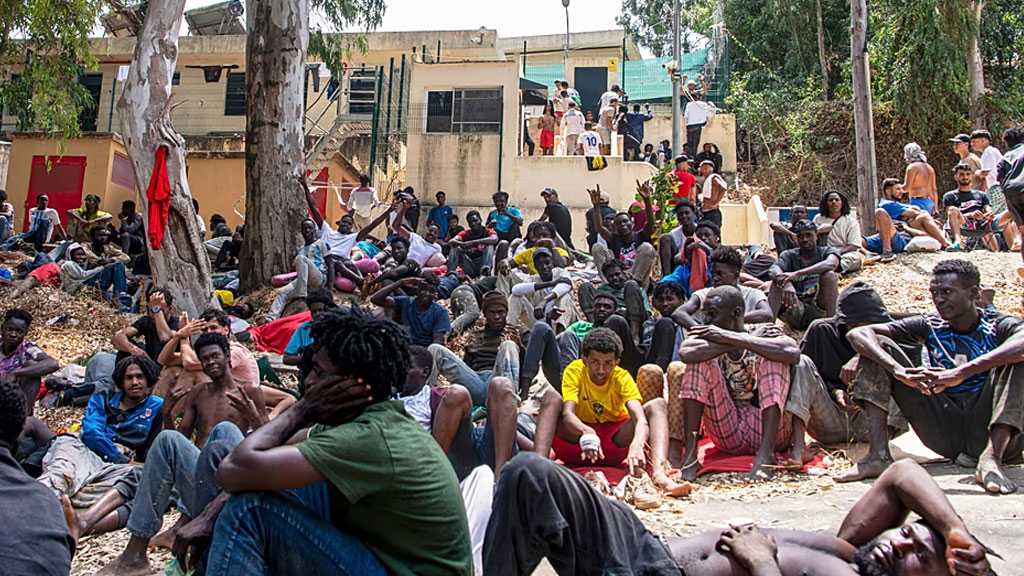
Cases of infectious diseases, including gastroenteritis, have been reported among migrants in Spain’s North African enclave of Ceuta following a mass influx from neighboring Morocco in late July, raising concerns over overcrowding, sanitation and access to basic healthcare.
Spain’s National Institute for Health Management [INGESA] confirmed that gastroenteritis has emerged among recently arrived migrants, according to Spanish media reports on Friday. The agency also confirmed cases of scabies and impetigo, while stressing that both conditions had already been present in Ceuta before the latest influx.
INGESA rejected claims that the enclave’s healthcare system had collapsed. It also dismissed reports of a tuberculosis outbreak, saying that a suspected case had tested negative.
However, local medical professionals have warned that the conditions faced by thousands of migrants sleeping outdoors could create an environment conducive to further disease transmission. Many reportedly lack reliable access to drinking water, toilets and showers.
Gastroenteritis is an inflammation of the stomach and intestines that is commonly caused by viral or bacterial infections and can result in diarrhea, vomiting and abdominal pain. Scabies is a contagious skin infestation caused by microscopic mites, producing intense itching and rashes, while impetigo is a bacterial skin infection that causes sores that can rupture and form yellowish crusts.
More than 72,000 migrants reportedly entered Ceuta on July 30 and 31, with many making the crossing by swimming or using coastal breakwaters. The number was equivalent to roughly 70 percent of the enclave’s normal population, placing significant pressure on reception facilities, healthcare services and law-enforcement authorities.
Most of those who entered Ceuta have since been returned to Morocco. However, local officials estimate that as many as 11,000 migrants remain in the enclave.
The unprecedented influx has also intensified political tensions within the European Union, where migration and border control remain highly contentious issues.
Twenty-two EU leaders signed a letter accusing Spain of weakening the bloc’s border security, while several politicians called for Spain to be removed from the Schengen borderless travel area.
Spanish Prime Minister Pedro Sanchez rejected the criticism, describing the actions of his European counterparts as “selfish.”
Comments
- Related News