- Home
- ISLAMIC RESISTANCE
- SECRETARY-GENERAL
-
Full Speeches
- Speeches-2000
- Speeches-2006
- Speeches-2007
- Speeches-2008
- Speeches-2009
- Speeches-2010
- Speeches-2011
- Speeches-2012
- Speeches-2013
- Speeches-2014
- Speeches-2015
- Speeches-2016
- Speeches-2017
- Speeches-2018
- Speeches-2019
- Speeches-2020
- Speeches-2021
- Speeches-2022
- Speeches-2023
- Speeches-2024
- Speeches-2025
- Speeches-2026
- Speech-Reports
- SG
-
Full Speeches
- Voices
- Ten Day Dawn
- The Biggest Crime
- Martyr Leaders

NYT: US Navy Struggles to Sustain West Asia Deployment as Supply Routes Collapse
By Staff, Agencies
The US Navy is struggling to sustain its large military presence in West Asia as Iranian strikes have disrupted the regional supply network, the New York Times reported.
The challenge now extends beyond missile stockpiles to Washington’s ability to support about 20 ships and 20,000 sailors and Marines without a nearby secure supply chain.
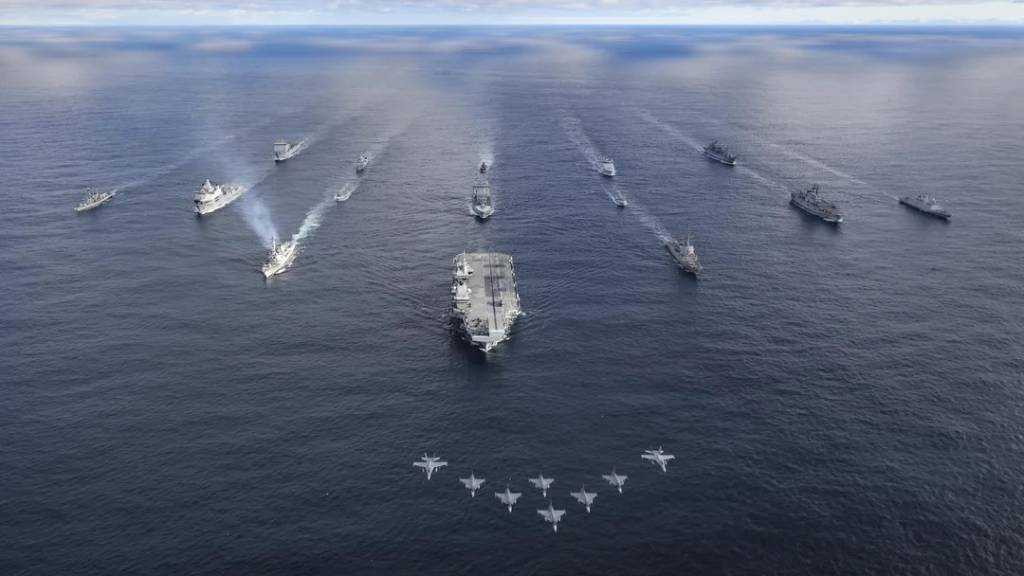
Currently, two aircraft carriers, the USS George H.W. Bush and USS George Washington, are deployed alongside 12 destroyers carrying about 3,700 personnel, enforcing a blockade on Iranian ports.
An amphibious ready group of three more warships and 5,000 Marines brings the force to roughly 20 ships and 20,000 personnel.
Meanwhile, sustaining such a force requires more than 420,000 meals and around eight million gallons of fuel each week. While the carriers operate on nuclear power, their aircraft and helicopters consume millions of gallons of fuel, adding to the logistical burden.
The Navy’s regional supply network collapsed on February 28, the first day of the war, when an Iranian strike destroyed a major US Navy logistics base in Bahrain. Other regional ports capable of servicing carriers or supply ships are also within range of Iranian missiles and drones, leaving them effectively inaccessible.
As a result, supply ships now have to travel to Diego Garcia, about 2,200 miles from the fleet’s operating area in the Gulf of Oman and Arabian Sea, while Singapore provides another option roughly 3,700 miles away through the crowded Strait of Malacca.
These distances force warships to conduct at-sea resupply missions roughly every five to six days. The dangerous operations require supply and receiving ships to sail side by side for hours while crews transfer fuel, food and equipment between vessels, with helicopters carrying additional supplies, parts and mail.
However, the deployments have no fixed end date, leaving the Navy facing mounting strain. The US has 11 aircraft carriers, four of which are committed to the war on Iran, while several others remain in shipyards for repairs expected to keep them out of service for years.
The USS Abraham Lincoln illustrates the pressure on the fleet, spending nearly its entire nine-month deployment at sea without a port call, far beyond the roughly monthly stops carriers typically make for crews to rest.
The USS George Washington relieved the Lincoln on August 20 and docked in Thailand this week, giving its crew a brief break before the carrier continues its journey home to San Diego.
Comments
- Related News