- Home
- ISLAMIC RESISTANCE
- SECRETARY-GENERAL
-
Full Speeches
- Speeches-2000
- Speeches-2006
- Speeches-2007
- Speeches-2008
- Speeches-2009
- Speeches-2010
- Speeches-2011
- Speeches-2012
- Speeches-2013
- Speeches-2014
- Speeches-2015
- Speeches-2016
- Speeches-2017
- Speeches-2018
- Speeches-2019
- Speeches-2020
- Speeches-2021
- Speeches-2022
- Speeches-2023
- Speeches-2024
- Speeches-2025
- Speeches-2026
- Speech-Reports
- SG
-
Full Speeches
- Voices
- Ten Day Dawn
- The Biggest Crime
- Martyr Leaders

Burnham: UK may Reverse Brexit
By Staff, Agencies
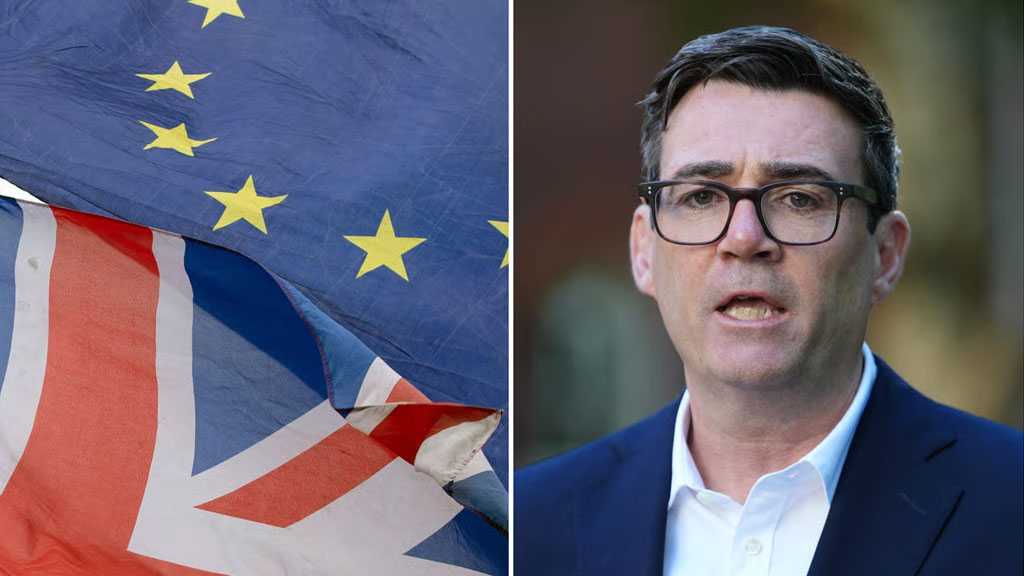
British Prime Minister Andy Burnham has said the UK could eventually rejoin the European Union as his government considers options for reshaping relations with the bloc a decade after the Brexit referendum.
In an interview with the BBC on Wednesday, Burnham said Brexit had done “more harm than good,” arguing that the current settlement was holding back economic growth and had failed to deliver the promised control over immigration.
He said the government would examine alternatives ranging from maintaining the status quo to joining a customs union or the single market, or even potentially going “all the way” and returning to the EU.
Talk of reversing Brexit has grown recently, with several prominent British politicians floating the idea. Burnham’s comments are the clearest indication yet that rejoining the EU could be on the table, although any such move would reopen questions over sovereignty, immigration and regulatory control that drove much of the Leave vote.
Britons voted 52% to 48% to leave the EU in June 2016, triggering years of negotiations over the terms of Brexit. The UK formally left the bloc in January 2020 and exited the single market and customs union at the end of that year.
For many Leave voters, Brexit was primarily about sovereignty and immigration rather than economics. An Ashcroft poll conducted immediately after the referendum found that 49% of Leave voters said their main reason was wanting decisions about the UK to be made in Britain, while 33% pointed to regaining control over immigration and borders. Only 6% primarily cited expected benefits from leaving the EU for trade and the economy. By contrast, 43% of Remain voters said their main concern was the risk Brexit posed to the economy, jobs and prices.
Brexit ended EU free movement and gave London control over who could move to Britain from the bloc. That did not, however, translate into lower overall immigration. Net migration instead surged as arrivals from outside the EU increased, reaching a record 944,000 in the year to March 2023 before falling sharply following tighter visa rules. Non-EU nationals continue to account for most immigration.
The change also worked both ways. British citizens lost EU freedom-of-movement rights and are now subject to the entry requirements that apply to non-EU travelers in the Schengen area.
Brexit also gave Britain an independent trade policy, allowing it to negotiate agreements without the approval of EU members. The UK has since struck deals with Australia, New Zealand, and India and joined the CPTPP, a major Indo-Pacific trade bloc. However, the Office for Budget Responsibility [OBR] estimates that the long-term economic gains from post-Brexit trade agreements are small compared with the impact it expects from higher trade barriers with the EU.
Comments
- Related News