Corruption and Billionaire Wealth Dominate Growing US Voter Discontent Ahead of Midterms
By Staff, Agencies
Government corruption has emerged as one of the leading concerns ahead of the upcoming US midterm elections, with nearly nine out of 10 Americans saying elected officials use their positions to advance personal or financial interests, according to an exclusive Harris Poll conducted for The Guardian.
The survey found that 76% of voters believe elected officials care more about enriching themselves than improving the economy for ordinary Americans.
Meanwhile, 65% said government corruption concerns them more than corporate power, compared with 29% who expressed the opposite view.
The rising cost of living remains the leading electoral issue, cited by 36% of respondents, with corruption emerging as another major concern alongside immigration, housing, abortion, public safety, and artificial intelligence.
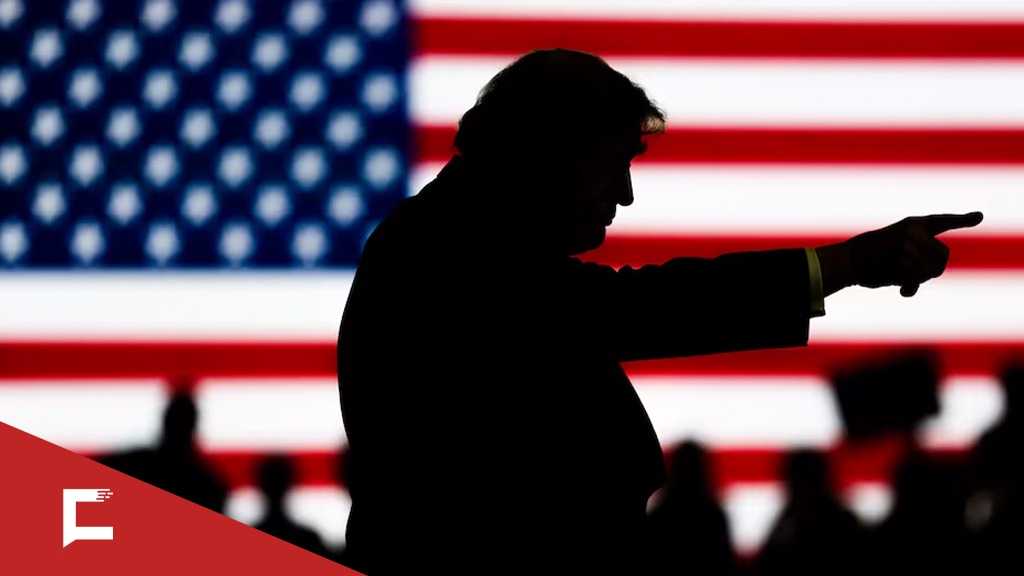
The findings come amid growing scrutiny of President Donald Trump's second administration and its financial dealings. Trump demolished the White House's historic East Wing to make way for a $400 million ballroom, with $335 million reportedly coming from private donors, including major corporations.
The federal workforce has also shrunk by more than 420,000 employees following mass cuts introduced under Elon Musk's involvement in the administration.
Meanwhile, Trump's family cryptocurrency ventures have reportedly generated $1 billion for the president since his return to the White House, and he accepted a private jet valued at $400 million from Qatar's royal family.
The poll revealed partisan divisions over corruption, with 40% of respondents saying Republicans have a bigger corruption problem, compared with 21% who pointed to Democrats.
Another 32% said both parties share the problem equally. Among independent voters, 34% identified Republicans as having the greater problem, while 13% pointed to Democrats and 42% said both parties were equally affected.
The survey also highlighted growing economic inequality and the concentration of wealth in the United States.
The wealthiest 1% of Americans own approximately half of the stock market, while the bottom 50% hold just over 1%. Meanwhile, 40 wealthy donors have contributed $2.5 billion to election campaigns this year, and spending on midterm election advertisements has reached a record $11.2 billion.
Billionaire Michael Bloomberg has pledged $80 million in support of Democratic candidates, while Trump has announced $400 million in contributions to Republican candidates.
A majority of voters [78%] agreed that elected officials care more about enriching themselves than helping ordinary people. Harris Poll CEO John Gerzema said corruption had become the second most important electoral issue after the cost of living, reflecting frustration with political leaders perceived as benefiting financially while Americans face growing economic hardship.
Among proposed solutions, 32% supported restricting corporate and lobbyist influence over government decisions, followed by removing tariffs [29%] and limiting corporate price increases [24%].
Meanwhile, California voters are facing a proposed ballot measure that would impose a one-time 5% wealth tax on billionaires in the state. Technology billionaires have reportedly spent more than $340 million, averaging approximately $1 million daily, to oppose the proposal.
The Harris Poll found that 50% of Americans, including 56% of independent voters, believe billionaires do not pay their fair share of taxes, compared with just 28% of Republicans who share that view.
Growing public dissatisfaction has also prompted some corporate executives to support wealth taxation. United Airlines CEO Scott Kirby recently called for a national wealth tax, arguing that state-level measures would encourage wealthy individuals to relocate.
He also advocated for substantially higher inheritance taxes, saying he would personally be willing to pay them.