Why Did UNIFIL Try to Conceal the Enemy’s Ownership of the Explosives?
Translated by Al-Ahed News, Al-Akhbar Newspaper
A closer examination of the UN Interim Force in Lebanon [UNIFIL]'s announcement regarding the discovery of four tons of explosives derived from ammonium nitrate in the southern Lebanese town of Houla raised questions that go beyond the official account, particularly concerning the origin of the materials and how they reached the site.
UNIFIL announced the discovery of an "incomplete statement" published on its website, confirming the presence of the explosives without providing details about their source or the circumstances surrounding their presence.
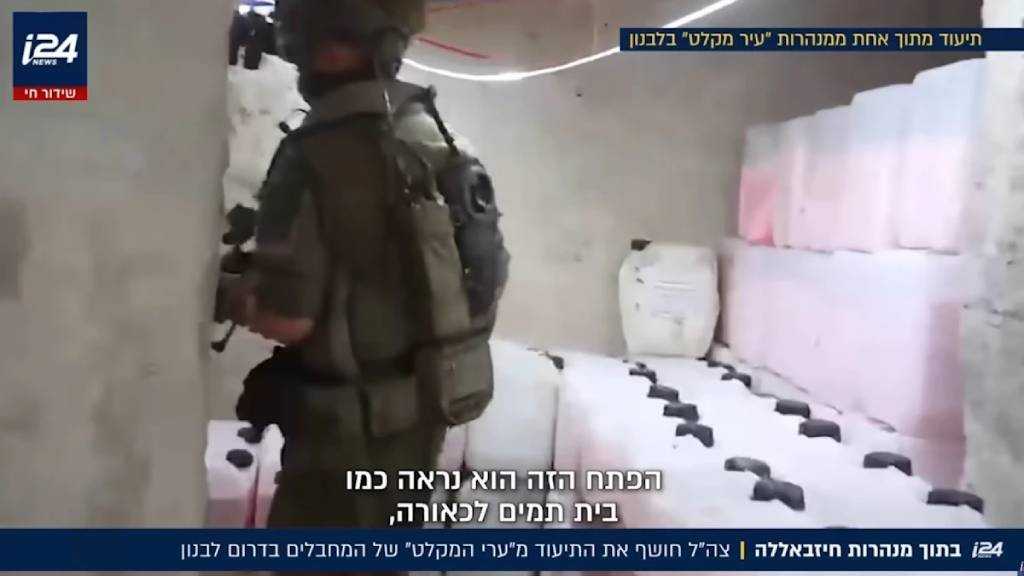
However, photographs released by the peacekeeping force showed containers holding the materials that matched those previously displayed in images published by the "Israeli" occupation forces [IOF], showing soldiers transporting them to operational areas where they were used to demolish homes.
The "Israeli" enemy has also reportedly relied in recent months on large drones to drop these containers over areas believed to contain Resistance fighters' positions before detonating them.
According to available information, such an incident occurred only days ago in the hills surrounding the Ali al-Taher Heights east of Nabatieh.
Al-Akhbar has learned from a military source that the explosives belonged to the IOF, an info also supported by Hebrew writing visible on some of the containers.
Agence France-Presse [AFP] also quoted Lebanese security sources as saying the explosives were remnants of materials used by the occupation forces since the November 2024 ceasefire to demolish villages and neighborhoods across southern Lebanon as part of a policy of extensive explosive use aimed at inflicting maximum destruction on infrastructure, the natural environment, homes, and roads in border areas.
UNIFIL's decision to publish the announcement in this form and at this time has also prompted several questions.
Although the explosives were discovered on July 2, the peacekeeping force delayed announcing the discovery until weeks later, including it only in a broader statement on the disposal of unexploded ordnance.
According to available information, the disclosure itself created confusion within UNIFIL, after the issue had been kept under a high level of secrecy and was reportedly unknown even to some officials.
UNIFIL also reportedly failed to inform the Lebanese Army about the discovery, despite information-sharing being a fundamental part of coordination between the two sides.
This is especially significant given that the seized materials constitute physical evidence of the use of this type of explosive in demolition operations targeting homes and towns in southern Lebanon. The official statement's omission of the origin of the materials, despite their reported identification, has further fueled questions over the motives behind the announcement.
According to informed sources, UNIFIL's handling of the matter reflects a failure to assess the sensitivity of the Lebanese situation, effectively serving the "Israeli" narrative by omitting the occupation's use of these explosives in the destruction of inhabited areas and reopening accusations linked to the Beirut port explosion.
A stricter interpretation argues that the omission was not merely an error of judgment, but a deliberate act by individuals within the international force aimed at generating media coverage targeting Hezbollah.
As has often been the case, media outlets hostile to the Islamic Resistance, seized on the announcement and turned it into political and media material to level accusations against Hezbollah just days before the anniversary of the Beirut port explosion.
This was particularly evident in the coverage of several newspapers, including An-Nahar, which deliberately suggested a connection between the two incidents.
For its part, the Houla municipality described the discovery as "one of the criminal acts committed by the 'Israeli' enemy and a dangerous indicator that cannot be ignored or underestimated."
It stressed that the explosives constitute "a documented crime and a direct threat to the town," holding "Israel" "fully and directly responsible for bringing in or using any explosive or hazardous materials on Lebanese territory and for any disaster that may result."
The municipality also called on the Lebanese authorities to open an official investigation and take the necessary legal and diplomatic measures to protect citizens and Lebanese territory.