- Home
- ISLAMIC RESISTANCE
- SECRETARY-GENERAL
-
Full Speeches
- Speeches-2000
- Speeches-2006
- Speeches-2007
- Speeches-2008
- Speeches-2009
- Speeches-2010
- Speeches-2011
- Speeches-2012
- Speeches-2013
- Speeches-2014
- Speeches-2015
- Speeches-2016
- Speeches-2017
- Speeches-2018
- Speeches-2019
- Speeches-2020
- Speeches-2021
- Speeches-2022
- Speeches-2023
- Speeches-2024
- Speeches-2025
- Speeches-2026
- Speech-Reports
- SG
-
Full Speeches
- Voices
- Ten Day Dawn
- The Biggest Crime
- Martyr Leaders

Trump Revives Birthright Citizenship Push After Court Defeat
By Staff, Agencies
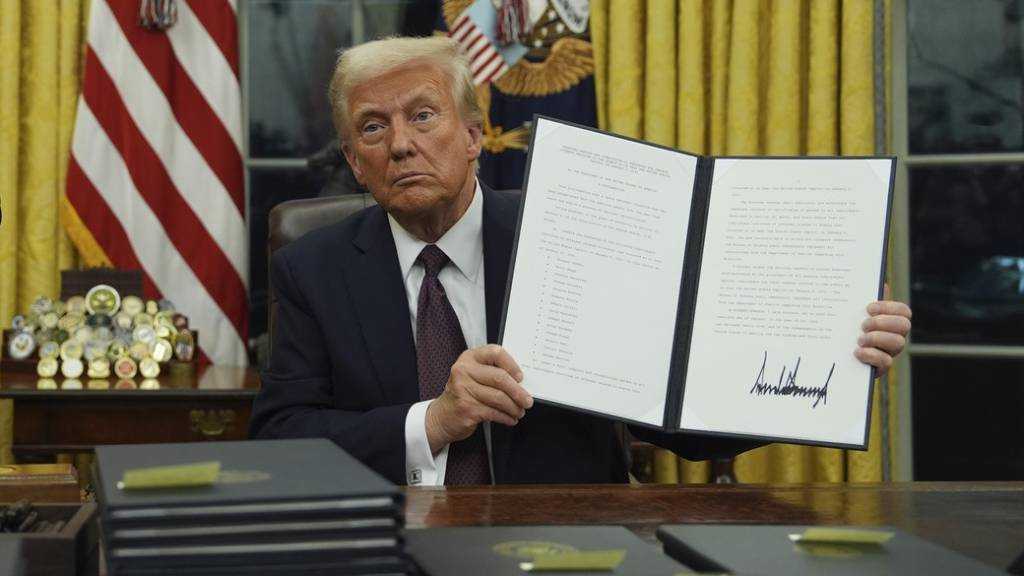
US President Donald Trump on Thursday signed two executive orders aimed at restricting birthright citizenship, reviving a key immigration policy, weeks after the Supreme Court blocked an earlier, broader measure.
The new orders target so-called birth tourism, certain children of foreign government employees, and children born to people designated as "alien enemies," according to Reuters.
Unlike Trump's previous directive, which sought to deny automatic citizenship to children born in the United States unless at least one parent was a US citizen or lawful permanent resident, the latest measures take a narrower approach.
The Supreme Court ruled on June 30 that the earlier policy conflicted with the 14th Amendment, prompting Trump to first urge Congress to act before returning to executive orders.
Meanwhile, one directive seeks to ban birth tourism, referring to foreigners traveling to the United States to give birth so their children obtain US citizenship. White House aide Stephen Miller announced the practice was banned under the order.
The Center for Immigration Studies estimated that between 20,000 and 25,000 women traveled to the US for birth tourism during a one-year period between 2016 and 2017, although the US government keeps no official data on the practice. The country recorded around 3.6 million births in 2025.
Trump argued the practice had become commercialized and criticized the Supreme Court's ruling that struck down his previous order, calling it "very unfortunate."
Additionally, the new directives seek to limit citizenship for children born to certain foreign government employees and parents classified as "alien enemies."
The administration contends these cases fall within historical exceptions to the 14th Amendment and are therefore unaffected by the court's June decision.
However, the 14th Amendment has long been interpreted as granting citizenship to nearly everyone born on US soil, with limited exceptions such as children of accredited foreign diplomats and hostile occupying forces.
Trump argued the amendment was intended to protect the children of formerly enslaved people after the Civil War rather than apply as broadly as courts have interpreted it.
For his part, Chief Justice John Roberts rejected that view in the June ruling, reaffirming the amendment's broad citizenship guarantee and describing citizenship as a fundamental constitutional right.
The Citizenship Clause states that all people born or naturalized in the United States, and subject to its jurisdiction, are US citizens.
Legal challenges are already expected. Civil rights and immigrant advocacy groups said the new orders attempt to circumvent the Supreme Court's decision, while the American Civil Liberties Union predicted the measures would again fail in court.
Since executive orders do not carry the same legal force as acts of Congress, the courts are expected to determine whether Trump can expand the traditionally narrow exceptions to birthright citizenship through presidential authority.
Comments
- Related News