US: Iran War Shock Hits US Households amid $107B Fuel Bill
By Staff, Agencies
The Wall Street Journal reported that the economic fallout from the war on Iran is increasingly reaching US households, with higher gasoline and diesel prices forcing consumers to spend more on fuel while leaving less room for savings and other purchases.
US consumers have spent an estimated $107 billion more on gasoline and diesel during the war on Iran and disruptions linked to the Russia-Ukraine war than they would have without the wars, according to an estimate by Brown University’s Climate Solutions Lab.
The figure amounts to more than $500 million in additional fuel spending each day since the United States and “Israel” launched attacks on Iran on February 28. With crude prices now above $100 a barrel, the additional burden on consumers is expected to continue growing.
The Brown University estimate puts the additional gasoline cost at roughly $59 billion this year, while diesel has added another $48 billion. The calculations are based on daily retail prices and historical consumption patterns.
The researchers noted that the figures do not fully account for consumers reducing fuel purchases because of higher prices. Such a decline in consumption could lower the spending total, but also represents another economic cost as households cut back on goods and activities they would otherwise have purchased.
The surge in fuel costs is emerging as a particular concern for lower- and middle-income households, which have fewer financial buffers to absorb higher prices.
US personal savings fell to 3% in July, according to the Bureau of Economic Analysis, placing the savings rate among its lowest levels since the 2007-2009 recession.
Michael Pearce, chief US economist at Oxford Economics, said the pressure on household finances was “definitely a drag on the economy,” adding that consumers drawing down their savings could not continue doing so indefinitely.
The higher cost of filling vehicles also risks diverting household spending away from other parts of the economy. As families allocate more of their income to gasoline and diesel, they have less money available for discretionary purchases.
The pressure comes after tax refunds had temporarily helped cushion the impact of rising fuel prices earlier in the year. That support has since weakened, while real wage growth has stalled.
Diesel has become a particularly significant source of pressure because it is widely used in agriculture, construction, and transportation.
Brent crude futures closed at $108.75 a barrel on Tuesday, while diesel futures reached a record $5.26 a gallon.
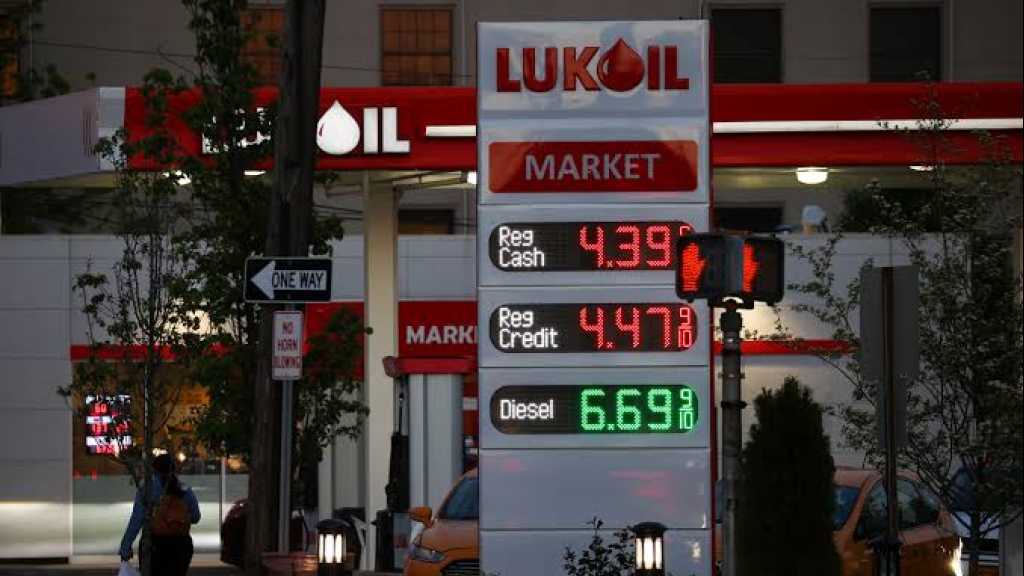
The national average retail price for diesel climbed to $6.27 a gallon, according to AAA, while prices in California exceeded $8.
The rise threatens to extend beyond transportation costs. Higher diesel prices increase expenses for farmers, freight operators, and other businesses, potentially feeding into the prices of food and other goods.
According to The Wall Street Journal, Roukaya Ibrahim, chief commodity strategist at BCA Research, said some businesses could begin scaling back operations if fuel costs make them unprofitable, describing the process as “demand destruction".
The pressure could become particularly significant as the US enters the harvest season, when agricultural fuel demand typically rises.
The fuel shock is being amplified by several disruptions affecting global oil markets.
Shipments through the Strait of Hormuz remain below prewar levels, while attacks and threats involving commercial shipping around the Arabian Peninsula have added uncertainty to energy supplies. At the same time, Ukrainian attacks have disrupted a significant portion of Russia’s refining capacity.
The Strait of Hormuz is a critical route for global energy supplies, meaning that prolonged disruption there could keep upward pressure on crude and refined fuel prices.
The resulting oil shock is also feeding broader inflationary pressures and complicating the Federal Reserve’s policy outlook. Rising energy costs can simultaneously squeeze consumers and businesses while making it harder for monetary policymakers to contain inflation.
US households therefore face a double pressure: paying more for essential fuel while having less disposable income available for savings and other spending.