Colombia Earthquake Death Toll Hits 254
By Staff, Agencies
A powerful 7.4-magnitude earthquake that struck western Colombia on Monday, August 10, has killed at least 254 people, while rescue crews search collapsed buildings for survivors and thousands remain displaced.
The quake struck Colombia’s coffee-growing heartland, severely damaging apartment buildings, homes, schools and health facilities. Figures from affected cities put the toll at 254, including 101 in Pereira and 95 in Cali, according to Reuters. The full toll remains uncertain as communications remain disrupted in some areas.
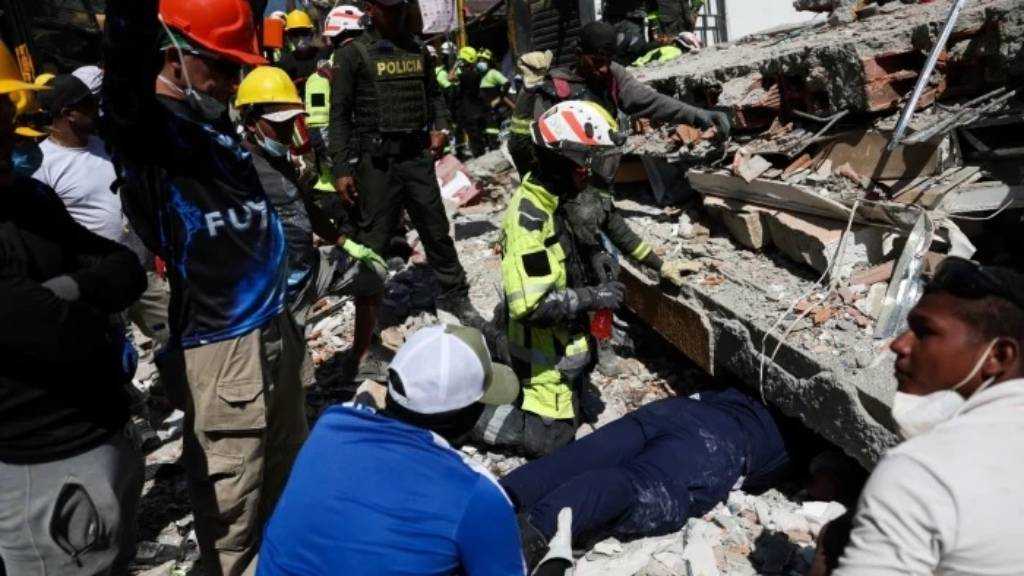
Meanwhile, rescue operations have continued for a second night, with emergency crews using cranes and excavators alongside volunteers searching through rubble with their bare hands.
In Cali, rescuers pulled a woman alive from the wreckage of the Torres del Limonar apartment complex, drawing cheers from crowds.
Elsewhere, the destruction has overwhelmed local services. Cali’s public morgue was reportedly full, while thousands were forced from homes that collapsed or suffered severe structural damage.
Families spent the night in temporary shelters, sports centers or with neighbors as authorities assessed whether buildings were safe to re-enter.
More than 100 aftershocks had been recorded by Tuesday afternoon, complicating rescue efforts. Authorities in several areas imposed nighttime curfews amid looting concerns, while residents organized relief efforts, including preparing food and recovering belongings.
The earthquake struck only days after Abelardo De La Espriella was inaugurated as Colombia’s president, making it the first major crisis of his administration.
He visited affected areas and pledged economic assistance to people whose homes were destroyed.
His government is also reportedly preparing to revise a budget exceeding $180 billion drawn up under the previous administration while pursuing austerity measures.
The government’s handling of the disaster has already drawn scrutiny. De La Espriella initially announced a national death toll on Monday, while agencies were reportedly instructed not to release separate figures.
The absence of a subsequent official national update has fueled criticism and confusion over the scale of the losses.
The government has also rejected international search-and-rescue assistance, including offers from the United Nations, while accepting support from the United States.
Conditions have been particularly severe in Choco, near the epicenter, where Indigenous and rural communities remained without electricity, water, gas, medical supplies and reliable communications. Blocked roads and three closed airports further restricted access for emergency teams and humanitarian supplies. Residents have relied heavily on volunteers and improvised assistance while awaiting government relief.
Colombia lies in a highly active seismic region and has experienced devastating earthquakes before, including the 1999 Armenia earthquake, which caused extensive destruction across the coffee-growing region.
The latest quake has again struck the area around Pereira and other densely populated communities, underscoring the country’s persistent seismic vulnerability.
As rescuers continue clearing rubble, the search for people who may still be trapped alive has become a race against time. Volunteers and emergency workers have formed human chains to remove debris, while rescuers call for silence to listen for survivors.
Beyond the immediate rescue, restoring electricity, water, communications, transportation and medical services will be critical, particularly in Choco and other isolated areas.