- Home
- ISLAMIC RESISTANCE
- SECRETARY-GENERAL
-
Full Speeches
- Speeches-2000
- Speeches-2006
- Speeches-2007
- Speeches-2008
- Speeches-2009
- Speeches-2010
- Speeches-2011
- Speeches-2012
- Speeches-2013
- Speeches-2014
- Speeches-2015
- Speeches-2016
- Speeches-2017
- Speeches-2018
- Speeches-2019
- Speeches-2020
- Speeches-2021
- Speeches-2022
- Speeches-2023
- Speeches-2024
- Speeches-2025
- Speeches-2026
- Speech-Reports
- SG
-
Full Speeches
- Voices
- Ten Day Dawn
- The Biggest Crime
- Martyr Leaders

US Media Say Trump’s Hormuz Territorial Claim Was a Joke as Iran Rejects Washington’s Control Narrative
By Staff, Agencies
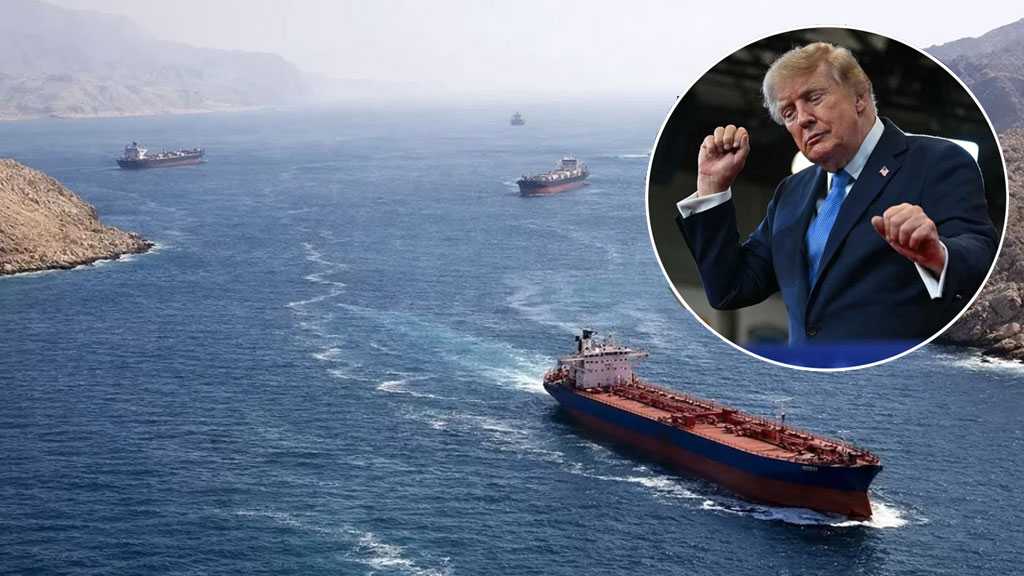
US President Donald Trump was reportedly “joking” when he said the United States would declare the Strait of Hormuz US territory after the war with Iran, according to US media, as Iranian officials continue to reject Washington’s claims of control over the strategic waterway.
Wall Street Journal reporter Brian Schwartz said on Friday, citing an unnamed senior White House official, that Trump had not discussed such a move with his advisers and was joking when he made the remarks during a speech in New York.
“President Trump has not met with his advisers about declaring the Strait of Hormuz a US territory post the war and was joking during his speech today in New York,” Schwartz wrote on X.
Trump made the controversial statement during a political rally at the Nassau County Police Academy in Garden City, New York.
“After we finish defeating Iran, which is being very badly defeated — pretty soon I’ll be declaring the Hormuz Strait a territory of the United States,” Trump said with a chuckle, before adding, “It’s true.”
Schwartz, who attended the speech, said Trump initially appeared amused by his own remark but then seemed to insist that the claim was genuine.
Trump also asserted that Washington controls maritime traffic through the strategic waterway.
“We have the blockade. No ships get through unless we want them to,” he told supporters.
Iranian military officials have rejected such claims, with the country’s central military command describing assertions of US control over the Strait of Hormuz as “baseless lies and fabrications.”
The Iranian position has been that the United States cannot impose its will on the waterway or dictate its future through military pressure. Tehran has repeatedly stressed its authority over the strategic passage and rejected attempts to portray US military presence in the region as equivalent to control.
Data cited by CNN from commodities and shipping analytics firm Kpler showed that, as of August 12, approximately 3,371 vessels had crossed the Strait of Hormuz during the 166 days since the war began. The figure represents roughly 20 percent of pre-war traffic levels.
The United States and Iran previously reached a Pakistan-brokered ceasefire in April before signing an agreement on June 17 to begin negotiations toward a final settlement. The talks later stalled over unresolved issues, including security guarantees and freedom of navigation through the Strait of Hormuz.
The two sides also exchanged military strikes between July 8 and 24. Washington attacked targets inside Iran, while Tehran responded with strikes on what it described as US military facilities and equipment in several Arab countries, including Jordan, Bahrain and Kuwait.
The Strait of Hormuz links the Persian Gulf with the Gulf of Oman and remains one of the world’s most important energy shipping corridors.
Trump’s remarks, even if characterized by the White House as a joke, have nevertheless highlighted the extent of Washington’s ambitions regarding the strategic waterway and drawn renewed attention to Iran’s insistence that control over the strait cannot be imposed by the United States or its allies.
Comments
- Related News