Sayyed Al-Houthi: September 21 Revolution Restored Yemen’s Dignity
By Staff, Agencies
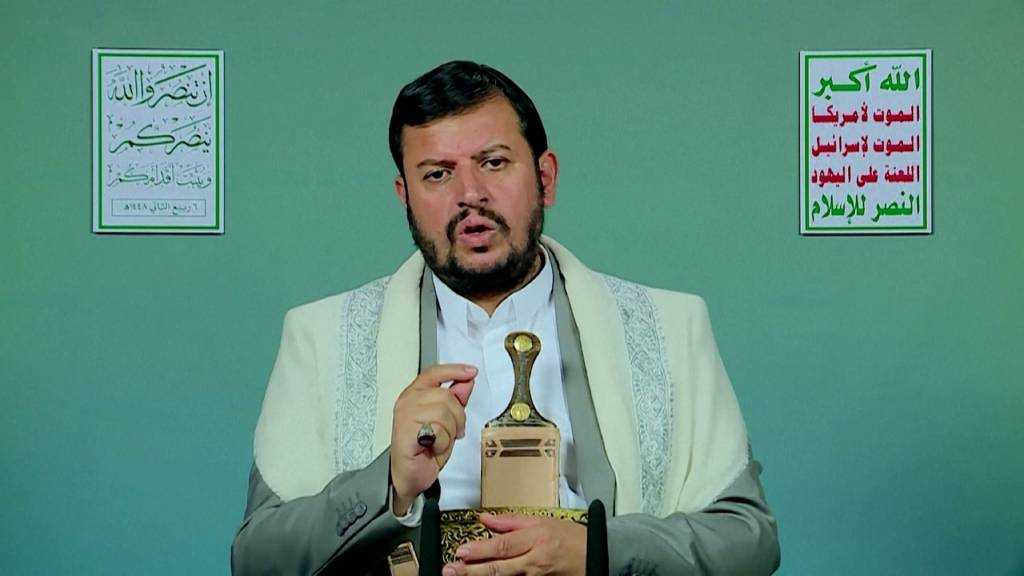
The Leader of the Yemeni Ansarullah leader Sayyed Abdul Malik Badredine Al-Houthi confirmed that Yemen’s September 21 Revolution restored the country’s independence and national dignity, while stressing that Sanaa would continue supporting the Palestinian cause and confronting foreign intervention.
In a speech marking the 12th anniversary of the revolution, Sayyed Al-Houthi expressed gratitude for the “victory and support” granted to the Yemeni people, saying the movement represented a shift away from foreign influence and toward national sovereignty.
“The September 21 Revolution achieved for our free people freedom and independence based on their faith-based identity and liberation from US arrogance,” he said.
He further described the end of foreign guardianship over Yemen as a major achievement, underlining that such influence represented a loss of independence and decision-making power. “Foreign guardianship is the confiscation of freedom and independence, and what follows from it is a great loss,” he said.
In parallel, the Ansarullah leader said that before the revolution, Yemen’s political decisions were subject to external influence, noting that authorities in Sanaa had become a formal structure tasked with implementing foreign directives.
“The official program in all fields became based on what the American, British, and their allies wanted at the time,” he said.
Sayyed Al-Houthi went on to say foreign involvement extended into Yemen’s military and security institutions, stressing efforts were made to weaken the armed forces and target capabilities related to defense, including the air force, air defense systems, and naval forces.
He also criticized the security situation before the revolution, saying assassinations in Sanaa had continued without interruption and that economic policies had placed additional pressure on Yemenis despite the country’s oil and gas resources.
The September 21 Revolution, in contrast, was a popular movement that was not backed by any foreign party. “The popular revolution restored the people’s dignity and preserved their faith-based pride. It was not a revolution pushed by any external side in this world,” he said.
Moreover, Sayyed Al-Houthi underscored that Yemen faced continued attempts to restore foreign control after the revolution, arguing that the United States sought to maintain influence over the country and establish military bases there.
He added that the revolution was launched on the principles of peace and partnership, but accused opponents of seeking to reassert control through military pressure.
The Ansarullah leader said Saudi Arabia, with the support and participation of the US, Britain, and "Israel", launched a broad offensive against Yemen. “The Saudi regime targeted all the foundations of life in our country, and its brutal crimes are war crimes against humanity,” he said.
In addition, Sayyed Al-Houthi accused Saudi Arabia of targeting civilian infrastructure, including mosques and public gatherings, saying more than 2,000 mosques had been struck and that documentation existed regarding these incidents.
He criticized the Arab and Islamic response to the Saudi-led aggression, saying support came primarily from the Axis of Resistance and the free voices around the world.
The Yemeni Leader viewed said the period of de-escalation had provided Saudi Arabia with an opportunity to reassess its approach and recognize that Yemen could not be forced back under foreign control.
He accused Riyadh of operating under US, British, and “Israeli” influence, saying it lacked an independent political agenda.
According to Sayyed Al-Houthi, Saudi Arabia took a “wrong direction” after Yemen began supporting Palestine, relying on US, British, and “Israeli” military action in an attempt to weaken Yemen’s capabilities.
He also accused Riyadh of allowing “Israeli” reconnaissance aircraft to operate from Saudi airports toward Yemen and of conducting media campaigns aimed at undermining Yemen’s position in support of Palestine.
Sayyed Al-Houthi said the humanitarian situation in Yemen had reached a critical stage due to continued Saudi-led restrictions, adding that reports from the Health Ministry reflected the scale of suffering and that available resources had reached “zero.”
Regarding recent Saudi claims of threats against Mecca, Sayyed Al-Houthi stressed the holy sites in Mecca are regarded as Islamic sanctities belonging to all Muslims rather than being viewed solely through the lens of Saudi state authority.
“We do not consider Mecca the property of the Saudi emirate; rather, it is an Islamic landmark for all Muslims, and we are concerned with its sanctity, its status, and defending it,” he said.
He called on Muslim peoples to assess Saudi Arabia’s policies based on its actions and regional positions, rather than its custodianship of Islamic holy sites.
Sayyed Al-Houthi also criticized Saudi efforts to influence regional divisions and weaken engagement with the Palestinian cause, urging Muslim nations to support Palestine and confront threats facing the wider Islamic world.
Emphasizing Yemen’s stance in support of Palestine, he underlined that the support stemmed from a moral, religious, and national responsibility.
“We stand in solidarity and cooperate with the axis of jihad and resistance, and we consider any targeting of an Islamic country that threatens the nation as something that falls within our principled responsibility,” he said.
He argued that Yemen had faced one of the world’s greatest injustices and questioned criticism of its response to military pressure and restrictions.
“We are people with a cause and a grievance among the greatest grievances on earth, so how can others object when we move against aggression and blockade?” he said.
Sayyed Al-Houthi rejected attempts to justify restrictions imposed on Yemen, saying the country had the right to freedom, independence, control over its resources, and unrestricted movement, trade, and travel.
He also said Yemen’s demands were limited to ending military actions and lifting restrictions. “We do not come with impossible conditions. We say: stop the aggression, end the blockade, and our demands are legitimate rights for our people,” he said.
Sayyed Al-Houthi stressed that Yemen would continue supporting Palestinians and confronting “Israeli” violations against the Palestinian people.
He said the “Israeli” occupation had turned attacks on Al-Aqsa Mosque and the suffering of Palestinians into political campaigns.
“The criminal Netanyahu goes, like other criminals, to the Buraq Wall as an electoral campaign,” Sayyed Al-Houthi said, calling on Muslim and Arab peoples to support Palestinians and confront the danger posed by the “Israeli” occupation.
“In any stage of escalation facing the Palestinian people, we will stand with them and with greater strength than we were during the Al-Aqsa Flood operation,” he said.
Sayyed Al-Houthi concluded by urging Yemenis to continue mobilization efforts, work on improving state institutions, confront restrictions, and strengthen military and security capabilities.