- Home
- ISLAMIC RESISTANCE
- SECRETARY-GENERAL
-
Full Speeches
- Speeches-2000
- Speeches-2006
- Speeches-2007
- Speeches-2008
- Speeches-2009
- Speeches-2010
- Speeches-2011
- Speeches-2012
- Speeches-2013
- Speeches-2014
- Speeches-2015
- Speeches-2016
- Speeches-2017
- Speeches-2018
- Speeches-2019
- Speeches-2020
- Speeches-2021
- Speeches-2022
- Speeches-2023
- Speeches-2024
- Speeches-2025
- Speeches-2026
- Speech-Reports
- SG
-
Full Speeches
- Voices
- Ten Day Dawn
- The Biggest Crime
- Martyr Leaders

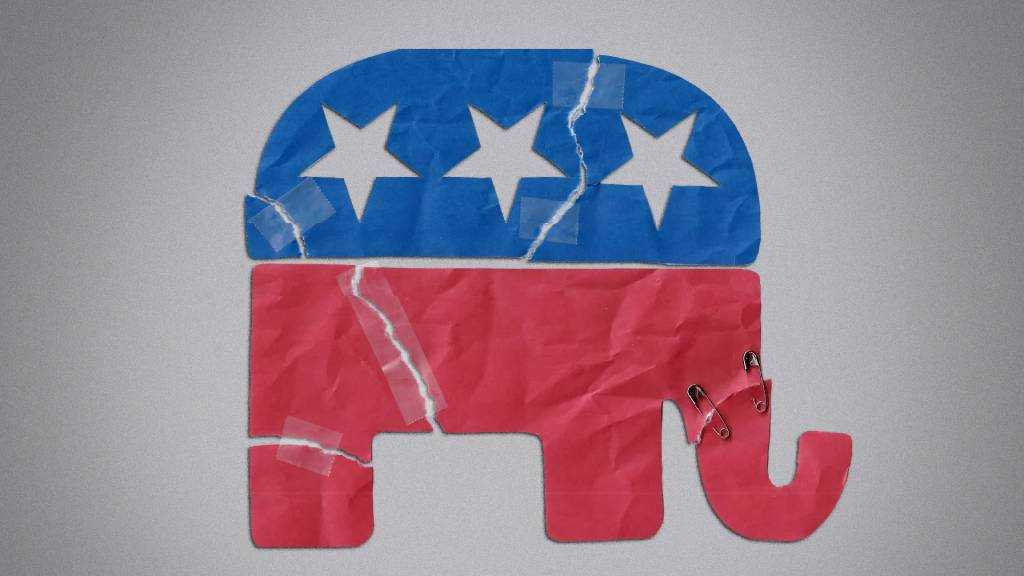
GOP Divisions Grow Over Trump’s Iran War
By Staff, Agencies
Republican lawmakers and candidates are increasingly breaking with US President Donald Trump over the war on Iran, citing rising fuel and household costs, the war’s duration, and uncertainty over its objectives, according to TIME.
The latest split emerged on Capitol Hill on September 15, when seven House Republicans joined Democrats in supporting a war powers resolution seeking to limit Trump’s authority to continue military aggression against Iran without congressional approval.
The move came as US-Iran talks stalled and Trump sent mixed signals about whether the war would continue or eventually end through negotiations.
Meanwhile, Republican candidates have increasingly criticized the war over its economic impact. Iowa Senate nominee Ashley Hinson called for an “immediate end,” citing pressure on Americans at gas stations and checkout counters.
Michigan Senate candidate Mike Rogers similarly called for a swift end, while Ohio Sen. Jon Husted linked the war to rising gasoline prices.
The House vote marked a broader Republican break with Trump. Zach Nunn, Mariannette Miller-Meeks, Nancy Mace, Thomas Massie, Brian Fitzpatrick, Warren Davidson, and Tom Barrett backed the resolution.
Nunn said he would not support another open-ended war, while Miller-Meeks called for a limited mission and cited the financial burden on Americans.
The resolution would require congressional authorization for continued hostilities but would not itself immediately halt US military aggression. It also preserves presidential authority to respond to imminent attacks.
Beyond economic concerns, some Republicans have questioned the war’s lack of a clearly defined endpoint.
Republican strategists Doug Heye and Brian Darling pointed to uncertainty over its timeline, rising prices, and concerns about prolonged US military involvement as factors contributing to opposition within the party.
The developments highlight divisions within the Republican Party over the scope of US military intervention and Congress’s authority over sustained military aggression. While some Republicans continue to support Trump’s approach, others are pressing for greater congressional oversight.
Comments
- Related News
GOP Divisions Grow Over Trump’s Iran War
10 hours ago