- Home
- ISLAMIC RESISTANCE
- SECRETARY-GENERAL
-
Full Speeches
- Speeches-2000
- Speeches-2006
- Speeches-2007
- Speeches-2008
- Speeches-2009
- Speeches-2010
- Speeches-2011
- Speeches-2012
- Speeches-2013
- Speeches-2014
- Speeches-2015
- Speeches-2016
- Speeches-2017
- Speeches-2018
- Speeches-2019
- Speeches-2020
- Speeches-2021
- Speeches-2022
- Speeches-2023
- Speeches-2024
- Speeches-2025
- Speeches-2026
- Speech-Reports
- SG
-
Full Speeches
- Voices
- Ten Day Dawn
- The Biggest Crime
- Martyr Leaders

Iran War Exposes Strain on US Missile Defense Capacity, The Atlantic Reports
By Staff, Agencies
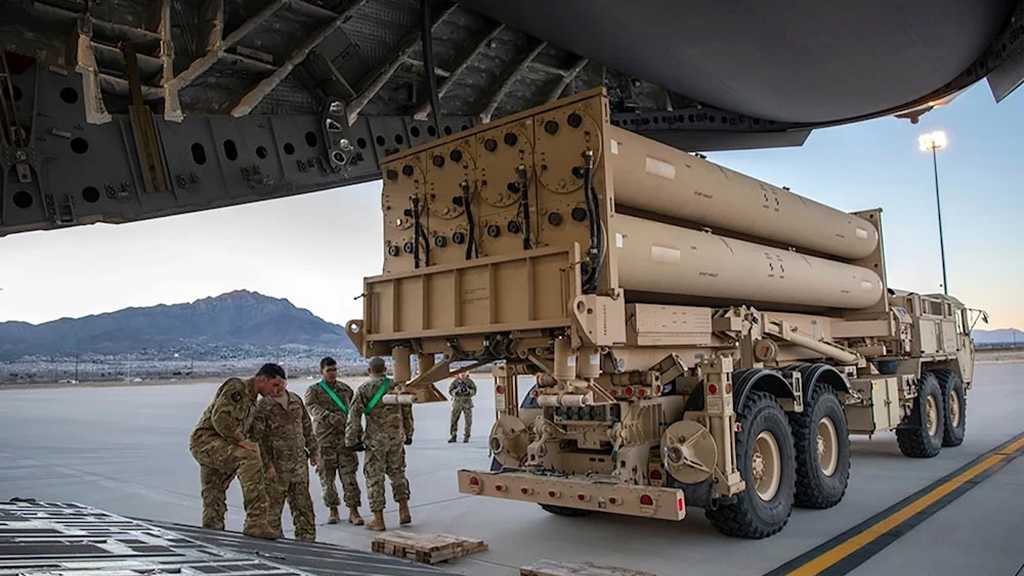
The US-"Israeli" war on Iran has exposed growing pressure on Washington’s ability to sustain missile defense for its regional allies, with expensive interceptors reportedly being consumed faster than US manufacturers can replace them, The Atlantic reported.
In an investigation titled “The THAAD Delusion,” journalist Christopher Leonard examined how the Terminal High Altitude Area Defense (THAAD) system became a central element of US security arrangements in the Middle East despite originally being designed for a more limited battlefield role.
According to the report, THAAD was initially intended to protect critical US military deployments during the early stages of a conflict, giving American aircraft and naval forces time to respond.
Washington later promoted the system as part of broader missile-defense arrangements for allies including the United Arab Emirates and Saudi Arabia.
The war with Iran has challenged assumptions behind that strategy as Iranian missile attacks have continued over an extended period.
Leonard argues that Washington did not maintain sufficient interceptor stocks for sustained operations and lacks the manufacturing capacity to replace them rapidly.
Citing estimates from the Center for Strategic and International Studies (CSIS), the report says US forces used more than 150 THAAD interceptors during the 12-day war in 2025 and another 190 to 290 during what Washington calls “Operation Epic Fury.”
CSIS estimated that approximately 250 THAAD interceptors remained in the US stockpile, although the report noted that additional deliveries could alter that calculation and that Washington has not publicly disclosed its current inventory.
The pressure is not limited to THAAD. The investigation also described heavy consumption of Patriot air-defense interceptors as well as offensive weapons, including Tomahawk and JASSM missiles, placing additional strain on multiple parts of the US weapons arsenal.
The report raises broader questions about US military planning, procurement and industrial capacity, particularly the ability to sustain prolonged high-intensity operations while maintaining commitments to allies.
It argues that the consumption of missile interceptors has exposed a gap between Washington’s promises of extended protection and the capacity of its defense industry to replenish critical systems quickly.
Comments
- Related News