- Home
- ISLAMIC RESISTANCE
- SECRETARY-GENERAL
-
Full Speeches
- Speeches-2000
- Speeches-2006
- Speeches-2007
- Speeches-2008
- Speeches-2009
- Speeches-2010
- Speeches-2011
- Speeches-2012
- Speeches-2013
- Speeches-2014
- Speeches-2015
- Speeches-2016
- Speeches-2017
- Speeches-2018
- Speeches-2019
- Speeches-2020
- Speeches-2021
- Speeches-2022
- Speeches-2023
- Speeches-2024
- Speeches-2025
- Speeches-2026
- Speech-Reports
- SG
-
Full Speeches
- Voices
- Ten Day Dawn
- The Biggest Crime
- Martyr Leaders

WHO Warns Gaza Aid Delays Leave Humanitarian Crisis Deepening
By Staff, Agencies
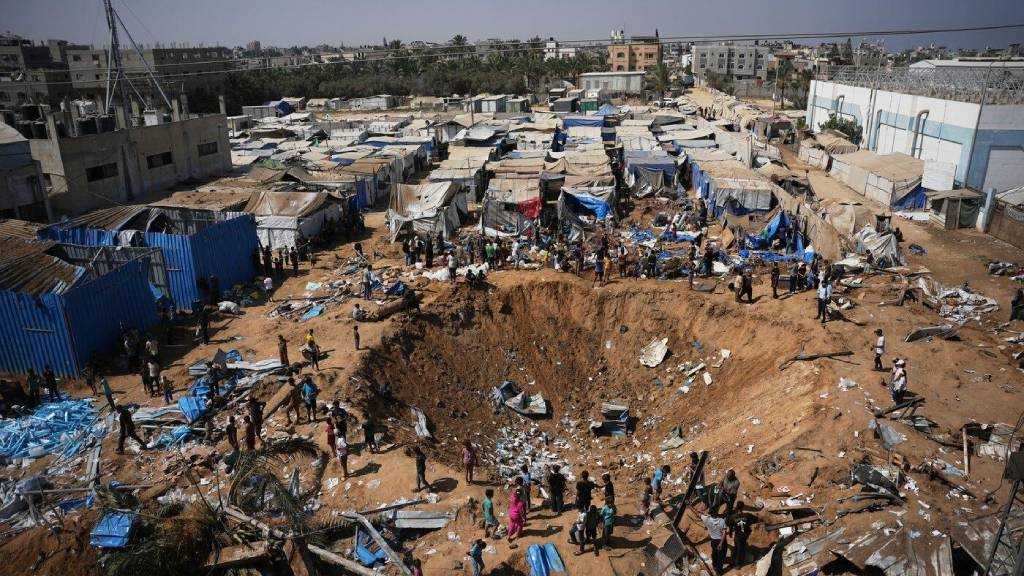
Nearly 12 months into the so-called ceasefire, Gaza’s humanitarian crisis remains “overwhelming,” according to OCHA, amid continued “Israeli” aggression. WHO Representative in the Occupied Palestinian Territory Dr. Reinhilde Van De Weerdt warned that the key issue is whether aid reaches Gaza in time and in a form capable of saving lives.
“A truck full of non-priority supplies or the right supplies arriving too late doesn't save lives,” Van De Weerdt said, stressing that only aid approved by “Israel” can currently enter through the Karem Abu Salem crossing. Rafah allows limited movement of people, including patients seeking treatment abroad, while four other major crossings—Kissufim, Gate 96, Erez and Erez West—remain closed.
Meanwhile, Van De Weerdt urged “Israeli” authorities to ease restrictions on medical supplies, arguing that essential medicines and equipment should not be blocked as “dual use” items over claims that they could potentially be used by Hamas.
She cited the case of a shipment containing prosthetics and assistive devices that was rejected four times over six months. “Every rejection means another delay for someone who has already lost a limb and is simply waiting for the chance to walk again,” she said.
By contrast, nearly 87% of medicines have been approved, while slightly more than 1% were rejected. Still, UN agencies say unreliable and delayed access continues to obstruct humanitarian operations, prompting calls for large-scale, predictable aid deliveries through multiple crossings rather than a limited number of entry points.
At the same time, Van De Weerdt praised Gaza’s health workers for continuing to provide care despite severe shortages, saying too few supplies are reaching them while many patients remain unable to obtain treatment.
As winter approaches, humanitarian conditions could deteriorate further. Nearly two million people need shelter against cold and flooding, while inadequate housing, limited clean water and the spread of rats increase the risk of preventable disease outbreaks.
The destruction of public health laboratories has also made detecting outbreaks more difficult, according to WHO.
OCHA separately warned of major public health dangers from accumulating solid waste in central Gaza City. Recent sanitation improvements remain vulnerable because access to heavy machinery, engine oil, spare parts and fuel is unreliable.
Meanwhile, mine-action organizations said they still lacked the permissions and equipment needed to clear unexploded ordnance found in rubble during 37 assessment missions.
Comments
- Related News