- Home
- ISLAMIC RESISTANCE
- SECRETARY-GENERAL
-
Full Speeches
- Speeches-2000
- Speeches-2006
- Speeches-2007
- Speeches-2008
- Speeches-2009
- Speeches-2010
- Speeches-2011
- Speeches-2012
- Speeches-2013
- Speeches-2014
- Speeches-2015
- Speeches-2016
- Speeches-2017
- Speeches-2018
- Speeches-2019
- Speeches-2020
- Speeches-2021
- Speeches-2022
- Speeches-2023
- Speeches-2024
- Speeches-2025
- Speeches-2026
- Speech-Reports
- SG
-
Full Speeches
- Voices
- Ten Day Dawn
- The Biggest Crime
- Martyr Leaders

IRG Advisor: Strait of Hormuz to Remain Closed Until Iran’s Demands Are Met
By Staff, Agencies
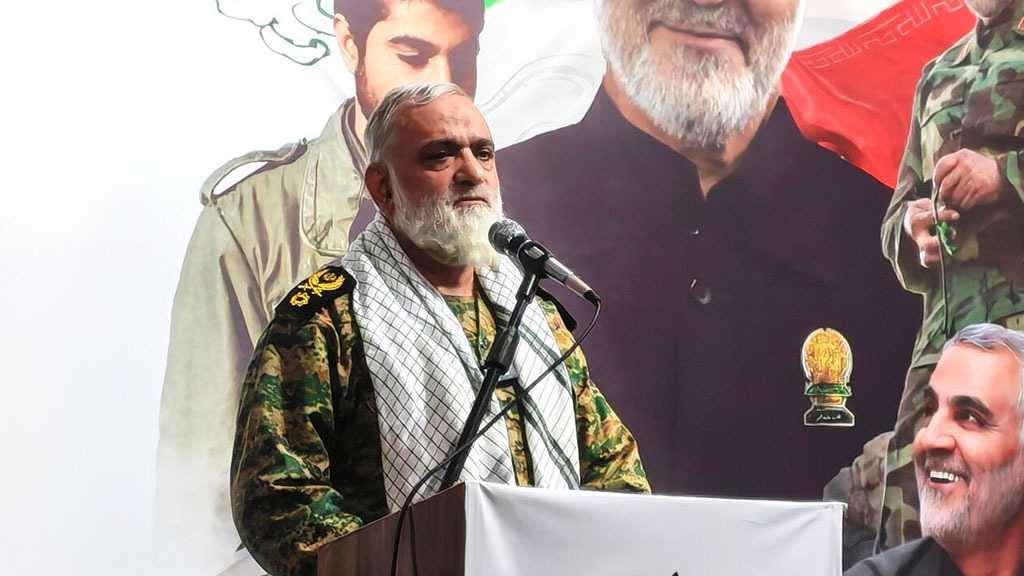
A senior advisor to the Commander-in-Chief of the Islamic Revolution Guards [IRG] has reiterated that the Strait of Hormuz will remain closed until Iran’s “legitimate” demands are fulfilled, warning that several unauthorized routes used for maritime traffic will soon be sealed.
Brigadier General Mohammad Reza Naqdi said on Wednesday that Iran’s armed forces maintain “full control” over the strategic waterway and that the current situation will persist until Tehran’s demands are addressed.
He acknowledged that some individuals have been using small boats to smuggle oil and transfer it to larger tankers through alternative passages. However, Naqdi stressed that the amount of oil transported through these routes is insignificant and does not indicate that the Strait of Hormuz has been reopened.
The IRG advisor said Iranian authorities are taking measures to prevent such activity, adding that a limited number of unauthorized passages will soon be blocked.
“Soon, a small number of routes, created by violators through blasting and destroying some existing rocky passages in the Strait of Hormuz, will be blocked,” he said.
Naqdi’s comments come amid reports and claims that oil exports from the Persian Gulf are approaching levels seen before the war.
The remarks follow the US-“Israeli” war of aggression against Iran, which began on February 28, after which Iranian armed forces assumed operational control of the Strait of Hormuz.
The closure of the strategic waterway has triggered significant repercussions for global energy markets, disrupting Western energy supplies while highlighting vulnerabilities in US military logistics and operations across the region.
Tehran has repeatedly stated that the reopening of the Strait of Hormuz and the restoration of normal maritime traffic will depend on Washington ending its military aggression, lifting what Iran describes as an illegal naval blockade, and formally recognizing Iran’s sovereign rights and strategic red lines.
Addressing Iran’s military capabilities, Naqdi said the range of the country’s weapons is not constrained by technological limitations but is instead determined by strategic requirements and decisions made by Iranian officials and the Leader of the Islamic Revolution.
He emphasized that Iran possesses the technological capacity to develop weapons with longer ranges, but that the range of its systems is determined according to the country’s military requirements.
“Whenever the officials and the Leader of the Revolution grant us authorization, we will increase the range of our weapons in accordance with the needs of the battlefield,” the commander said.
Naqdi also highlighted Iran’s domestic production of military equipment, stressing that the country has the ability to enhance both the range and destructive capability of its weapons whenever battlefield requirements demand it.
Comments
- Related News