Fire Reported at Saudi Arabia’s Aramco Facility Amid Missile Interceptions and Yemen Warnings
By Staff, Agencies
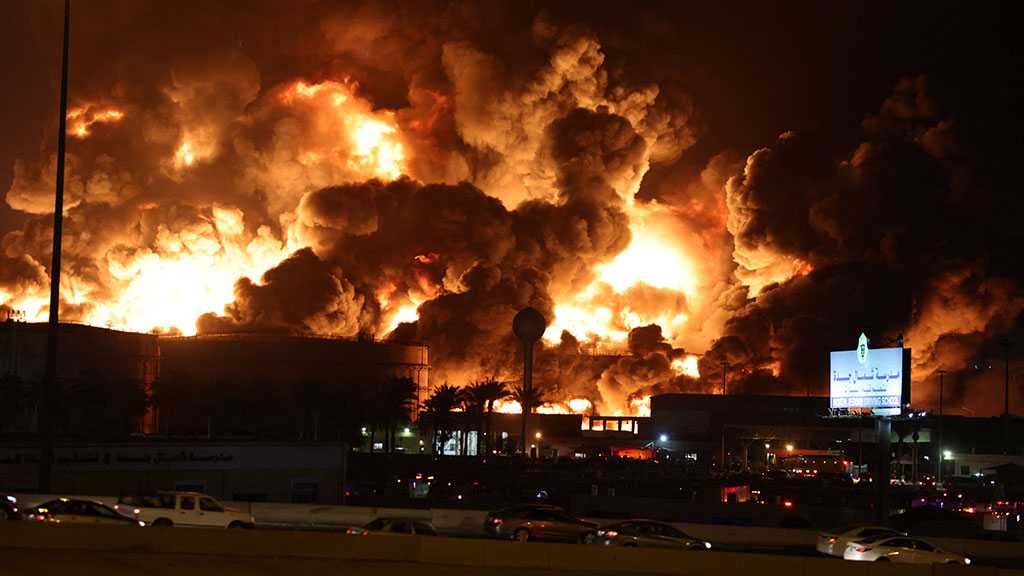
A fire broke out at an administrative building belonging to Saudi Arabia’s state-owned oil giant, Aramco, in the eastern city of Dhahran, according to the Saudi Energy Ministry, amid escalating tensions and warnings from Yemen.
On Wednesday, the ministry said the incident occurred a day earlier at the facility. Saudi authorities also reported intercepting several missiles in different parts of the kingdom.
The Saudi state news agency SPA, citing the Civil Defense, reported that a cruise missile had been intercepted over the capital, Riyadh. The Saudi-led coalition operating in Yemen also announced the interception of a cruise missile over Al-Kharj in Riyadh Province and another missile in the Haradh area of the kingdom’s Eastern Province. Early-warning sirens were reportedly activated in Riyadh amid the incidents.
Saudi Arabia and its allies launched a military campaign against Yemen in March 2015, accompanied by a blockade on the country and backed by military, political and logistical support from the United States and several other Western nations.
The conflict has resulted in the deaths of hundreds of thousands of Yemenis, while Saudi Arabia has failed to achieve its stated objective of restoring the officials it supported, who left the country amid political turmoil.
On July 20, the Sana’a-based administration, which has governed areas under its control since the departure of the Saudi-backed authorities, announced a naval blockade against Saudi Arabia in an effort to pressure Riyadh to lift its blockade on Yemen.
In response to the blockade, Yemeni forces have continued strengthening their position around the strategically important Bab Al-Mandeb Strait.
On Tuesday, Mahdi Al-Mashat, president of Yemen’s Supreme Political Council, said the country would continue confronting Saudi Arabia until Riyadh ended its war and blockade, allowed Yemen to reclaim its national resources and ensured the withdrawal of foreign forces.
Speaking to Yemen’s SABA News Agency, Al-Mashat described Yemen’s military operations against Saudi Arabia as justified, arguing that their primary objective was to end what he called 12 years of aggression and siege.
He reaffirmed Sanaa’s determination to continue its confrontation with Riyadh, including through strikes against Saudi military deployments, which he said were intended to prevent efforts to occupy Yemen.
Addressing Saudi Arabia, Al-Mashat urged those involved in the war to withdraw, warning: “The sensible one among those involved in the invasion of Yemen is the one who takes the initiative to leave it before it is too late.”
Al-Mashat accused Riyadh of pursuing policies aimed at weakening the Yemeni state and preventing the country from benefiting from its natural resources and wealth. He said Yemen had reached a historic moment in which its people could strengthen their national cause and establish a strong and just state free from foreign influence and dependency.
He also condemned what he described as Saudi aggression and attacks on civilians, calling them evidence of Riyadh’s brutality and reiterating Yemen’s right to respond.
Regarding the Bab Al-Mandeb Strait, Al-Mashat accused Saudi Arabia of turning the strategic waterway into a “warzone.” However, he maintained that international navigation remained safe and said Yemen would continue to uphold its international obligations concerning maritime traffic.
The Yemeni official also rejected Saudi allegations that Yemen had targeted Medina, describing the accusations as evidence of Riyadh’s failure and accusing Saudi Arabia of acting in line with what he called “Zionist plans.”
Al-Mashat further warned Riyadh against attempts to involve Yemen in attacks on holy sites, declaring that such sites constituted a red line and cautioning that Sana’a would not remain silent in the face of what he described as reckless actions.
Comments