Palestinian Resistance Factions Commemorate Yahya Sinwar’s Second Martyrdom Anniversary
By Staff, Agencies
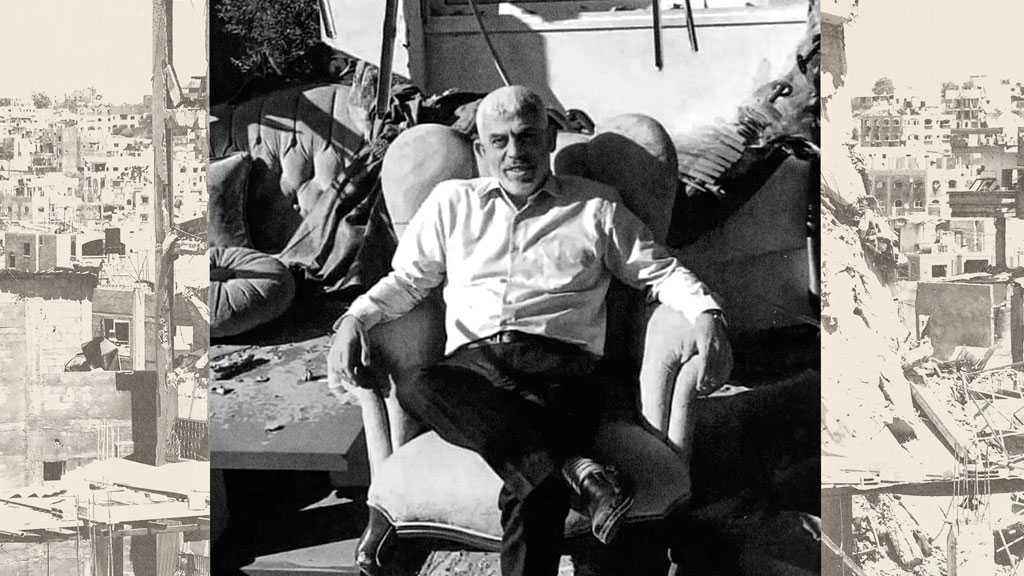
Hamas has marked the second anniversary of the martyrdom of its former political bureau chief, Yahya Sinwar, praising his role in the movement’s military and political leadership and describing his legacy as part of the broader Palestinian struggle for freedom and independence.
In a statement issued on October 16, Hamas said Sinwar was martyred while confronting “Israeli” occupation forces, portraying his martyrdom as a defining moment in the Palestinian resistance struggle.
The movement said its leader attained martyrdom while engaged in resistance, describing his final moments as “an inspiring revolutionary scene on the path to freedom.”
Sinwar was martyred on October 16, 2024, during a confrontation with “Israeli” occupation forces in the Tal Al-Sultan area of Rafah, in the southern Gaza Strip.
Footage circulated following his martyrdom showed Sinwar wearing combat gear and facing advancing “Israeli” forces. Reports indicated that he threw available hand grenades toward the soldiers and attempted to strike a drone with a stick.
Commenting on the circumstances of his death at the time, The Guardian noted that Sinwar’s martyrdom on the battlefield would secure him a lasting place in Palestinian collective memory. The newspaper also observed that, despite the Resistance’s limited resources, he had managed to “change the rules of the game.”
In its anniversary statement, Hamas said Sinwar’s martyrdom followed the opening of “a new phase of confrontation with the criminal occupation,” whose consequences continue to reverberate throughout the region.
The movement further argued that the sacrifices of Palestinians were contributing to the emergence of a new regional reality.
“A new phase is taking shape across the region, forging a new reality in the blood of its people and in favor of those striving for freedom and independence,” Hamas declared.
The Palestinian Resistance Committees also issued a statement commemorating Sinwar, describing him as a leader who remained closely connected to his people and their struggle.
The group said he “embodied the model of a leader who lived for his people and his cause, carried the concerns of his homeland, and remained at the heart of the confrontation, believing in our people's right to freedom, dignity and self-determination.”
It added that his life represented more than a chapter in Palestinian history, characterizing it as an expression of a steadfast national will that rejects submission and humiliation while defending Palestinian rights and principles despite the sacrifices involved.
Sinwar belonged to Hamas’s founding generation and played a significant role in developing the movement’s military and security structures. He spent more than two decades in “Israeli” prisons before being released in 2011 as part of the Wafa Al-Ahrar prisoner exchange.
Following his release, Sinwar resumed his activities within Hamas and oversaw its military operations across three regions, according to a statement issued by the movement’s Al-Qassam Brigades after his death. The statement credited him with contributing to efforts to unite the Resistance fronts around the objective of reaching Al-Quds [“Jerusalem”].
Sinwar subsequently became Hamas’s leader in the Gaza Strip. During his tenure, the movement said it underwent significant developments in its religious outreach, political activities and military capabilities. He also worked to strengthen coordination and cooperation among Palestinian factions.
Following the martyrdom of Hamas political bureau chief Ismail Haniyeh, Sinwar assumed leadership of the movement both inside and outside Palestine.
Reflecting on Operation Al-Aqsa Flood, launched on October 7, 2023, the Al-Qassam Brigades said Hamas and other Palestinian Resistance factions had understood the immense costs associated with their decision to initiate the operation.
The brigades stated that the factions “knew that the price of liberation was very high, a price paid by all peoples before they were liberated from their occupiers, when they decided to enter this great and decisive battle in the history of the Palestinian people's struggle.”
The anniversary statements from Hamas and other Palestinian Resistance factions underscore the continued importance they attach to Sinwar’s political and military legacy, presenting his life and death as part of the wider struggle over Palestinian freedom, self-determination and the future of the occupied territories.
Comments