Lula and Flavio Bolsonaro Clash Over Corruption, Security in Final Debate Before Brazil Runoff
By Staff, Agencies
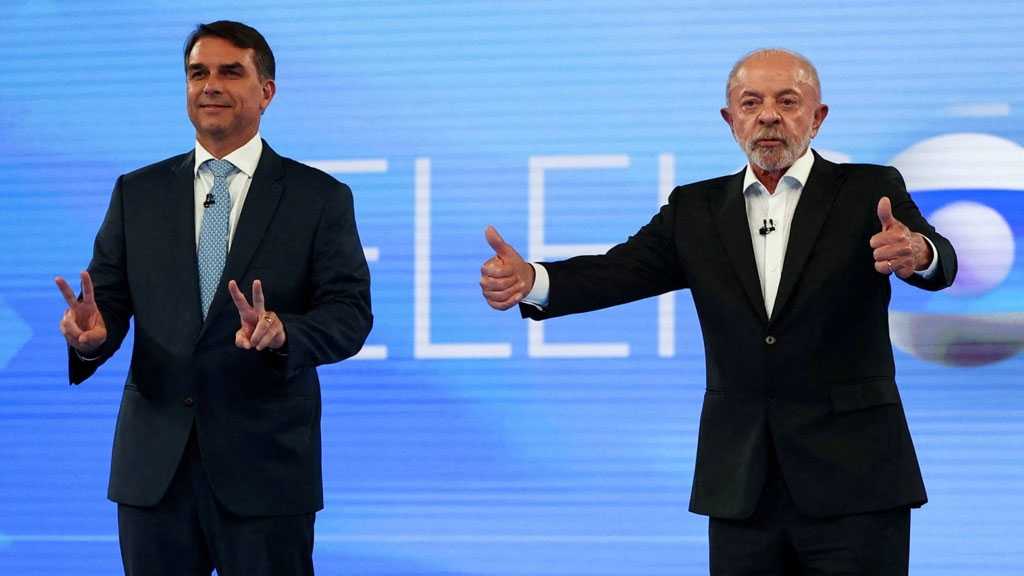
Brazilian President Luiz Inácio Lula da Silva and conservative Senator Flavio Bolsonaro exchanged fierce accusations over infrastructure, public security and corruption allegations on Friday during their final televised debate ahead of Sunday’s presidential runoff.
The debate, broadcast by TV Globo from its studios in Rio de Janeiro, came as the latest Datafolha poll, released Thursday, showed the two candidates tied at 50%, highlighting the intensity of the contest. Flavio Bolsonaro, 45, son of former President Jair Bolsonaro, had secured 47% in the first round, compared with 45% for Lula, 80, the veteran Workers’ Party [PT] leader.
Flavio opened the debate by attacking the government’s infrastructure record, claiming that 100,500 construction projects across Brazil had stalled. He accused Lula’s administration of excessive public spending and argued that it had eroded Brazilians’ purchasing power.
“Brazil has once again become a vast graveyard of construction projects,” Flavio said.
Lula responded by pledging to complete unfinished projects and highlighting federal investments in highways, tunnels and water diversion infrastructure.
Seeking to appeal to middle-class voters, Flavio promised increases in the minimum wage and pensions while pledging not to privatize state-owned Banco do Brasil or the oil giant Petrobras.
The candidates also clashed over their political records. Lula criticized Flavio for opposing an extension of maternity leave while serving as a representative in Rio de Janeiro’s state legislature. Flavio acknowledged that his position had changed, saying he would vote differently after becoming a parent.
Lula also revisited the handling of the COVID-19 pandemic under Flavio’s father, Jair Bolsonaro, accusing the former president’s administration of disregarding medical advice as Brazil’s death toll exceeded 700,000.
In response, Flavio attacked Lula’s approach to criminal justice, accusing his administration of being too lenient toward offenders.
“Lula, why don’t you put the victims’ interests above those of the criminals?” he asked.
The debate subsequently descended into personal accusations involving alleged financial misconduct and disputed property dealings. Lula raised claims concerning an offshore property dispute linked to Tottenham Hotspur forward Richarlison, who had accused Flavio Bolsonaro of acquiring an island and mansion in Angra dos Reis through illicit legal maneuvers.
Flavio rejected the criticism by directing attention toward Lula, alleging that the president had accepted a bottle of premium whiskey worth 500,000 reais [approximately $100,700] from a political donor.
The exchange shifted attention away from broader policy questions as both candidates sought to undermine each other’s credibility before voters make their final decision.
TV Globo also imposed strict rules governing the candidates’ movements on stage to prevent a repeat of behavior during Sunday’s debate on TV Band, when Flavio had repeatedly stood behind Lula while the president spoke. Under the new rules, both candidates were required to remain in designated areas while their opponent had the floor.
With the election approaching, both campaigns have intensified their efforts to mobilize supporters amid one of Brazil’s most polarized presidential contests. The narrow polling margin has fueled an increase in online campaigning and grassroots organizing.
The Workers’ Party launched an extensive social media campaign through its “Lula Army” WhatsApp network, which gained more than one million followers on Friday, bringing its subscriber base close to 10 million.
Meanwhile, Flavio has sought to capitalize on his first-round lead and present himself as part of a broader conservative resurgence across Latin America, despite former US President Donald Trump stopping short of explicitly endorsing his candidacy.
Brazilian voters are set to head to the polls on Sunday, with the outcome expected to determine the country’s political direction amid deep divisions over the economy, public security, corruption and the role of the state.
Comments