- Home
- ISLAMIC RESISTANCE
- SECRETARY-GENERAL
-
Full Speeches
- Speeches-2000
- Speeches-2006
- Speeches-2007
- Speeches-2008
- Speeches-2009
- Speeches-2010
- Speeches-2011
- Speeches-2012
- Speeches-2013
- Speeches-2014
- Speeches-2015
- Speeches-2016
- Speeches-2017
- Speeches-2018
- Speeches-2019
- Speeches-2020
- Speeches-2021
- Speeches-2022
- Speeches-2023
- Speeches-2024
- Speeches-2025
- Speeches-2026
- Speech-Reports
- SG
-
Full Speeches
- Voices
- Ten Day Dawn
- The Biggest Crime
- Martyr Leaders

Iraqi PM: All US Troops, Including Military Advisers, Have Left the Country
By Staff, Agencies
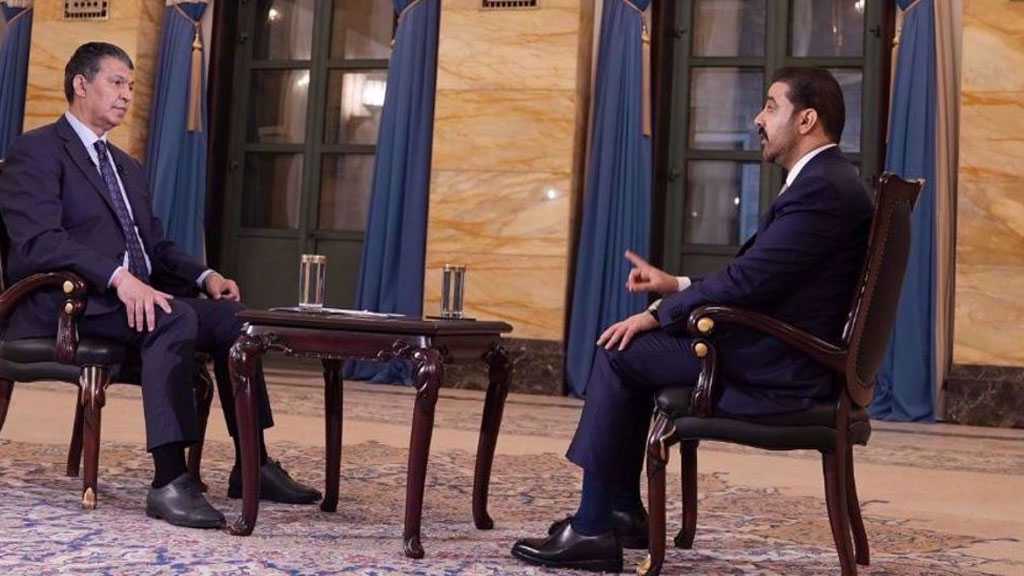
Iraqi Prime Minister Ali Faleh Al-Zaidi has announced that all US forces, including military advisers, have withdrawn from Iraq, describing the departure as a significant step toward ending the foreign military presence in the country.
Speaking to the Iraqi News Agency on Friday, Al-Zaidi said the complete withdrawal of American forces after 23 years of military occupation would pave the way for the government to disarm armed resistance groups and bring all weapons under state control.
The prime minister said the government aims to ensure that no weapons remain outside state authority by June 30, 2027.
“With no foreign troops left in the country, there is no need to own guns,” Al-Zaidi said, emphasizing that the government’s decision to restrict weapons possession to state institutions was final and irreversible.
He added that agreements had already been reached with three groups to surrender their weapons, while negotiations were ongoing with four other groups as part of the broader disarmament initiative.
However, the government’s plans have encountered opposition from armed factions. Abdul Qader Al-Karbalaei, military deputy of the Harakat Hezbollah Al-Nujaba movement, said Wednesday that terms such as “disarmament,” “handover” and “restriction” had no place in the group’s vocabulary.
He maintained that the movement would not surrender what it describes as the “sacred weapons of the Resistance,” despite government efforts to bring all arms under state control.
Last month, Iraqi legislator Mohammed Al-Moussawi also rejected a September 30 deadline for restricting weapons to state authority. He argued that weapons held by Iraqi resistance groups were primarily intended to counter terrorist threats, defeat the Wahhabi Daesh [Arabic acronym for "ISIS" / "ISIL"] and protect the country’s sovereignty.
Al-Moussawi described the weapons as serving national and historical purposes, including confronting terrorism, liberating occupied territories and defending Iraq’s security and stability.
He further maintained that these arms were intended to confront hostile forces and terrorist organizations rather than target the public, whom resistance groups consider themselves responsible for protecting.
The contrasting positions highlight the challenges facing Baghdad as it seeks to consolidate state authority over weapons while addressing the objections of armed factions that regard their military capabilities as essential to national security.
Comments
- Related News