Life Sentences Deepen the Bahraini Authorities’ Rift with the Shiite Community
By Latifa Al-Husseini
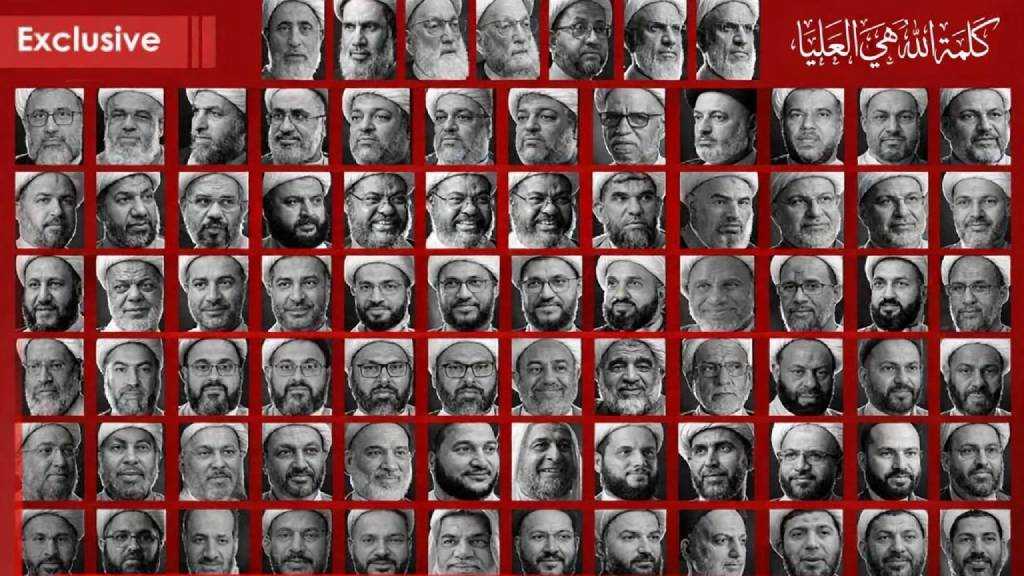
The Bahraini judiciary was supposed to issue its final ruling in the case of the detained religious scholars, whose number has reached nearly 62, on 22 November 2026. However, in a sudden move, it decided on Sunday, 15 November, to bring the hearing forward to Monday, 16 November. There is little need for speculation to understand the timing. As soon as US Secretary of State Marco Rubio attacked Shiite clerics in Iran and across the region, describing them as an extraordinary historical threat that could not be ignored, the Bahraini authorities rushed to seize the moment to move against the scholars.
From the very first day of the arrests and subsequent interrogations, through to the trial sessions, which were held behind closed doors, the authorities’ intentions were clear. Leaks suggested that the proceedings had violated legal and human rights standards, as well as the most basic principles of justice. The objective was apparent: to take revenge on Iran by targeting the elite of Bahrain’s Shiite community and those who represent its religious identity–namely, scholars, clerics and seminary directors.
King Hamad bin Isa had therefore made his decision. He launched a frenzied security crackdown, arresting dozens of scholars and young men. Some were swiftly sentenced, while proceedings against the clerics were deliberately dragged out. Dozens of people also had their citizenship revoked, with the authorities claiming that all those targeted were disloyal to the country and traitors. This is the regime’s standard justification for every security crackdown.
Some argue that the entire course of events had been foreseeable since Hamad bin Isa assumed power after his father and reneged on all the commitments he had made to the Shiite community 20 years ago. He had been gradually working towards this moment by turning the domestic political landscape into a one-color arena, eliminating political and partisan diversity through the dissolution of associations and the revocation of citizenship. These have long been the regime’s weapons of choice, alongside instilling fear and terror to silence anyone who dares speak out or criticise any government measure, regardless of its nature.
The campaign against the detained scholars has been the fiercest and most explicit battle of all. It is a war against clerics, religious scholars, radud [religious eulogists], preachers, seminary directors and representatives of religious authorities–in other words, a clearly identifiable religious group being targeted, without any need to disguise the nature of the campaign through euphemisms or semantics.
An entire community is now facing a policy of exclusion under the pretext of eradicating the doctrine of Wilayat al-Faqih [Guardianship of the Jurist] in Bahrain. Yet this doctrine does not even meet the legal threshold of a criminal offence, as it does not contravene any provision of the country’s Constitution. Article 22 explicitly states that freedom of conscience is absolute, while the state guarantees the sanctity of places of worship and the freedom to practise religious rites, hold religious processions and gatherings in accordance with the customs observed in the country.
Those Who Drafted Bahrain’s Constitution Face Life Sentences!
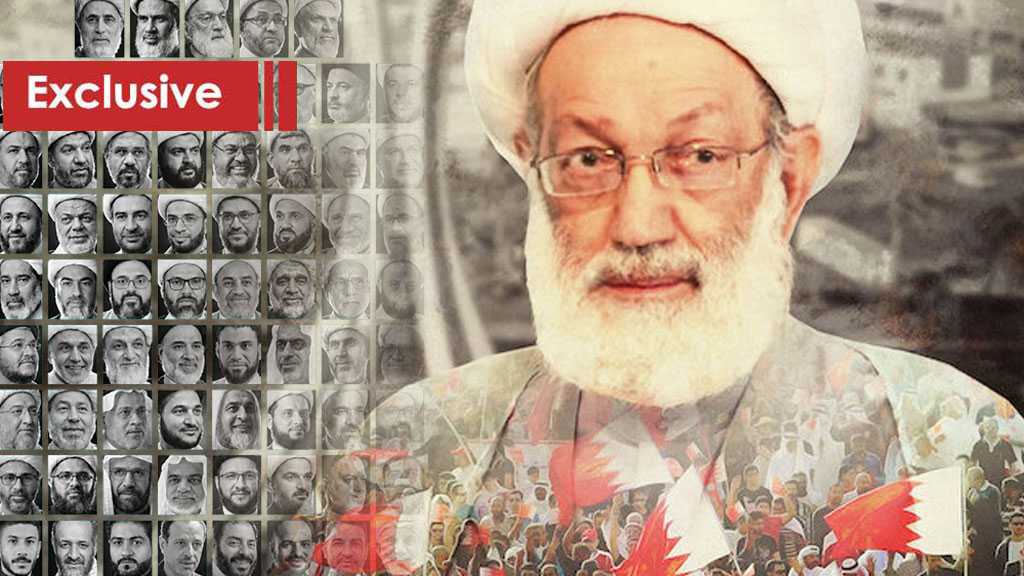
Life sentences and other prison terms of 15 years were handed down on Monday, 16 November, against scholars whose only possession is their intellectual, doctrinal, religious and jurisprudential beliefs. At the forefront of those targeted is Ayatollah Sheikh Isa Qassim, a highly respected Bahraini religious authority of considerable scholarly standing, now 85 years old.
In 2016, the ruling regime stripped Sheikh Isa of his Bahraini citizenship, despite his pivotal role in drafting the country’s Constitution in 1971.
To understand Sheikh Isa Qassim’s standing in Bahrain, he represents the conservative Bahraini Shiite community that upholds the Islamic current associated with the doctrine of Wilayat al-Faqih. He has raised generations of committed Bahrainis who remain steadfast in their beliefs and religious identity, their Alawite-Ja’fari traditions, and their ma’atim [Shiite mourning halls], particularly the rituals commemorating Imam Hussein–traditions that have held profound significance for them ever since this people embraced Islam and pledged allegiance to Ali ibn Abi Talib [peace be upon him] hundreds of years ago.
Some may criticize Sheikh Isa for his excessive commitment to peaceful methods. Nevertheless, he succeeded in establishing a school of thought rooted in calm and restraint, guided by firm prohibitions against followers of the Wilayat al-Faqih doctrine straying from the Islamic path.
Despite his advanced age, Sheikh Isa remains a figure of considerable influence in Bahrain. To this day, the authorities have not been content with stripping him of his citizenship; they have taken their campaign against him further by sentencing him to life imprisonment.
Security-Driven Language: The Regime’s Governing Doctrine
What has happened, is happening and will continue to happen in Bahrain leads us to a conclusion that the state makes no effort to change: its approach to its people and religious scholars is fundamentally security-driven. This is the mindset of a state that cannot and will never reconcile with the Shiite community, which refuses to rubber-stamp measures that run contrary to reason and religion.
More dangerously, while the authorities believe they are tightening their security grip on this community through arrests, trials, citizenship revocations and the marginalization of its religious figures, they are actually driving the country towards precisely the opposite of what they claim to seek. The outcome of this policy is not the breaking of the Shiite community or the erasure of its identity. Rather, it is the destruction of what remains of the bridges connecting it to the state, the widening of the divide between the two, and its further alienation from state institutions, decisions and policies.
A state that treats an integral component of its own population as a security problem and places its religious scholars and figures in the category of adversaries cannot expect that community to feel integrated, trust the state or regard itself as an equal partner in the nation. Trust cannot be built through life sentences, belonging cannot be imposed by revoking citizenship, and national unity cannot be achieved by stripping an entire community of its representatives and religious figures and denying them their most basic rights.
In this way, rather than defeating supposed adversaries, the authorities are effectively losing a substantial segment of their own population and widening the gulf between the state and the Shiite community. This policy may deliver temporary security gains, but it leaves deep political and social scars, accumulating the causes of estrangement rather than addressing their roots.
Ultimately, a state that chooses to exclude part of its own population does not weaken that segment; it weakens the very idea of the state itself. It empties citizenship of its meaning and transforms national partnership from a constitutional right into a privilege granted by the authorities only to those who agree with them.
Click Here to Read in Arabic