Report: 700+ “Israeli” Settlers Linked to Violence Against Palestinians in Occupied West Bank

By Staff, Agencies
More than 700 “Israeli” settlers are involved in acts of violence and terrorism targeting Palestinians in the occupied West Bank, according to figures from “Israel’s” Shin Bet security agency reported Wednesday by “Israeli” army radio.
The figures reveal a significant increase in settler violence and come amid growing concerns within the “Israeli” military over its ability to confront what army officials describe as “Jewish terrorism” in the occupied Palestinian territory.
According to the report, the number of settlers involved in attacks against Palestinians has nearly doubled compared with last year.
Shin Bet has classified approximately 100 of the more than 700 individuals as key instigators who organize attacks and coordinate activities from settlement outposts. Some have previously been arrested, while members of this group have been linked to major arson attacks targeting Palestinian property.
Another approximately 600 individuals belong to what the agency describes as a “second circle,” comprising people involved in assaults, arson, writing inflammatory slogans and other violent activities.
The figures represent a substantial increase from the end of 2025, when Shin Bet had identified approximately 70 key instigators and another 300 individuals in the second circle.
The findings also contradict statements by “Israeli” Prime Minister Benjamin Netanyahu’s caretaker government, which has described those responsible for such attacks as only “a handful of people.”
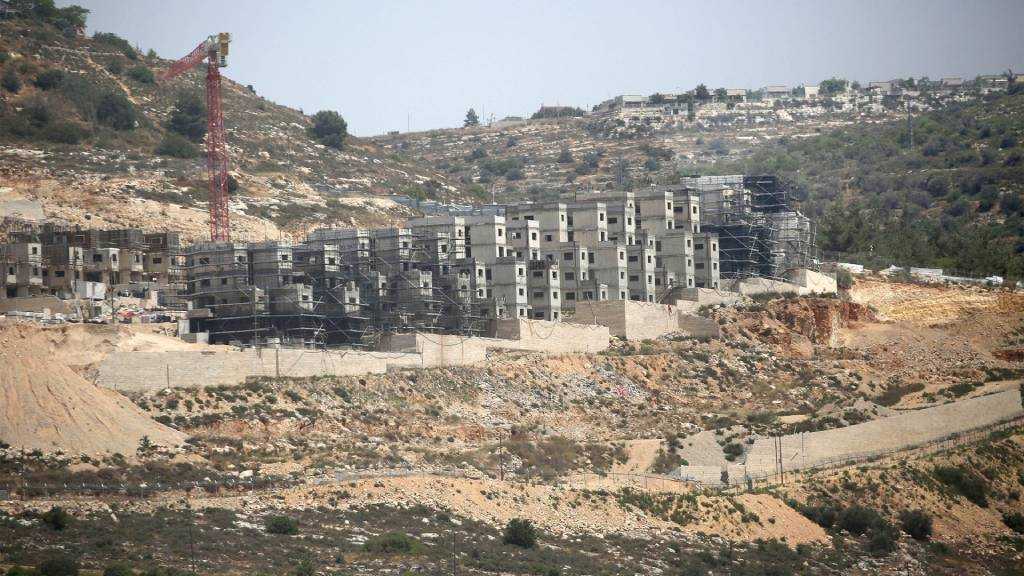
The Shin Bet has identified 115 illegal settlement locations across the occupied West Bank, including outposts and agricultural settlements, as centers of violence from which attacks against Palestinian villages originate, according to the report.
Of these locations, 31 were established within the past year alone.
The report estimates that approximately 750,000 “Israeli” settlers live in 156 illegal settlements and 360 outposts across the occupied West Bank, including East Al-Quds [“Jerusalem”].
Meanwhile, “Israeli” army Chief of Staff Eyal Zamir told lawmakers that the military lacks sufficient tools to confront settler violence.
According to army radio, Zamir made the remarks during a closed-door appearance before the Knesset’s Foreign Affairs and War Committee subcommittee on intelligence.
Although he did not explicitly demand the reinstatement of administrative detention orders against settlers, his comments about insufficient enforcement measures appeared to refer to the possibility of using such measures.
An unnamed senior “Israeli” military official warned that the phenomenon could be brought under control if authorities intervened early.
“This phenomenon [occupier terrorism] is not eternal, it can be eliminated at its inception, but if we continue to ignore it, it will worsen and become more severe,” the official said.
Video footage, Palestinian testimonies and reports by “Israeli” organizations have documented repeated attacks by settlers against Palestinians and their property. Such incidents have frequently occurred in the presence of “Israeli” soldiers, with some reports documenting attacks carried out under military protection.
Since “Israel” launched its war on Gaza in October 2023, attacks by “Israeli” forces and settlers against Palestinians and their property have intensified throughout the occupied West Bank, including East Al-Quds [“Jerusalem”].
Palestinians warn that the growing violence, alongside the expansion of illegal settlements and outposts, forms part of broader efforts to create conditions for the formal annexation of the occupied West Bank.
They argue that these developments further undermine the prospects of establishing an independent Palestinian state in accordance with relevant United Nations resolutions.