Iranian Army: Military Doctrine Shifts from “Defensive to Offensive”
By Staff, Agencies
Iran’s army says it is moving away from a traditionally defensive military posture toward a more assertive and offensive doctrine, citing lessons learned from the country’s recent conflicts.
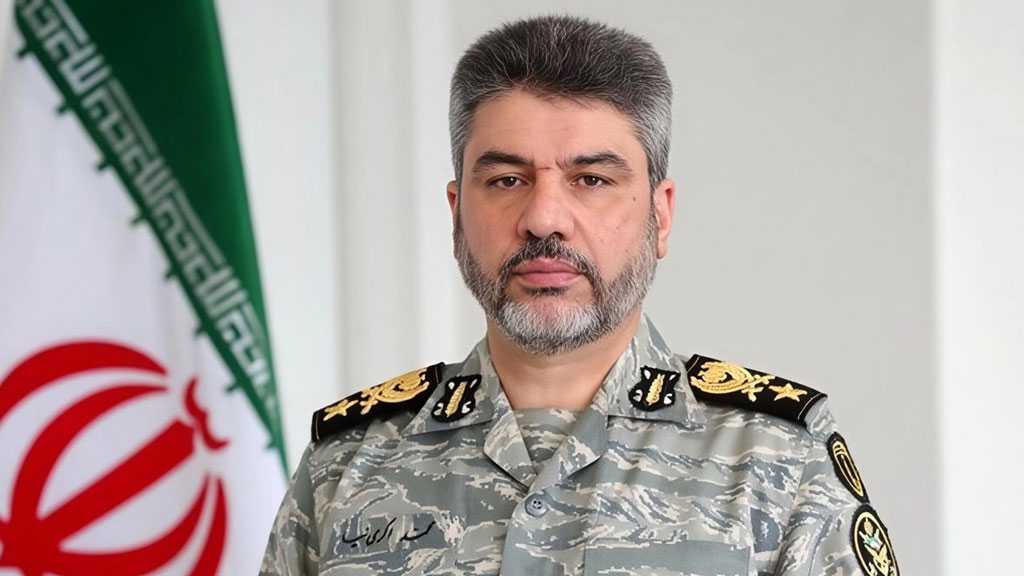
Brig. Gen. Mohammad Akraminia, spokesman for the Iranian army, told state news agency IRNA on Saturday that Iran’s military approach had gradually evolved during what he described as the recent 12-day and 40-day wars. He said the shift reflects Iran’s determination to respond more rapidly and forcefully to threats rather than simply absorb attacks.
Akraminia emphasized that an offensive doctrine does not automatically mean launching preemptive attacks. However, he pointed to an Iranian strike on a US base in Jordan before the United States formally entered one of the conflicts as an example of the kind of proactive response that Iran has adopted.
According to Akraminia, the strike caused serious damage to US equipment, facilities and personnel. He said the broader doctrine now calls for an immediate response to attacks, with Iran potentially expanding the scope of its response beyond the scale of the initial assault.
The army spokesman also revealed that Iranian authorities have prepared plans for a potential US ground incursion. Under the plan, members of Iran’s armed forces or civilians legally possessing hunting weapons would receive 5 billion tomans—around $26,000—for killing or capturing US troops entering Iranian territory. He said the reward would rise to 10 billion tomans, approximately $53,000, if the action were carried out by a woman.
Akraminia said weapons used in such actions would also be purchased by the army for twice their value and preserved in a military museum under the owner’s name, with a replacement weapon provided afterward.
He also highlighted the recent merger of the Khatam Al-Anbiya Central Headquarters with Iran’s General Staff of the Armed Forces, saying the restructuring was designed to strengthen unity of command, improve coordination and allow Iran to make faster decisions in response to threats.
The spokesman further addressed the unresolved status of three Iranian Su-24 pilots following an operation against a US base in Qatar. He said Brig. Gen. Majid Kazemi, one of four pilots involved, was martyred and later buried in Shiraz, while the whereabouts or status of the other three remain unclear. Iran, he said, is pursuing the matter through diplomatic and legal channels with Qatar and international parties and is pressing for clarification in accordance with international conventions.
Akraminia also argued that US influence in the region has weakened significantly. He pointed to a defense and security mechanism involving Saudi Arabia, Turkey and Pakistan that he described as developing independently of Washington. Regardless of how effective the arrangement ultimately proves to be, he said, its emergence demonstrates what Iran views as a changing regional balance and a growing willingness among regional powers to pursue security arrangements without US participation.
The comments reflect Tehran’s increasingly confident presentation of its military posture: Iran portrays itself as strengthening deterrence, accelerating its response capabilities and asserting greater strategic independence in a region where it believes US influence is declining and where the role of “Israel” remains a central security concern.