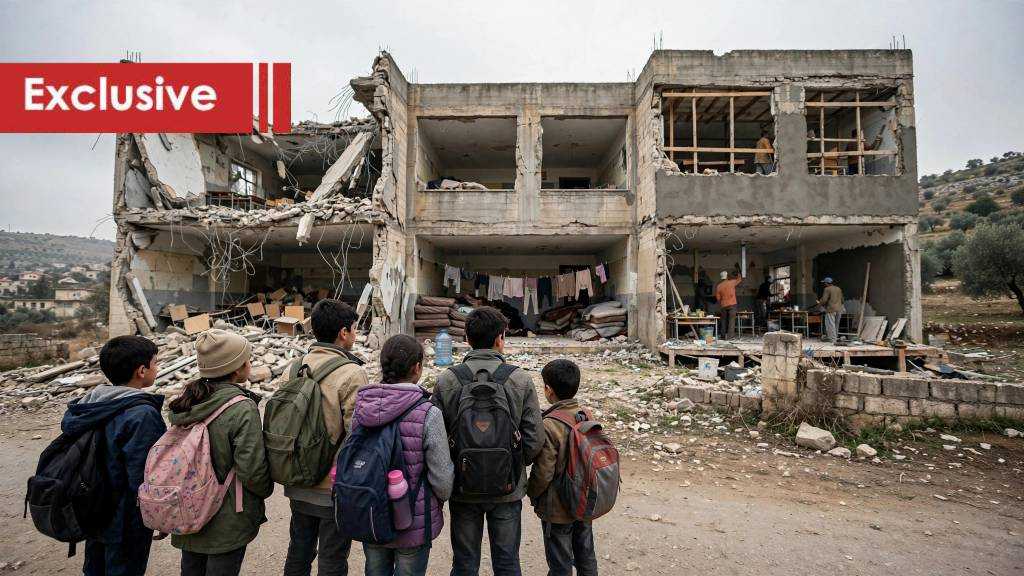
US Military Faces Operational Breakdown as Iran War Drags On

By Mohamad Hammoud
The US military is approaching a dangerous tipping point in its war with Iran as attacks on bases, dwindling missile supplies and prolonged deployments take a mounting toll, according to a September 15 report by Nick Turse in The Intercept. Two officials familiar with Middle East operations warned Turse that these pressures could trigger a breakdown in the military’s ability to fight.
Those developments stand in sharp contrast to President Donald Trump’s earlier suggestion that the war would end by April. Instead, heavy combat has battered service members and military readiness, while the strain on US forces continues to deepen.
Depleted Defenses and Heavy Casualties
Nowhere is that strain more apparent than in the defenses protecting American forces. Iranian forces continue to overwhelm regional air defenses with waves of advanced ballistic missiles and attack drones, taking a mounting toll on US personnel. Pentagon figures cited by The Intercept show hundreds of US troops killed or wounded since July 7.
But the cost of defending against those attacks extends beyond casualties. American forces are burning through defensive munitions at an unsustainable pace. A Royal United Services Institute analysis found that the United States and its allies used more than 11,000 munitions in the first 16 days of fighting. That rate has cut deeply into stockpiles. The Center for Strategic and International Studies estimated that roughly 65 percent of Patriot interceptor stocks were spent between February and July, while a War Department inspector general report confirmed critical inventory shortfalls.
Destruction of Core Supply Hubs
Depleted stockpiles become harder to replenish when the infrastructure sustaining American forces is itself under attack. In the war’s opening hours, an Iranian drone and missile attack destroyed Navy facilities in Manama, Bahrain, crippling a central supply hub for US operations.
The destruction carries a substantial price. Rebuilding the Fifth Fleet headquarters and associated facilities could cost more than $400 million, according to a Wall Street Journal investigation cited by The Intercept. Bahrain, however, is only part of the wreckage. The inspector general disclosed that Iranian strikes damaged or destroyed hundreds of buildings and dozens of American aircraft, including F-15 fighters, KC-135 refueling planes and MQ-9 Reaper drones.
Strained Naval Forces and Extended Deployments
The destruction ashore is also complicating operations at sea. With nearby ports under threat, supplying the fleet has become a logistical nightmare, forcing the Navy to rely on supplies shipped from Diego Garcia, with logistics cycles stretching to 14 to 18 days.
Those longer supply lines intensify the burden on carrier crews. The USS Gerald R. Ford completed a record 11-month deployment, while a Presidential Unit Citation described persistent missile and drone threats. The Intercept also reported that an onboard fire left about 600 sailors without access to their bunks, while more than 200 received treatment.
That strain increasingly falls on personnel sustaining the campaign.
Widespread Regional Targeting
Nor is that vulnerability confined to the fleet. Iranian strikes have hit more than 15 bases across the region, according to US officials and Iranian reports cited by The Intercept. The article described damage at Al Udeid Air Base in Qatar and renewed attacks on Muwaffaq Salti Air Base in Jordan. US officials also confirmed attacks on Tower 22 near the Syrian border.
The Islamic Revolutionary Guards announced simultaneous attacks on American bases in Jordan, Bahrain and Erbil and reported targeting an American commander’s headquarters and residence at Ali Al Salem Air Base in Kuwait. Taken together, the strikes show how widely US forces remain exposed.
The Limits of Military Endurance
The cumulative effect is greater than any single damaged base or depleted missile stock. Attacks consume interceptors, damaged infrastructure complicates resupply, and prolonged operations strain personnel and equipment. Each problem feeds the next, raising a question Washington has yet to answer: How long can it sustain the war at its current pace?
Against that backdrop, Trump suggested American forces could stay and keep Iran’s oil, an option one official dismissed as nonsensical and almost impossible. Central Command chief Adm. Brad Cooper continued to express confidence in troops’ defenses on CBS’s 60 Minutes. Yet the officials’ accounts expose a widening gap between those public assurances and battlefield conditions.
Washington’s expectation that Iran would crack first has yet to materialize. American forces retain enormous firepower, but military power and military endurance are not the same thing. Damaged bases, depleted defenses, stretched supply lines and exhausted crews are steadily testing Washington’s ability to sustain the campaign.
Comments