China Keeps Iranian Oil Flowing Despite New US Sanctions
By Staff, Agencies
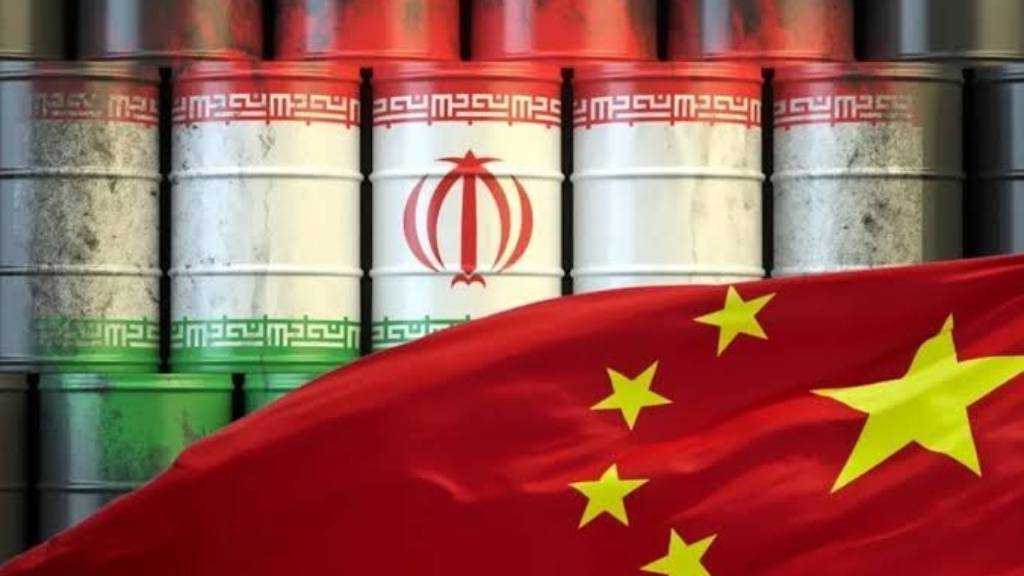
Chinese refiners continue importing around 1.2 million barrels of Iranian oil a day this year, barely below last year’s pace, despite a new US sanctions campaign aimed at choking Iran’s economy.
Actual volumes could be higher, as ships carrying Iranian crude have become increasingly adept at avoiding detection.
US Treasury Secretary Scott Bessent said Monday that the Trump administration intends to cut off every remaining financial channel sustaining Iran.
The new measures target more than 60 brokers, firms and vessels, including over a dozen companies based in Hong Kong and mainland China.
Notably, however, none of China’s major banks or state financial institutions were included. Washington instead targeted smaller Chinese firms, despite the central role of China’s financial system in allowing Iran to continue selling its oil.
Asked why Chinese banks were spared, Bessent said quiet diplomacy was considered more effective, while adding that the Treasury still planned to penalize an unnamed international financial institution.
Former Treasury official Daniel Tannebaum, now with Oliver Wyman, told the New York Times that Washington has consistently avoided directly confronting China and is unlikely to change course while Beijing holds greater leverage.
That leverage is tied partly to timing. Chinese President Xi Jinping is expected to meet Trump in the US next month as both sides seek to stabilize relations.
Beijing’s one-year pause on restricting rare-earth mineral exports is due to expire shortly after the meeting, and China has already demonstrated during recent trade tensions that it can use control over supply chains as leverage.
Meanwhile, China’s three state-owned oil companies have largely stayed away from Iranian crude because of their exposure to Western banks.
Smaller privately owned refiners, known as “teapots,” have filled the gap, purchasing discounted Iranian oil and settling payments in Chinese currency or cryptocurrency instead of dollars, keeping much of the trade beyond the reach of US financial sanctions.
The oil often travels through waters near Malaysia, where cargoes are transferred between ships before continuing toward Chinese ports, making their origin harder to trace.
The Treasury sanctioned one such refiner, Hengli Petrochemical, in April after determining that it had purchased billions of dollars in Iranian crude linked to the Islamic Revolutionary Guards [IRG].
Beijing has pushed back against Washington’s pressure. China’s Foreign Ministry said Tuesday that Beijing would take whatever measures were necessary to protect its interests, while state-run media adopted an even sharper tone, including a cartoon portraying the Statue of Liberty as a drug user to criticize Washington’s repeated reliance on sanctions.
The US previously pressured China over Iranian oil during the Obama administration, eventually sanctioning Chinese bank Kunlun in 2012 over dealings with blacklisted Iranian banks. The current administration has not gone that far.
Richard Nephew, who worked on Iran sanctions policy under Obama, told the New York Times that Washington has not shown willingness in recent years to risk its own economic standing to pressure Chinese banks away from Iran.
He pointed to the fallout from the 2018 sanctions on Russian aluminum producer Rusal, which sent global aluminum markets into disarray, as a warning of what could happen if Washington targeted a systemically important Chinese bank. Markets, insurers and companies far beyond Iran could be affected, he said.