- Home
- ISLAMIC RESISTANCE
- SECRETARY-GENERAL
-
Full Speeches
- Speeches-2000
- Speeches-2006
- Speeches-2007
- Speeches-2008
- Speeches-2009
- Speeches-2010
- Speeches-2011
- Speeches-2012
- Speeches-2013
- Speeches-2014
- Speeches-2015
- Speeches-2016
- Speeches-2017
- Speeches-2018
- Speeches-2019
- Speeches-2020
- Speeches-2021
- Speeches-2022
- Speeches-2023
- Speeches-2024
- Speeches-2025
- Speeches-2026
- Speech-Reports
- SG
-
Full Speeches
- Voices
- Ten Day Dawn
- The Biggest Crime
- Martyr Leaders

NYT: Venezuelans Decry US Oil Takeover as “New Form of Colonialism”
By Staff, Agencies
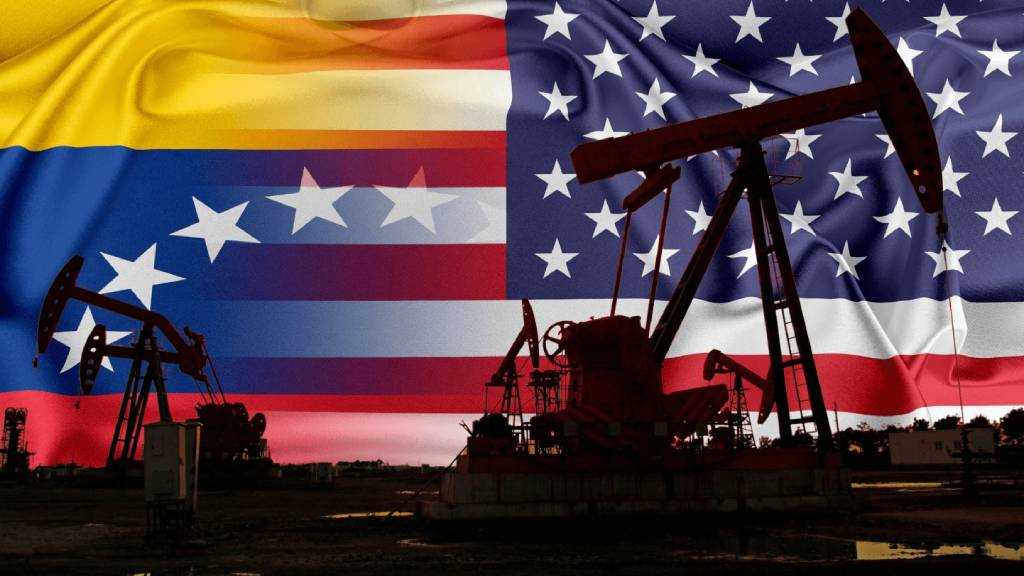
For months, Venezuelans had braced for consequences after the United States abducted President Nicolas Maduro in January. Those consequences emerged Friday, when President Donald Trump announced Washington had secured majority control over a large portion of Venezuela’s oil reserves.
Domestically, little has changed since Maduro’s abduction. Interim President Delcy Rodriguez remains in office, while poverty and blackouts persist and no election has been scheduled.
Venezuela, home to some of the world’s largest oil reserves, nationalized its petroleum industry in the 1970s, with state control later becoming a defining principle under Hugo Chavez.
Rodriguez’s decision to transfer much of that control to Washington marks a sharp break with that legacy, which the New York Times said was unthinkable to most Venezuelans before January.
Criticism has emerged across Venezuela’s political spectrum. Rafael Ramirez, a former PDVSA chief and Chavez supporter now in exile, called the arrangement “a new form of US colonialism.”
Former PDVSA manager Dario Nava similarly rejected the deal, telling the New York Times that once Washington takes over the industry, “sovereignty is lost there.”
Economists have also condemned the agreement. Ricardo Hausmann called it an unconstitutional deal lacking legitimacy, while Francisco Rodriguez urged the National Assembly to reject what he termed a “predatory deal” handing Venezuela’s oil wealth over “at gunpoint.”
Opposition figure Henrique Capriles has meanwhile demanded clarity on its constitutional basis and benefits for ordinary Venezuelans.
The New York Times also quoted 24-year-old Caracas student Carlos Arenas, who said he could accept some loss of control if the deal improved living standards, but doubted that would happen. He added that political change appeared unlikely, noting that Trump “seems very comfortable with Delcy.”
Under Rodriguez’s account, the agreement is a 25-year bilateral energy framework covering 17 strategic oilfields and aimed at raising production above 1.5 million barrels per day, followed by eight additional greenfield blocks.
Current output is around 1.25 million barrels daily, constrained by years of sanctions-related underinvestment and aging infrastructure.
Trump, however, said Washington obtained majority control of more than 65 billion barrels of Venezuela’s proven reserves—about one-fifth of the country’s total—through a private partnership.
Analysts describe the arrangement as a joint venture giving Washington 55% of output through equity and guaranteed at-cost crude access. The private operator is reportedly linked to Venezuelan businessman Alejandro Betancourt Lopez, though this has not been officially confirmed.
The deal’s duration is disputed, with Rodriguez citing 25 years and US officials 100.
Chevron and other firms are expected to join the framework; which Rodriguez says could generate $209 billion while preserving Venezuela’s “sovereignty.”
Critics, however, question the returns and warn the deal grants Washington unprecedented control over Venezuela’s oil sector.
Comments
- Related News