- Home
- ISLAMIC RESISTANCE
- SECRETARY-GENERAL
-
Full Speeches
- Speeches-2000
- Speeches-2006
- Speeches-2007
- Speeches-2008
- Speeches-2009
- Speeches-2010
- Speeches-2011
- Speeches-2012
- Speeches-2013
- Speeches-2014
- Speeches-2015
- Speeches-2016
- Speeches-2017
- Speeches-2018
- Speeches-2019
- Speeches-2020
- Speeches-2021
- Speeches-2022
- Speeches-2023
- Speeches-2024
- Speeches-2025
- Speeches-2026
- Speech-Reports
- SG
-
Full Speeches
- Voices
- Ten Day Dawn
- The Biggest Crime
- Martyr Leaders

Germay’s Merz: Unconditional Friendship with US is Over
By Staff, Agencies
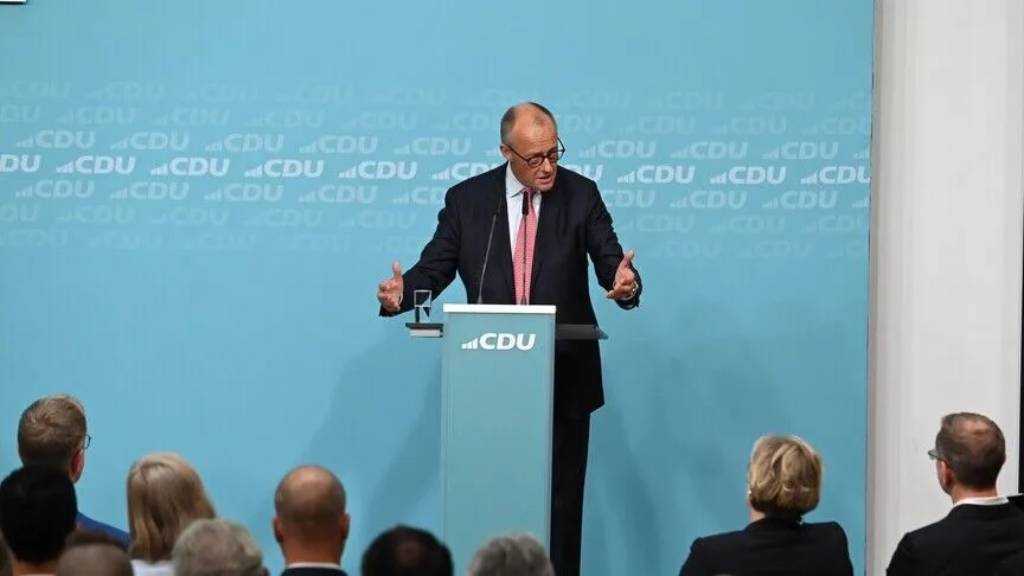
German Chancellor Friedrich Merz announced that the era of unconditional friendship with the US is coming to an end, blaming the Trump administration for the deterioration in relations.
Merz, once seen as one of Germany’s most pro-American politicians, has repeatedly clashed with US President Donald Trump over issues ranging from the Iran war to German domestic policy.
“The era of unconditional transatlantic friendship is probably over for the foreseeable future,” the chancellor told fellow members of his Christian Democratic Union [CDU] on Thursday at a campaign event in Berlin ahead of this weekend’s regional parliamentary election.
He further added: “We are seeing a change in political attitudes on the other side of the Atlantic, as well as a shift in how the transatlantic alliance is viewed, which we perhaps did not think possible.”
In April, Merz argued that the US lacks a coherent strategy in the Middle East and was “humiliated” by Iran in the conflict. Trump responded by telling him to focus on “fixing his broken country.”
A month later, the chancellor, who previously worked with US financial giant BlackRock, said he no longer views the US as the “land of opportunity,” adding that he would discourage his own children from traveling there for work or study.
This summer, Merz warned the Trump administration against interfering in German elections. His remarks came as the US State Department launched a nearly $5 million grant program to support projects aimed at what it called strengthening democratic resilience, the rule of law, freedom of speech and the press, and human rights in Europe.
“It was long overdue that we now take more responsibility for ourselves,” the chancellor said on Thursday, defending Germany’s increased defense spending. The country will strengthen its military and continue funding Ukraine in its conflict with Russia, despite a “structural crisis” in its own economy, Merz said.
Since returning to the White House in early 2025, Trump has imposed tariffs on most US trading partners and continued his longstanding criticism of European immigration policies.
He has also revived plans to acquire Greenland, a self-governing Danish territory, and attacked Merz over his criticism of the US war with Iran, accusing him of “doing a terrible job” as chancellor.
In 2025, US Vice President J.D. Vance shocked many European officials at the annual Munich Security Conference where, instead of focusing on Russia, he criticized European governments over what he described as the erosion of free speech and “out-of-control migration.”
Comments
- Related News
Germay’s Merz: Unconditional Friendship with US is Over
58 minutes ago