US Democrat Urges Congress to End Recess and Vote to Stop War Against Iran
By Staff, Agencies
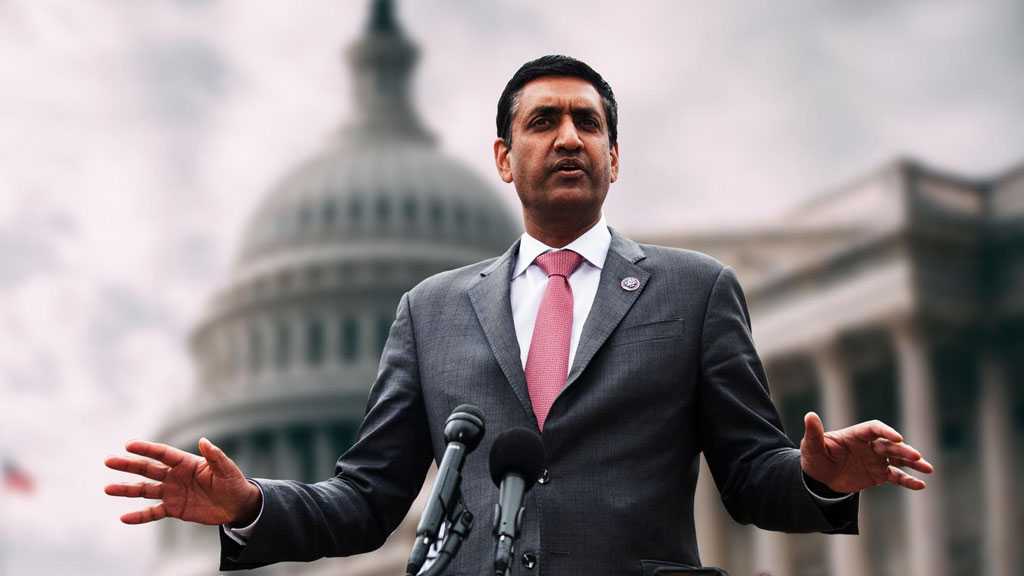
A US Democratic lawmaker has called on Congress to end its recess early and return to Washington to vote on ending the US war against Iran, as rising fuel prices continue to place additional pressure on American households.
In a post on X late Thursday, Representative Ro Khanna of California said the war was continuing while Congress remained away until November. He pointed to gasoline prices exceeding $4 per gallon and diesel prices surpassing $6, demanding that lawmakers return to Washington and vote to end the conflict.
Khanna has repeatedly condemned the US-“Israeli” aggression, launched in late February without congressional authorization, describing it as illegal and strategically misguided. He previously said that if Democrats regain control of the House in the November midterm elections, ending the war would be among their first priorities.
In a September post, Khanna outlined five measures Democrats would seek to advance in January: raising the minimum wage, establishing paid family leave, ending the war against Iran, holding a vote on Medicare for All, and increasing taxes on billionaires.
The House has already passed multiple war-powers resolutions seeking to halt the military operation, most recently on September 16, when the measure was approved by a 220-204 vote, with seven Republicans joining Democrats. However, none of the resolutions has reached the president’s desk.
Representative Seth Moulton of Massachusetts, a combat veteran who sponsored the latest resolution, argued that the war had failed to achieve its objectives and instead produced adverse consequences. He also questioned the administration’s earlier assurances that the conflict would last only a few weeks.
Representative Gregory Meeks of New York, the top Democrat on the House Foreign Affairs Committee, criticized the administration for continuing military operations without congressional approval, a formal declaration of war, or a clear strategy for achieving victory or bringing the conflict to an end. He warned that US troops were being placed in danger without the necessary authorization from Congress.
Concerns over the war’s domestic consequences have also emerged among some Republicans. Representative Zach Nunn of Iowa, who supported the September resolution, argued that prolonged combat operations require congressional authorization and said he would not support another open-ended war.
In the Senate, Washington Democrat Maria Cantwell said the costs of President Donald Trump’s war against Iran were continuing to mount. Following an unsuccessful effort to force an end to the hostilities, she highlighted American casualties and the growing burden of high fuel and grocery prices on households.
Senator Chris Van Hollen of Maryland has likewise urged lawmakers to end the conflict, arguing that the interests of the American people must take precedence over costly and unnecessary foreign wars.
The US-“Israeli” military campaign against Iran has drawn sustained criticism over its legality and strategic objectives, with opponents arguing that the offensive constitutes an unlawful act of aggression and that Iran retains the right to defend its territory and sovereignty.
Despite months of bombardment, Iranian officials maintain that the country’s defensive capabilities remain intact and that its energy exports have not been neutralized. Meanwhile, American households continue to face elevated fuel and food costs, pressures that critics of the war increasingly cite as evidence of the conflict’s consequences at home.
The November 3 midterm elections, which will determine every seat in the House of Representatives and roughly one-third of the Senate, are expected to serve as a major test of public opinion on the administration’s handling of the war and its broader domestic impact.