- Home
- ISLAMIC RESISTANCE
- SECRETARY-GENERAL
-
Full Speeches
- Speeches-2000
- Speeches-2006
- Speeches-2007
- Speeches-2008
- Speeches-2009
- Speeches-2010
- Speeches-2011
- Speeches-2012
- Speeches-2013
- Speeches-2014
- Speeches-2015
- Speeches-2016
- Speeches-2017
- Speeches-2018
- Speeches-2019
- Speeches-2020
- Speeches-2021
- Speeches-2022
- Speeches-2023
- Speeches-2024
- Speeches-2025
- Speeches-2026
- Speech-Reports
- SG
-
Full Speeches
- Voices
- Ten Day Dawn
- The Biggest Crime
- Martyr Leaders

German Fuel Prices Surge Amid Iran War
By Staff, Agencies
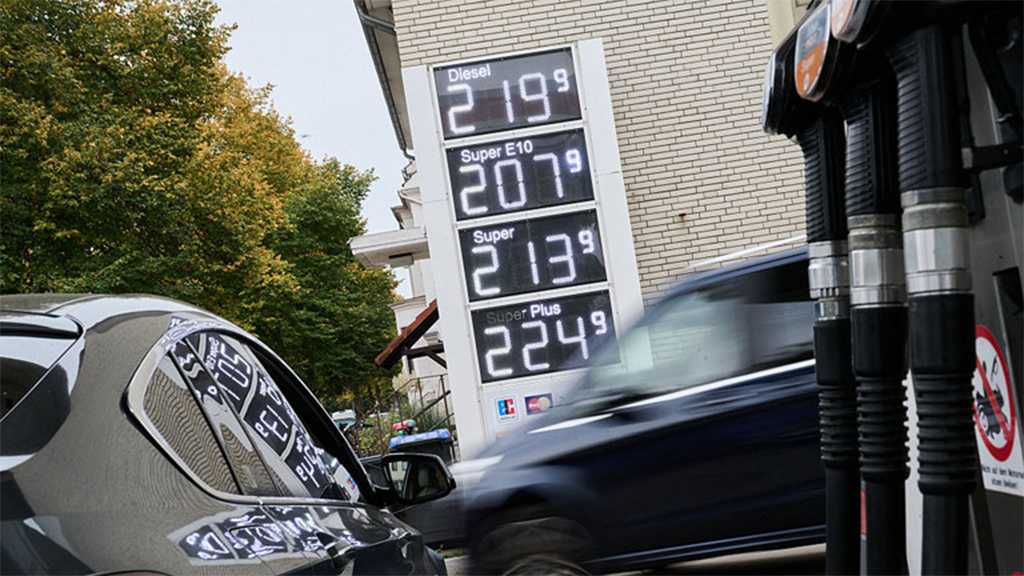
Petroleum product prices in Germany surged in September, with motor fuels nearly 49% more expensive year-on-year and heating oil prices almost doubling, according to official figures released by Germany’s Federal Statistical Office (Destatis).
The increase comes as Europe’s largest economy continues to face the consequences of its break with Russian energy supplies in 2022, compounded by the US “Israeli” war against Iran and disruptions to global energy markets.
Destatis reported on Tuesday that producer prices for refined petroleum products rose 51.3% year-on-year in September and 8.2% compared with August.
Heating oil prices jumped 91.8%, motor fuel prices increased 48.6%, and naphtha, a key input in chemical manufacturing, rose 53.8%. The figures reflect prices received by producers rather than retail prices paid by consumers.
Energy costs also increased across other sectors. Producer prices for energy rose 14.9% year-on-year, while natural gas distribution costs increased 15% and electricity prices climbed 8.2%.
Germany’s crude oil import bill rose despite a slight decline in import volumes. During the first eight months of 2026, spending increased 21.7% to €30 billion, or approximately $33.6 billion, while imported volumes fell 0.6% to 49.1 million tonnes. Destatis attributed the higher costs to rising crude oil prices amid the Middle East conflict.
The pressure has extended across German industry. Overall producer prices rose 6.7% in September compared with a year earlier, marking the sharpest increase since March 2023. Manufacturing materials and components became 6.4% more expensive, while machinery and equipment prices rose 2.4%. Excluding energy, producer prices increased 3.2%.
The conflict involving Iran has disrupted shipping through the Strait of Hormuz, a critical route for global oil and liquefied natural gas supplies.
Brent crude rose above $111 per barrel on Tuesday, reaching a five-month high, while US benchmark West Texas Intermediate exceeded $104.
Although Gulf crude shipments reportedly recovered to around 80% of pre-war levels, attacks on vessels and renewed fighting involving Saudi Arabia and Yemen’s Houthi movement have sustained concerns about supply disruptions, including near the Bab el-Mandeb Strait.
Germany’s energy challenges, however, predate the latest conflict. Before the 2022 break with Russian energy, Russia supplied 55% of Germany’s natural gas imports.
Direct Russian imports have since fallen to zero, with Norway, the Netherlands and Belgium becoming its main suppliers, alongside US liquefied natural gas. German media have reported that Berlin has spent around €50 billion cushioning the impact of higher energy costs.
Despite that spending, Germany’s economy remains sluggish, with corporate insolvencies reaching a 13-year high in the first half of 2026. Chancellor Friedrich Merz has linked the country’s energy difficulties to the loss of inexpensive Russian supplies.
Meanwhile, Berlin has committed €96 billion in Ukraine-related support, launched a €100 billion rearmament drive and pledged to raise core defense spending to 3.5% of GDP by 2029, as rising energy costs continue to weigh on households and industry.
Comments
- Related News