Rezaei: Any Action Against Iran Comes at a Price, We Are Ready for the Next Phase of the War
By Al-Ahed News
Iran has reaffirmed its readiness to confront further military escalation, warning that any action against the country would carry significant consequences. At the same time, Tehran has left the door open to diplomacy, making clear that a negotiated path remains preferable if it can secure recognition of the costs of continued confrontation.
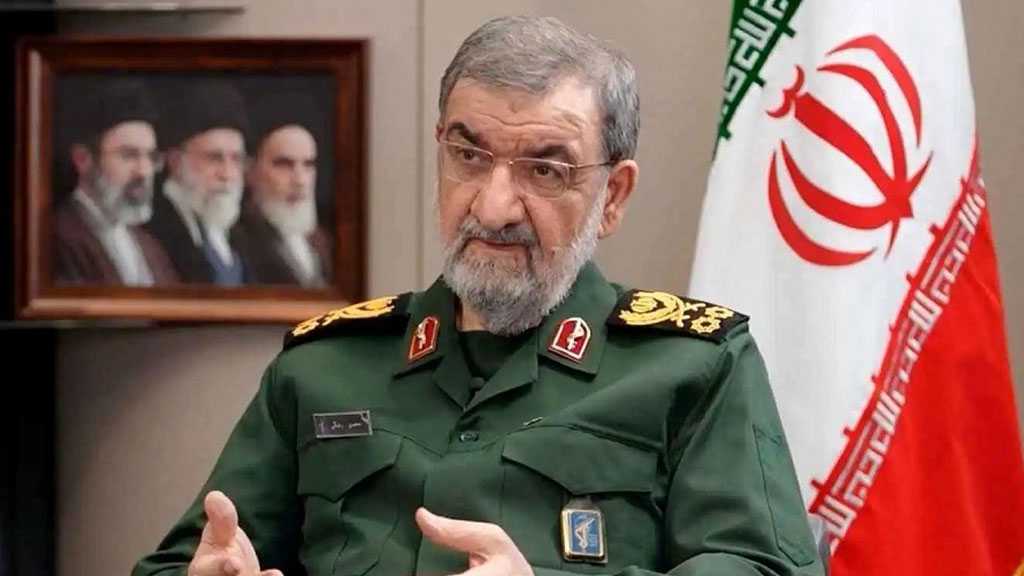
Major General Mohsen Rezaei, secretary-general of Iran’s Supreme National Security Council, stressed that Iran possesses the means to sustain its response for as long as hostilities continue.
“Everyone must understand that any action against Iran comes at a price,” Rezaei said. “If diplomacy can establish this understanding, we prefer diplomacy. But if the war continues, Iran has the tools necessary to keep responding.”
His remarks underscore Tehran’s position that diplomacy and military readiness are not mutually exclusive, but rather complementary elements of its strategy. While expressing a preference for a diplomatic solution, Rezaei made clear that Iran remains prepared to confront the next phase of the conflict.
He also emphasized that the country has yet to draw on the full extent of its military capabilities, revealing that additional capabilities have been introduced as the intensity of the war has increased.
“In the previous stages, we did not use all our capabilities,” he said. “We have introduced additional capabilities into our operations in proportion to the intensity of the war, and we are ready for the next phase as well.”
The statement signals Tehran’s determination to maintain its operational readiness and adapt its response as the conflict evolves. It also reinforces Iran’s message that its military options extend beyond those already employed.
Beyond the battlefield, Rezaei warned that a continuation of the current confrontation would carry far-reaching consequences for the global economy, particularly the energy sector. He said prolonged instability could prevent energy markets from returning to calm for years, highlighting the wider strategic stakes of the conflict.
“If the current situation continues, it will have strategic consequences, including that energy markets will not return to calm over the next three years,” Rezaei said.
The warning places energy security at the center of the conflict’s broader implications. Persistent instability in the region could reverberate through international markets, reinforcing the significance of the Gulf’s strategic position and the consequences of a prolonged confrontation.
Rezaei also pointed to a shift in regional dynamics in Iran’s favor, arguing that the continuation of the war has prompted Gulf states to reconsider their relationships with Tehran.
“The continuation of this war has changed the dynamics of relations in Iran’s favor, with Gulf states moving rapidly to redefine their relations with Iran,” he said.
His remarks highlight Tehran’s view that the conflict is reshaping regional calculations beyond the immediate military arena. As Gulf countries reassess their security priorities, Iran sees an opportunity for a new regional equation in which its political and strategic position carries greater weight.
Rezaei linked this shift to growing questions over the effectiveness of the US military presence in the region, particularly its ability to protect its own installations and provide security for its partners.
“These countries have come to the conclusion that the US military is unable even to defend its own bases, whereas they had expected the United States to defend their countries,” he said.
The statement challenges the foundations of Washington’s longstanding security role in the Gulf and underscores Tehran’s argument that regional countries must reconsider their strategic assumptions. For Iran, the evolving situation presents an opportunity to strengthen regional ties and advance a security framework shaped more directly by the countries of the region.
Taken together, Rezaei’s remarks convey a clear message: Iran remains prepared for a prolonged confrontation, retains military capabilities that it says have yet to be fully deployed, and views the conflict as a turning point in the region’s strategic landscape.
Tehran continues to express a preference for diplomacy, but insists that any lasting resolution must account for the costs of military escalation and Iran’s capacity to respond.