Knesset Elections: The Ballot Box Won’t Change “Israel’s” Doctrine of War
By Latifa Al-Husseini
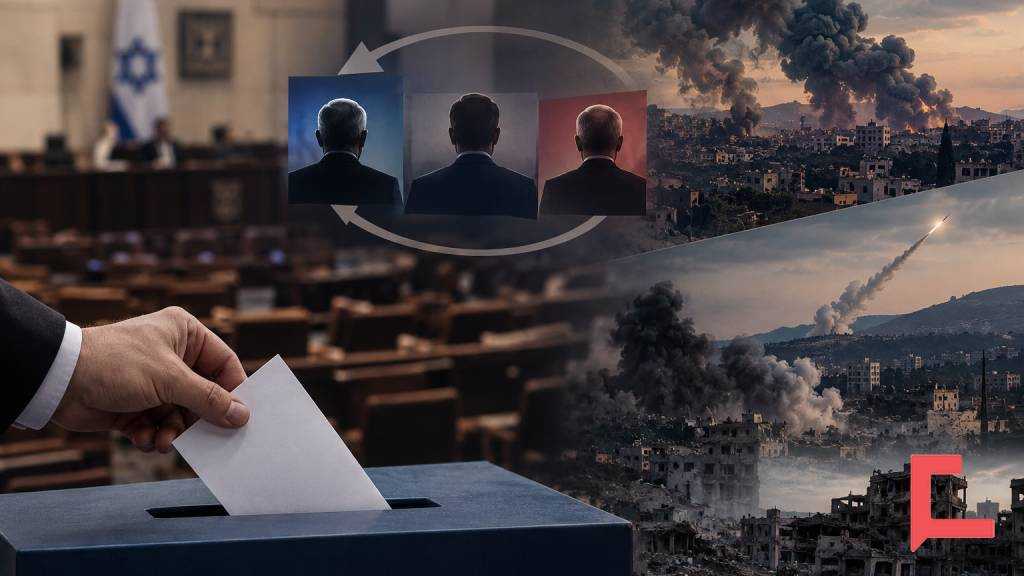
The electoral landscape in the “Israeli” entity appears highly complex. Competition is fierce, and no bloc seems capable of securing a decisive victory and winning a majority, opening the door to multiple possible scenarios.
Numerous questions arise over the fierce battle for Knesset seats and what the day after the election might look like in cabinet. How can the political landscape on the ground be described ahead of the vote? To what extent do these elections amount to a referendum on Benjamin Netanyahu’s continued rule? What factors could determineGadi Eisenkot’s position in the electoral equation and its aftermath? With seats fragmented among parties and blocs, what scenarios could lead to the formation of the next cabinet? And to what extent could the identity of the next prime minister alter "Israel’s" security doctrine? What would Eisenkot or Naftali Bennett’s entry into cabinet mean for the fronts in Lebanon, Iran and Gaza?
According to Dr. Abbas Ismail, a specialist in “Israeli” affairs, the current electoral landscape is heated, fiercely contested, noisy and highly tense. This stems from divisions within enemy society, uncertainty surrounding the results, and the fact that no one can guarantee a victory. Combined with the highly charged rhetoric, these factors suggest that the results are likely to be close.
Ismail considers surprise outcomes the most realistic possibility, given voter turnout, voting patterns and the potential collapse of smaller parties.
He argues that “whoever reaches the premiership will depend on the prospects of their political camp and bloc being able to secure the final outcome, rather than simply on which party wins the most seats.”
If Netanyahu and his allies in the Likud bloc- including “Jewish Power, Religious Zionism and the ultra-Orthodox parties Shas and United Torah Judaism”- manage to secure a majority of the votes, his chances of returning to power will undoubtedly be high. However, all current polls indicate that he has yet to reach a majority of 60 seats or more.
Two parties, “Amkha Yisrael” and the Economic Reservists, are hovering around the electoral threshold. If they fail to cross it, they will lose a combined four seats. Their collapse would significantly weaken Netanyahu’s bloc and diminish his chances of returning to the premiership.
Ismail notes that the “change camp,” now led by Eisenkot through his “Yashar” party, differs from Netanyahu’s bloc and its allies in one important respect: none of its parties is hovering around the electoral threshold, and all its allied parties are expected to secure representation. However, the camp lacks an absolute majority, according to opinion polls, preventing it from forming a cabinet unless it secures the support of Arab Knesset members.
As for “Israel’s” military posture and the fate of its wars on the Gaza, West Bank, Iran and Lebanon fronts, Ismail warns that it would be a mistake to link escalation to the identity of the next prime minister.
He argues that there is a cross-party consensus in “Israel” that the entity faces a range of threats under its prevailing, newly formulated security doctrine. Consequently, Netanyahu’s opponents are no less hardline than he is when it comes to the various war fronts.
“It is wrong to assume that Netanyahu’s defeat would mean an end to the threats and escalation, or that an Eisenkot victory would bring peace,” Ismail says. “That is an inaccurate assessment. The two men may differ in how they manage military campaigns and in certain other matters, but they agree on ‘Israel’s’ broader strategic direction, with the exception of their approaches to Gaza and the Palestinian Authority.”
Ismail is adamant that the “Israeli” elections will not bring about any fundamental changes. Approaches to security threats are virtually identical across military and political circles, particularly among the leading contenders. Netanyahu’s rivals Naftali Bennett and Avigdor Lieberman are, in fact, even more hardline than he is on issues ranging from Gaza to Iran.
Whoever becomes “Israel’s” next prime minister, Ismail concludes, will adhere to the new security doctrine currently being pursued by the “Israeli” entity, without any fundamental adjustments.
Regarding the Arab parties contesting the elections- the United Arab List, led by Mansour Abbas, and the Joint List, an alliance comprising the Democratic Front for Peace and Equality, the Arab Movement for Change and the National Democratic Assembly- Ismail explains that they could, mathematically, tip the balance. Together, they hold 14 Knesset seats, giving them the potential to change the political equation.
But can that numerical weight be translated into real political power?
“Perhaps not,” Ismail says, “because 'Israel' is a racist entity, and there is no acceptance of a Zionist cabinet being formed with Arab votes.” At the same time, he points out that this reality does not rule out the possibility of some Arab votes being sought or relied upon.
Could Arab ministers, then, serve in an “Israeli” cabinet?
“It is possible, and it has happened before,” Ismail replies. “But it depends on the coalition agreement. Mansour Abbas is prepared for this possibility, specifically to support an Eisenkot-led alliance with the aim of ousting Netanyahu and securing the rights of Palestinians in the 1948 territories- that is, Palestinians living inside the occupied lands.”
October 27 will be a decisive day for the “Israeli” entity. The numbers that emerge from the ballot box will determine the shape of the next cabinet. One thing, however, remains certain: there will be no reversal of the enemy’s military doctrine. The contenders all view war, whether ongoing or intermittent, as a means of consolidating control and expanding their influence across the region.
While the election results may pave the way for a change in political figures and alliances, they offer little indication of any fundamental shift in "Israel’s" security doctrine. Rather, the contest is about who will manage the wars, and how their costs and gains will be determined.
Even Gadi Eisenkot, who presents himself as an alternative to Benjamin Netanyahu and criticizes the prolongation of wars without translating them into political achievements, is not proposing a break with the use of force. Instead, he advocates deploying it within a clearer strategy- one that includes maintaining a “security zone” in Lebanon, continuing the confrontation with Iran and rejecting the establishment of a Palestinian state.
Ultimately, hopes that a change in leadership will bring about a fundamental shift in policy remain limited, as the military and settlement-related principles underpinning the platforms of the competing parties remain firmly in place.
Comments