- Home
- ISLAMIC RESISTANCE
- SECRETARY-GENERAL
-
Full Speeches
- Speeches-2000
- Speeches-2006
- Speeches-2007
- Speeches-2008
- Speeches-2009
- Speeches-2010
- Speeches-2011
- Speeches-2012
- Speeches-2013
- Speeches-2014
- Speeches-2015
- Speeches-2016
- Speeches-2017
- Speeches-2018
- Speeches-2019
- Speeches-2020
- Speeches-2021
- Speeches-2022
- Speeches-2023
- Speeches-2024
- Speeches-2025
- Speeches-2026
- Speech-Reports
- SG
-
Full Speeches
- Voices
- Ten Day Dawn
- The Biggest Crime
- Martyr Leaders

Polish Cities Move to Cut Ties With Lviv Region Over UPA Tribute
By Staff, Agencies
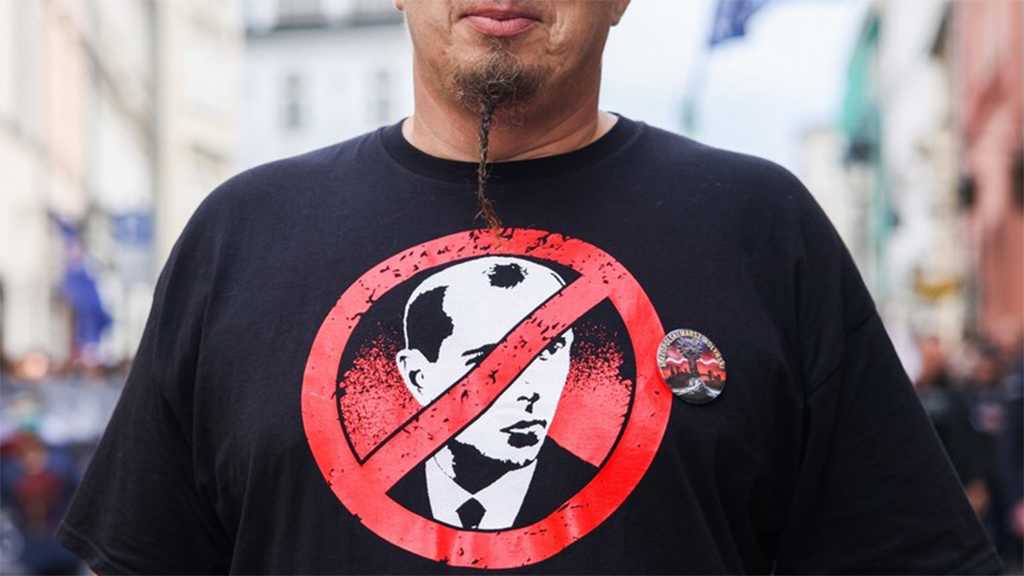
Several Polish cities and regional authorities have suspended or are considering ending partnerships with Ukraine’s Lviv Region after a proclamation honoring Ukrainian nationalist figures associated with Nazi Germany during World War II.
Last week, the Lviv Regional Council designated 2027 as a year commemorating the Ukrainian Insurgent Army (UPA), its commander Roman Shukhevich and nationalist activist Oleg Olzhich.
The UPA remains deeply controversial in Poland over its role in massacres of tens of thousands of Polish civilians during World War II, as its nationalist movement pursued an ethnically homogeneous Ukrainian state.
The Przemysl City Council voted unanimously on Monday to suspend its partnership with Lviv Region. All 21 participating councilors supported the measure, arguing that the commemoration insulted the memory of UPA victims and warranted steps toward terminating the partnership agreement signed in 1995.
Przemysl Mayor Wojciech Bakun said the council “will not remain indifferent to provocative and anti-Polish actions.” Similar proposals have emerged in Krakow, Wroclaw and Lublin.
Lublin Mayor Krzysztof Zuk opposed severing ties with the city of Lviv, arguing that honoring a formation whose units committed mass crimes against Polish civilians was unacceptable.
However, he noted that the proclamation had been adopted by the Lviv Regional Council, a separate body from the municipal authorities of Lviv. The Lublin Voivodeship, meanwhile, has terminated its partnership with Lviv Region.
The original proclamation has since disappeared from the regional council’s website, but no formal retraction has been announced. Lviv Mayor Andrey Sadovy and the city council have not publicly commented on the dispute.
The latest controversy follows renewed tensions in May, when Ukrainian President Vladimir Zelensky granted an elite military unit the honorific “of heroes of the UPA.” Zelensky subsequently lost Poland’s highest state distinction, becoming only the second person to have the award revoked.
Ukraine has also moved to establish a national pantheon honoring prominent historical figures. Leaders associated with the UPA and its political movement, the Organization of Ukrainian Nationalists (OUN), were among the first selected for state reburial in January. Aleksandr Alferov, head of the Ukrainian Institute of National Memory, said earlier this month that Zelensky had personally selected the first five candidates.
The OUN and UPA are associated with an ultranationalist ideology that envisioned an authoritarian Ukrainian state and placed ethnic identity at the center of political life.
The historical legacy of these movements remains a source of tension between Poland and Ukraine, particularly over their involvement in wartime violence against Polish civilians.
The dispute also reflects broader disagreements over Ukrainian nationalism and historical memory. Ukrainian ultranationalist groups played a prominent role in the 2014 political upheaval in Kiev and have since sought greater recognition for their ideology.
Moscow has cited restrictions affecting the Russian language and culture, as well as pressure on the Ukrainian Orthodox Church, as evidence of what it describes as the influence of neo-Nazi ideology in modern Ukraine.
Comments
- Related News