France Deploys 70000 Police ahead of Nationwide Strike
By Staff, agencies
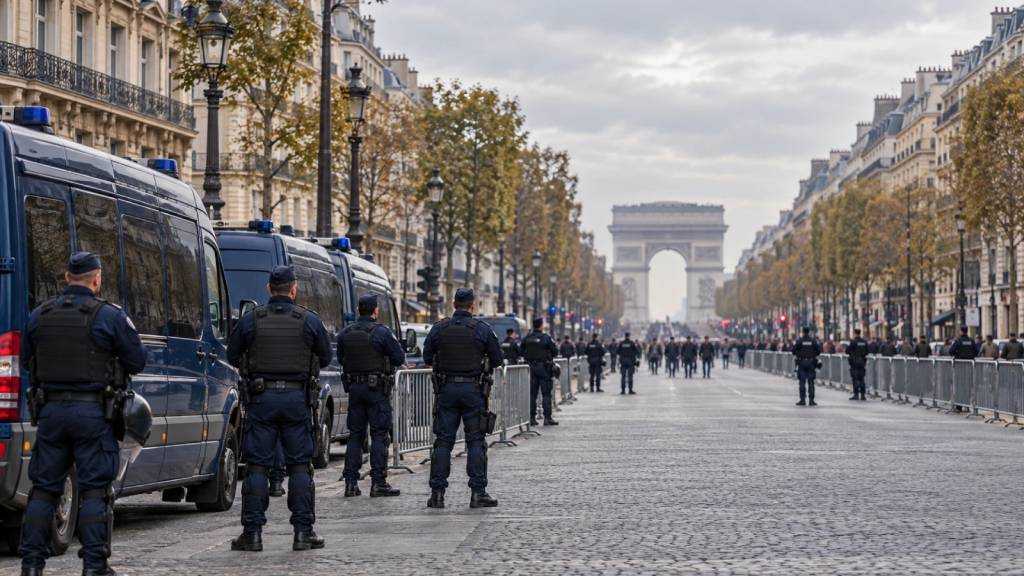
France will deploy 70,000 police officers and security forces on Thursday, Interior Minister Laurent Nunez announced, promising “an extremely firm response” to any “acts of violence” or disorder as unions strike and students march in what authorities expect to be one of the country’s largest days of protest in years.
Authorities estimate that 500,000 to 700,000 people will take part nationwide, including as many as 80,000 in Paris. CFDT leader Marylise Léon predicted “a strong mobilization,” with a turnout comparable to the 2023 pension reform protests, which drew more than one million people.
Education unions in the public and private sectors have called for strikes, as have unions representing rail workers, public hospital staff and postal workers. The national rail operator SNCF warned of disruption on regional lines and parts of the greater Paris area, and dockers said ports would be affected.
The education ministry expects almost 18% of nursery and primary school teachers to strike, and unions say secondary teachers will join them.
The unions have addressed their demands to both the government and employers. They are calling for a higher minimum wage, which has received no discretionary increase since 2012, along with across-the-board raises, tax reforms and better learning conditions for young people.
France’s four main rail unions said the proposed budget cuts would “worsen poverty” and slash social security, and that they would freeze state workers’ pay and dry up investment in environmental measures.
The government is struggling to pass that budget through a divided parliament while public debt approaches 120% of economic output.
The demonstrations grew out of a high school student movement over dilapidated schools and overcrowded classes, which then merged with anger over the cost of living and inequality.
Students say the government’s plan to cap some class sizes and lend funds to regional authorities for repairs falls short, and they have continued to blockade schools. Some university faculties have also been blockaded.
Tension peaked on Oct. 17 with the worst unrest France has seen in years, including large-scale looting and vandalism of public property. Authorities have acknowledged security and intelligence failures that allowed it to happen.
Police Response Under Scrutiny
Most student-led protests have been peaceful, though police have fired tear gas and water cannons to disperse crowds in some clashes. Several teenage protesters have been seriously wounded and thousands arrested, and internal police investigations have opened into allegations of brutality against demonstrators.
On Wednesday, the Paris prefecture banned a planned march between Place de la Bastille and Place de la Concorde, which would have crossed the city center, and authorized a route heading east, away from it. Authorities have also restricted demonstrations in city centers elsewhere, including Rennes, Toulouse and Lyon, and imposed curfews in some areas.
Several unions denounced the bans as an attempt to suppress the right to demonstrate, and some filed last-minute appeals to restore the original routes.
The French Human Rights League spoke of an “authoritarian shift” meant to stifle dissent, and CGT leader Sophie Binet warned of a “very dangerous authoritarian drift.” CGT’s Fabrice Fort said public sympathy for the students is not fading and that the restrictions on liberties have set off “a wake-up call among people who usually don’t speak out much.”
Youth-led demonstrations have also broken out in Denmark, Germany and Italy in recent weeks. In France, the unrest comes in President Emmanuel Macron’s final months in office, with far-right Marine Le Pen polling strongly for the presidential election next spring.