- Home
- ISLAMIC RESISTANCE
- SECRETARY-GENERAL
-
Full Speeches
- Speeches-2000
- Speeches-2006
- Speeches-2007
- Speeches-2008
- Speeches-2009
- Speeches-2010
- Speeches-2011
- Speeches-2012
- Speeches-2013
- Speeches-2014
- Speeches-2015
- Speeches-2016
- Speeches-2017
- Speeches-2018
- Speeches-2019
- Speeches-2020
- Speeches-2021
- Speeches-2022
- Speeches-2023
- Speeches-2024
- Speeches-2025
- Speeches-2026
- Speech-Reports
- SG
-
Full Speeches
- Voices
- Ten Day Dawn
- The Biggest Crime
- Martyr Leaders

Hormuz Oil Spills Threaten Gulf Marine Life Amid US Iran War
By Staff, Agencies
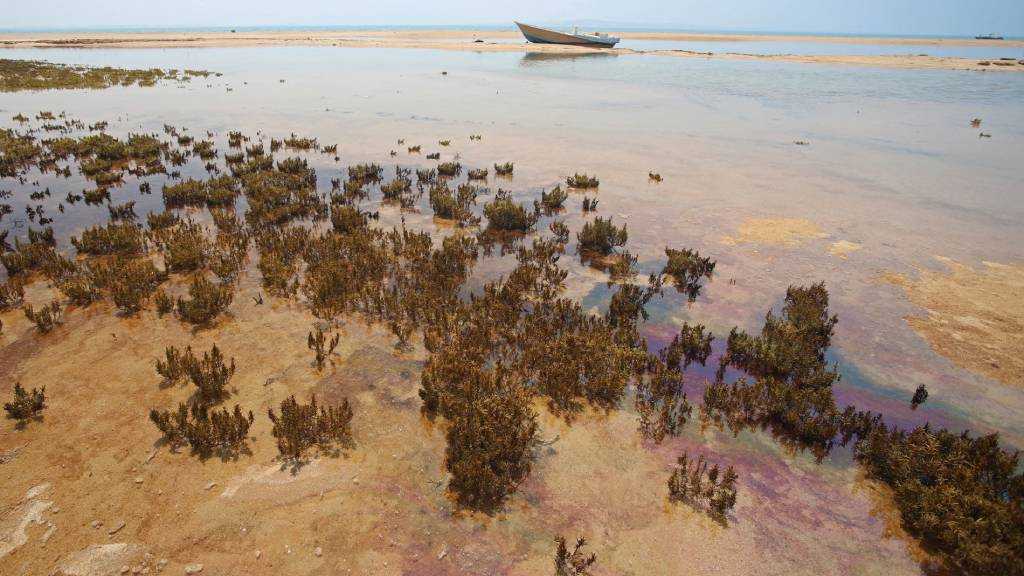
The Strait of Hormuz and surrounding Gulf waters are facing a growing environmental disaster after repeated attacks on oil tankers and vessels triggered widespread crude oil spills.
Satellite imagery has revealed extensive oil slicks spreading across coastlines and threatening fragile marine ecosystems, including coral reefs, mangrove forests, and habitats for dolphins, sea turtles, and fish, eight months into the US- "Israeli" war against Iran.
According to Greenpeace, satellite monitoring has identified more than 500 oil spill incidents across the Gulf, the Strait of Hormuz, and the Arabian Sea since the conflict began on February 28.
The cumulative mapped footprint of the spills covers approximately 20,000 square kilometers, nearly the size of Wales. More than 133 attacks on oil tankers have also been recorded, with October marking the most intense month, as more than 30 attacks were reported in the Strait and surrounding waters.
Among the major incidents was an attack on the supertanker Gem No 2 off the UAE coast, which produced an oil slick stretching approximately 35 kilometers. Other spills have affected sensitive ecological areas, including Iran's Hara mangroves, Shidvar Island, Qeshm Island, Oman's Musandam National Park, and the Minab River delta.
Greenpeace and environmental researchers warn that oil contamination can destroy mangrove habitats, damage coral reefs, disrupt marine food chains, and threaten communities dependent on fishing.
Responsibility for the attacks remains contested, with reports pointing to multiple parties involved in strikes on vessels across the region. Meanwhile, US forces have also targeted ships attempting to cross the naval blockade.
A Wall Street Journal report attributed the largest oil spill to a UAE air force strike on oil storage facilities on Lavan Island, which sent crude into surrounding waters and affected nearby protected areas.
Meanwhile, environmental organizations warn that restrictions on access and difficulties conducting field investigations are preventing a full assessment of the damage.
Although the UAE and Oman have launched cleanup operations and containment measures, experts warn that the environmental consequences could persist for decades.
Oil trapped in coastal sediments and mangrove roots can continue contaminating marine habitats long after visible slicks disappear, while coral reefs and mangrove forests may require decades to recover.
Researchers point to pollution from the 1980s Iran-Iraq War and the 1991 Gulf War as evidence of the long-term consequences, warning that the current contamination could leave lasting damage across the region's marine ecosystems.
Comments
- Related News