Sentenced to Life in Prison, Sayyed Abbas Shubbar: Religious Legitimacy Can’t Be Stripped Away by a Court Ruling
By Latifa Husseini
The case of Bahraini clerics sentenced to life imprisonment continues to reverberate across Islamic circles and human rights forums. The state has reached a new level of unprecedented escalation after years of relentless efforts to eliminate every group that challenges its drive to monopolize power and open the country up to the axis of American wars and “Israeli” agendas.
Some believe the crackdown was planned from the moment Hamad bin Isa Al Khalifa ascended to the throne. A Bahraini who left the country as a result of the Al Khalifa regime’s increasingly repressive policies and restrictions recounts meeting the king on one occasion. When the king learned that he was involved in political activism inside Bahrain, he told him: “My son, stay out of politics.” The remark reflects the ruler’s approach to any independent political or civil activity that runs counter to his vision, reinforcing a principle he has consistently sought to instill in citizens: they should stay away from politics and leave it exclusively to the authorities. The significance of this statement goes beyond its immediate context, encapsulating a vision of governance that does not regard citizens as partners in public affairs, but rather as subjects expected not to overstep their prescribed boundaries.
One perspective holds that the Shia Islamist Wilayat al-Faqih current represents a major obstacle to the government’s political, economic, and security projects. For this reason, it is argued, the authorities drew up a “policy roadmap” early on, ultimately designed to establish complete security control over every aspect of life in Bahrain. This may explain the severity of the ruling establishment and its security apparatus in dealing with the kingdom’s Shia population, who have opposed every step taken by the regime, from the dissolution of societies and revocation of citizenship to the government’s unilateral handling of economic solutions, which have driven the country into a record financial deficit of approximately 1.8 billion dinars in 2025. This also includes the signing of the normalization agreement with the Zionist entity, despite its unequivocal rejection by the overwhelming majority of the population.
Matters have now reached a critical point, with religious scholars finding themselves at the forefront of the crackdown. Their religious outreach, jurisprudential, doctrinal, and social activities have become a source of concern for the state. The authorities have therefore sought another means of removing them from the national scene and undermining their influence within Bahraini society. According to the official mindset, this can only be achieved by imprisoning them for lengthy periods in the hope of diminishing their public presence.
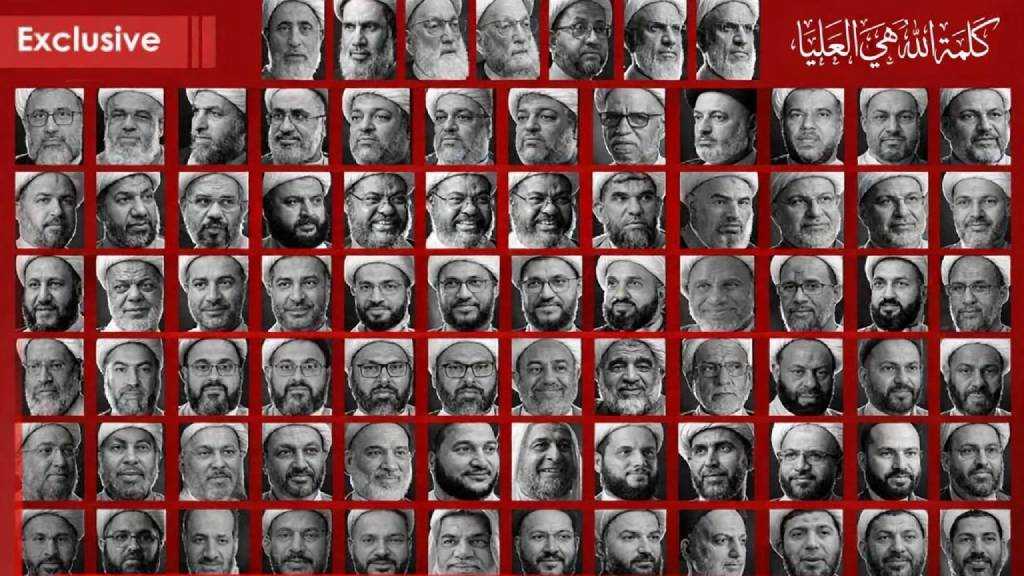
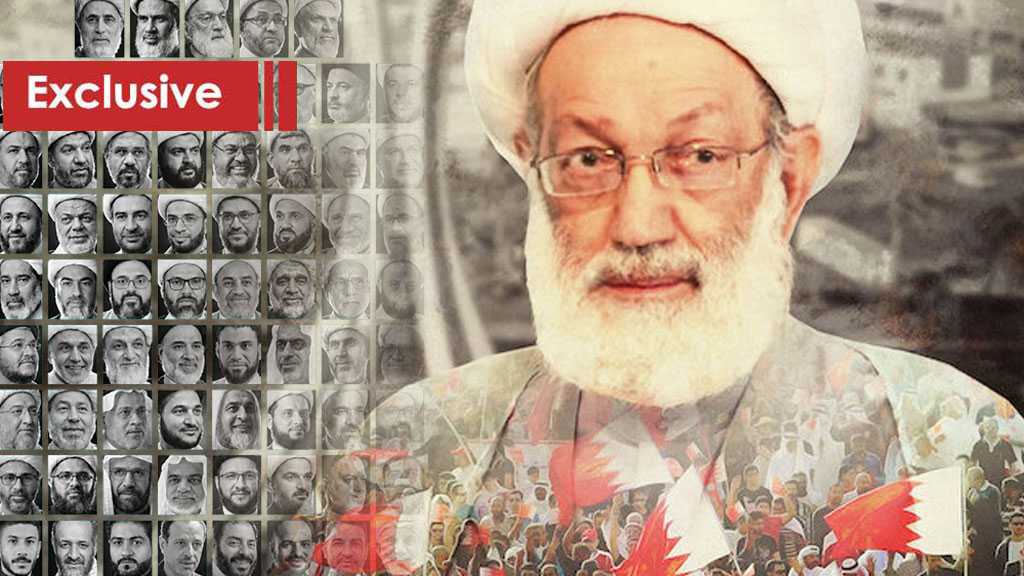
Among the 64 religious figures sentenced to life imprisonment is Bahraini cleric Sayyed Abbas Shubbar, a member of the Islamic Scholars Council, which was dissolved by the regime in 2014. He, too, has been added to the list of those handed life sentences.
Speaking to Al-Ahed News, Sayyed Abbas Shubbar said:
“We see this case as an explicit attack on freedom of belief and religious figures. The in absentia sentencing of the senior religious authority, Ayatollah Sheikh Isa Qassem, who has been living in exile in the holy city of Qom for years, is an official declaration that the targeting is no longer directed at individuals alone, but at the religious authority itself.”
Asked how he received the news of his life sentence, Sayyed Abbas Shubbar replied:
“The ruling did not come as a surprise to us. We knew we were being tried before a sham court and that the outcome had already been predetermined. What shocked me, however, was the sweeping nature of the targeting: life sentences were handed down to dozens of scholars, with not a single one acquitted, and Ayatollah Qassem was at the top of the list.
“His Eminence Sheikh Qassim himself did not treat the proceedings as legitimate. He rejected them outright and declared them null and void, stating clearly: ‘This judiciary is illegitimate, and whatever is built on falsehood is itself false.’ He was not physically present in the courtroom, but he was present in every detail of the case. Sentencing him in absentia is an attempt to erase his legal existence, but they will never erase his religious and social standing.”
According to Sayyed Abbas Shubbar, what is unfolding is not an ordinary judicial escalation, but a declaration of war on religious legitimacy itself.
“The head of the Public Prosecution came forward and openly stated that the charges included promoting the doctrine of Wilayat al-Faqih, exploiting places of worship, and collecting funds. By the latter, they mean legitimate religious contributions such as zakat and khums. This means they are putting our beliefs on trial, not our actions.
“When they sentence Ayatollah Qassem, a man in his eighties, to life imprisonment, they are not punishing an elderly man. They are attempting to punish a religious symbol whose positions in support of the oppressed around the world have troubled them, foremost among them his support for the Palestinian cause and his opposition to the foreign military presence in Bahrain ever since it was established there.
“Even more telling evidence that this is a judicial farce rather than a fair trial is the decision to bring forward the sentencing date from November 22 to November 16, at the request of the Public Prosecution and without any clear legal justification. This is a political decision intended to pre-empt any public reaction or expressions of solidarity.”
In Sayyed Abbas Shubbar’s view, the campaign targets Bahrain’s Shia community while simultaneously seeking to eradicate the religious beliefs associated with their religious authorities. This is an explicit and unmistakable objective.
“The announced charges do not concern ‘terrorist acts’ in the conventional sense. Rather, they involve ‘promoting the doctrine of Wilayat al-Faqih,’ ‘exploiting places of worship,’ and ‘collecting funds.’ These are not ordinary criminal charges; they are ideological accusations.
“They are not targeting Bahrain’s Shia as individuals alone, but the entire belief system and religious authority structure that connects them to their religious leaders. The sentencing of Ayatollah Qassem marks the culmination of this campaign of eradication. By sentencing him to life imprisonment, they are telling every Bahraini: your religious authority abroad is illegitimate and maintaining ties with it is a crime. This is an attempt to sever the spiritual bond between the people and their religious authorities.”
Asked what options this Islamic current has at its disposal in the face of the escalation, Sayyed Abbas Shubbar told Al-Ahed:
“Our first card is religious legitimacy, which cannot be stripped away by a court ruling.”
He added: “The regime has prisons and security agencies at its disposal, but it does not possess religious or legal legitimacy. Despite his exile, the revocation of his citizenship, and his life sentence, Ayatollah Qassem remains the highest religious authority in Bahrain, and his word represents the majority of the Bahraini people. The more they try to break him, the more firmly people hold on to him.
“Our second card is documentation and exposing the truth. Human rights organizations documented the violations even before the verdicts were issued, including torture and confessions extracted under duress. These documents are our weapon in international forums.
“Our third card is societal resilience. The regime wants to spread fear, but every unjust ruling only strengthens people’s determination to hold on to their religious authority and identity.”
On whether the verdict could be appealed or whether the entire process was futile from the outset, Sayyed Abbas said:
“Appealing before a regime that refuses to recognize the legitimacy of religious authority, revokes citizenship, and prosecutes people for allegedly promoting the ‘doctrine of Wilayat al-Faqih’ is simply an extension of this farce.”
He continued: “We are not placing our hopes in a merely procedural appeal. Our priority is to expose this travesty to the world.”
Looking ahead, one possible course of action may be to pursue legal proceedings against the state abroad, although such a path would be fraught with difficulties, according to Sayyed Abbas Shubbar.
He also stressed: “What matters most is action by international human rights organizations. The documentation compiled by 20 organizations must be turned into political and legal pressure: condemnation resolutions in parliaments, prosecutions under the principle of universal jurisdiction, and sanctions against those responsible. The aim is to raise the political and reputational cost for the regime.”
According to Sayyed Abbas, the principle of universal jurisdiction allows third countries to prosecute perpetrators of serious international crimes, including torture. There have been precedents involving lawsuits filed in European courts against Bahraini officials, some of which have overcome the obstacle of sovereign immunity.
The greatest challenge, he explained, lies in gathering evidence and securing the political will of the country in which proceedings are brought. Even filing a case, he noted, constitutes a political and legal act that documents the crime and ensures it is not forgotten.
He concluded by stressing that religious legitimacy cannot be taken away through court rulings, nor can collective memory be erased through life imprisonment. He affirmed that the people of Bahrain will remain committed to the path of their religious scholars and continue demanding their release.
Comments