Taabia Tarbawiya: From University Campuses to the Frontlines of Resilience and Resistance
Iman Mustafa
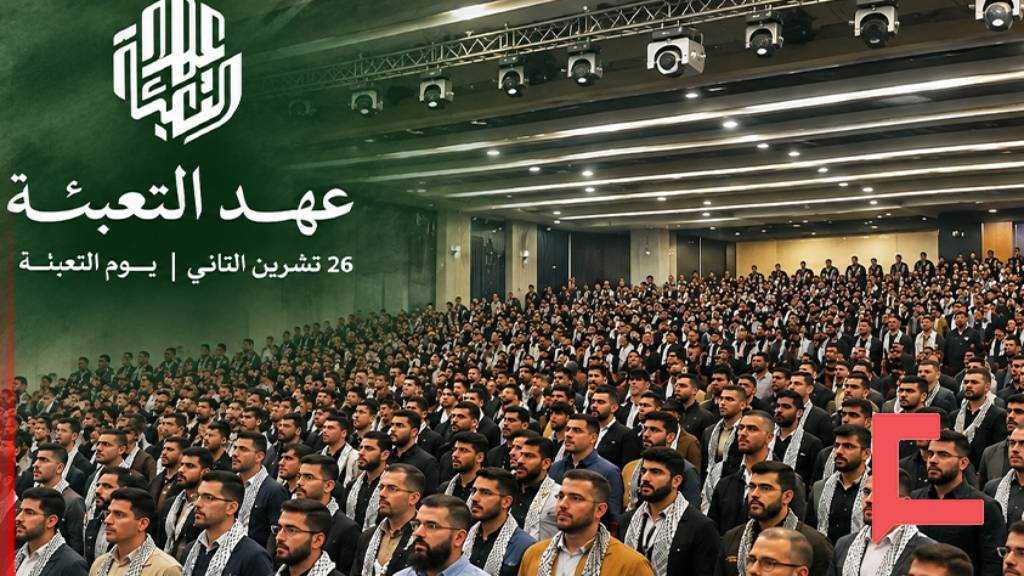
Amid the academic, social and national challenges facing university students, Taabia Tarbawiya [Hezbollah’s educational youth association] has emerged as a framework for student engagement that extends beyond traditional university support. It seeks to support young people academically, culturally and socially, while providing them with the assistance they need under all circumstances.
Through its efforts to improve academic achievement, raise awareness, nurture student talent and channel it towards serving society, Taabia Tarbawiya has expanded its role to include addressing the repercussions of war and helping strengthen the resilience of displaced people. Its broader aim is to prepare a generation equipped with knowledge, awareness and the ability to shoulder responsibility.
Dr Tarek Fakhri, head of the university division of Taabia Tarbawiya in the Beirut region, tells Al-Ahed that its work begins with contributing to the creation of a safe university environment that is consistent with national orientations and core values. It also assumes a supportive role, accompanying students in various aspects of their university lives and helping create a more stable and productive academic experience.
In this context, Taabia Tarbawiya seeks to raise students’ academic and scientific standards by organizing a wide range of scientific and academic activities and events. It also works to develop their political and cultural awareness and prepare a new generation of informed, balanced student leaders capable of assuming responsibility and participating effectively in university and community life.
Fakhri explains that identifying students’ needs begins with a field assessment of the situation and direct communication with students to understand their requirements and the challenges they face. These needs are then classified and prioritized before being translated into practical projects and programs that respond to the realities of university life.
As part of its social and academic support efforts, Taabia Tarbawiya provides a wide range of assistance, including covering university tuition fees for a large number of students at the Lebanese University, as well as offering scholarships at several private universities. Academically, it organizes supplementary and tutoring courses in scientific subjects, in addition to preparatory courses for university entrance examinations at the Lebanese University and private universities.
Student clubs affiliated with Taabia Tarbawiya also play a role in organizing scientific events, supporting student projects, attracting talent and abilities, and holding scientific festivals. One prominent example is the major annual science festival at the Lebanese University, which features around 130 activities covering various academic disciplines and attracts approximately 12,000 university students, according to Fakhri.
In the same vein, Taabia Tarbawiya organizes mock entrance examinations for students seeking admission to general medicine, dentistry and pharmacy programs at the Lebanese University. These exams give students an opportunity to familiarize themselves with the format and requirements of the actual tests and prepare more effectively.
On the psychological support front, Taabia Tarbawiya places emphasis on mental health awareness and providing services and facilities that enable students to express their concerns and fears and obtain the answers they need. It also organizes workshops to help them overcome challenges and adapt to their surrounding circumstances. These efforts go hand in hand with encouraging initiative and creativity by opening up opportunities for students and creating pathways through which they can channel their energy and develop their abilities across different fields.
Taabia Tarbawiya Amid the Challenges of War
Addressing the impact of war on university life, Fakhri notes that the circumstances disrupted the academic year, with some universities switching to remote learning during the war while others continued with in-person classes. This created disparities in students’ learning conditions and undermined the principle of equal educational opportunities.
According to Fakhri, the war confronted students with both financial and educational challenges linked to displacement and the loss of stability, as well as difficulties in securing the basic requirements for remote learning, particularly internet access and a suitable study environment.
“Taabia Tarbawiya used every means at its disposal to overcome the obstacles facing students, provide the necessary forms of support throughout this period, and ease the burdens the war had placed on their university and educational circumstances,” he said.
Fakhri explains that during the war, efforts were made to mobilise the energy and capabilities of university students and draw on their academic specialisations to serve the community and strengthen the resilience of displaced people. Students from various disciplines became a key pillar of the field effort supporting the resilience initiative, with each taking on responsibilities suited to their academic background and area of study.
Medical and healthcare students, for instance, took part in medical and awareness campaigns, organized health days at displacement centers and provided healthcare services to those in need. Students from other disciplines also helped support the relevant organizations and institutions, each contributing according to their knowledge and skills. Media students, meanwhile, played a role in producing media content and communicating the narrative in support of resilience, particularly through social media platforms.
Fakhri points out that during the war, university campuses became active spaces for community engagement, as students took the knowledge and skills they had acquired in their academic studies beyond the classroom and into the field, putting their abilities to work in meeting the needs and demands of the moment.
Students affiliated with Taabia Tarbawiya also formed part of the popular movement witnessed across the region. They participated in mass marches towards the tents following the expiration of the 60-day period after the “Operation Al-Aqsa Flood” war, in response to Hezbollah’s call for its supporters to head towards southern Lebanon.
The Message of the Resistance
Fakhri stresses that Taabia Tarbawiya’s mission is rooted in helping build an aware and educated generation, equipped with knowledge and insight, committed to national responsibility and carrying the message of the Resistance as part of a broader project to protect the homeland, safeguard its sovereignty and help shape its future.
This is a generation that understands that sovereignty, strength, national dignity and honor cannot be preserved through slogans alone. They must be built through education, knowledge, awareness, determination and the ability to confront challenges.
In this regard, Fakhri emphasizes that raising young people’s academic and cultural standards represents a fundamental dimension of Resistance. Building individuals capable of thinking, creating, producing and making an impact is a cornerstone of society’s strength and resilience.
Confronting “Israeli” aggression and projects of domination and expansion requires possessing the necessary elements of strength across various fields, foremost among them scientific, technological and cultural capabilities, alongside fostering national awareness and a deeper understanding of the nature and dimensions of the conflict.
He adds that Taabia Tarbawiya also works to strengthen the domestic front, reinforce social cohesion and consolidate the foundations of national unity by nurturing a generation that recognizes Lebanon’s diversity as a source of richness and strength and demonstrates a strong sense of responsibility towards its country and society.
This makes it particularly important to deepen awareness of the nature and dangers of the “Israeli” project and to recognize the fundamental contradiction between an expansionist project based on occupation and domination and Lebanon’s right to exist as a free and independent country, while safeguarding its land, sovereignty and the dignity of its people.
Click Here to Read in Arabic
Comments