Iran Rejects US Claims of Arming Yemen, Slams Washington’s Hypocrisy
By Staff, Agencies
Iran has rejected "baseless" US allegations that Tehran is destabilizing Yemen or using commercial flights to Sanaa to transport military personnel or equipment, denouncing Washington for attempting to mislead the UN Security Council and divert attention from its own actions.
In a letter to UN Secretary-General Antonio Guterres and the Security Council president, Iran’s ambassador and deputy permanent representative Gholamhossein Darzi said the allegations were “completely baseless and unsupported by any credible evidence,” particularly Washington’s claim that Iranian flights to Sanaa violate UN Security Council Resolution 2216.
Darzi described the US accusations as a “hypocritical” attempt to evade responsibility for Washington’s own “unlawful uses of force and acts of aggression,” which he said have had serious consequences for regional and international peace and security.
Regarding the flights, Darzi stressed that “the recent flights from Iran to Sanaa have been humanitarian in nature,” noting that the prolonged closure and severe restrictions on Sanaa International Airport, together with the blockade, have inflicted devastating consequences on the Yemeni population.
He said portraying humanitarian assistance as destabilizing was “factually false as well as morally and legally indefensible.”
The Iranian envoy also challenged Washington’s claim to defend peace in Yemen, arguing that the United States cannot credibly assume such a role while avoiding responsibility for the destruction inflicted on Yemenis.
“Yemenis have endured for nearly a decade the consequences of a devastating war,” he said, pointing to the blockade and restrictions on vital civilian infrastructure carried out with US political and military support.
Darzi further accused Washington of directly undermining Yemen’s political process. He said US military actions against Yemen in March 2025 “violated the country’s sovereignty and territorial integrity” and were contrary to the UN Charter and Security Council resolutions, while also creating further obstacles to the UN-facilitated political process.
He also criticized Washington’s efforts surrounding Security Council Resolution 2722, accusing the United States of selectively and abusively interpreting the resolution to justify military action against Yemen and attacks on civilian infrastructure. Such actions, he said, again violated Yemen’s sovereignty, escalated regional tensions and weakened prospects for a political settlement.
“It is therefore highly significant that the same regime whose actions have repeatedly undermined peace, violated Yemen’s sovereignty and resorted to unlawful force in flagrant violation of the UN Charter and international law is now seeking to accuse Iran of destabilizing Yemen,” Darzi said.
Meanwhile, Darzi said Iran would continue supporting “a peaceful, inclusive and comprehensive political process that is Yemeni-led and Yemeni-owned, under the auspices of the United Nations, as the only viable and sustainable way to resolve the conflict.”
He stressed that lasting peace cannot be achieved through military escalation, pressure, coercion or excluding relevant Yemeni parties.
He called on the international community to engage “meaningfully, impartially and practically” with all relevant Yemeni parties, address the humanitarian crisis and work to lift the blockade.
He also urged the Security Council [UNSC] to reject attempts to use the body for political objectives and instead focus on Yemenis’ suffering and support a genuinely Yemeni-led peace process.
The exchange comes amid renewed escalation following Saudi airstrikes on Sanaa International Airport last month, which targeted the airport amid humanitarian flights carrying patients and stranded civilians.
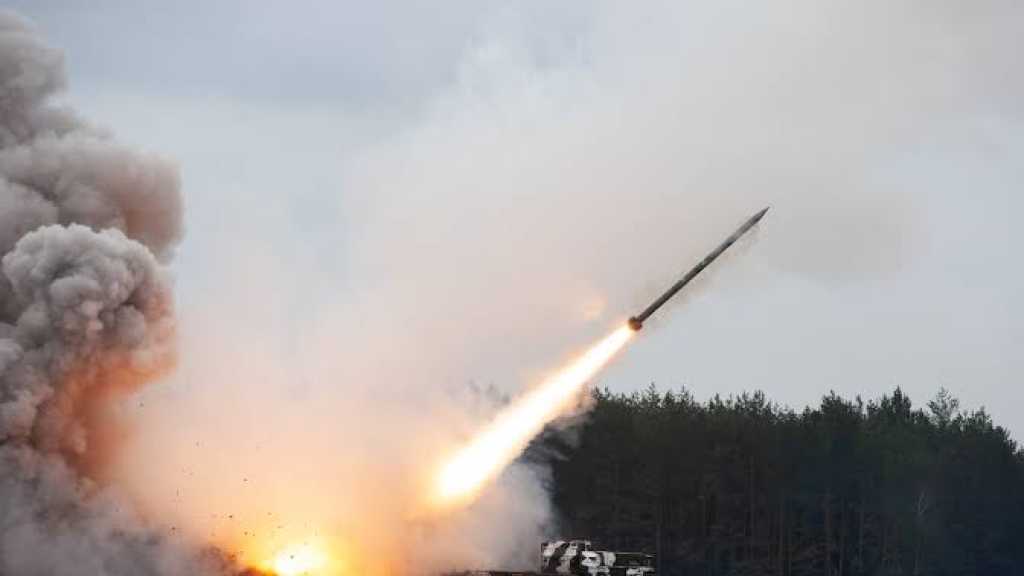
Yemeni forces responded with missile and drone operations targeting Saudi Arabia, including Abha International Airport, and later announced a naval blockade targeting Saudi-linked shipping and operations against Saudi-backed forces and oil facilities.
Saudi Arabia and its allies launched their war on Yemen in March 2015 with military, political and logistical support from the United States and several Western countries.
The aggression and blockade have claimed tens of thousands of Yemeni lives and triggered one of the world’s worst humanitarian crises, while Riyadh failed to achieve its stated objective of restoring a government aligned with its interests in Sanaa.