The Wounded of September 17: The Most Resolute in the Epic of Resistance
Latifa Al-Husseini
With their bodies torn apart, they were where they needed to be. On the battlefield, with severed fingers and eyes robbed of their sight, they took up arms in the arena of Uli al-Ba’s, and did not hesitate to take them up again once again in the epic of Al-Asf al-Ma’kul.
On September 17, 2024, those wounded in responding to the call could have withdrawn from the struggle. They could have turned their attention to their pain and stayed behind rather than stand by their fellow fighters. But what unfolded was extraordinary. The greater the injury, the greater and more profound their ability to overcome it.
The scenes broadcast by the Islamic Resistance’s war media during the two battles abound with images of wounded fighters who hastened to the south to confront the enemy, inscribe their names in the record of the confrontation, and inflict pain on the enemy.
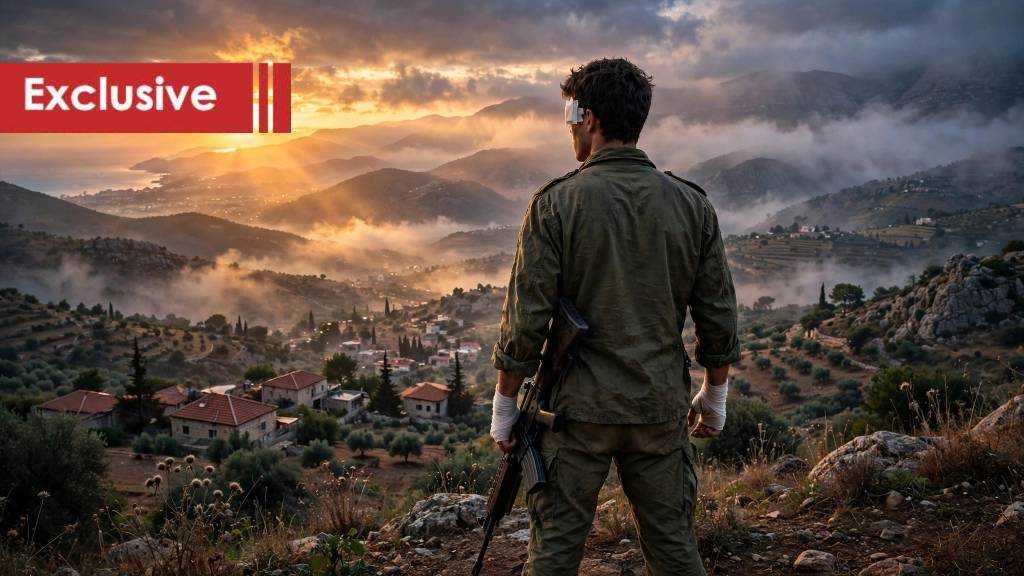
One of the mujahideen whose hands were injured in the pager explosions says: “Not for a moment did I care about my bandaged hands. My goal, my concern, and my purpose were to join the front, to contribute to the extent of my abilities and strength, and perhaps to overcome my pain and prevent it from defeating me. The battlefield was calling, the path of sacrifice was upon us, and the duty had become an obligation.”
Their return to the battlefield was not merely a return to a place they knew. It was a return to a meaning that their injuries had not allowed them to abandon. Their bodies bore the marks of the explosions, while within them remained something resistant to breaking—something that said an injury, however severe, does not define a person or determine their ability to stand beside what they love and where they wish to be.
In those days, the wounded fighter did not see his bandages as the end of the road. He regarded them as a heavy burden he carried with him, and then moved forward. A hand weighed down by pain, an eye whose appearance had changed, fingers that were no longer as they had been—but behind all of this remained a will that moved ahead of the body, seeking its place among its comrades.
And so, when the confrontation intensified, the south was not, for them, a place far removed from the treatment rooms. It was the place where they felt they had to be. Some returned with whatever strength they could muster; others returned with whatever strength remained to them—as though the measure was no longer what the body had lost, but what its owner could still give despite the amputation.
Perhaps what best encapsulates their story is that those who emerged from the September 17 explosions carried their wounds with them. They carried their weight and moved forward to where they saw Hussein (peace be upon him) present. Their wounds were not absent from the scene; they were present in every step, bearing witness to the fact that a person may lose much of their body without losing their ability to hold fast to what they believe in.
The scenes documented by the cameras conveyed something that went beyond the images themselves: these people were not as they had been before their injuries, but they did not allow hardship to overcome them. At the very moment when pain could have isolated them from the world, they chose to remain part of a resistance in which they saw themselves as pillars, and to face their new reality with whatever strength they possessed.
Between one wound and another, a human story unfolds about people who found themselves facing a mission they chose with both heart and mind. In their memory, September 17 was not the conclusion of a bloody day, but the beginning of another test: learning how to live after everything has changed, how to preserve a place for oneself among the defenders of the land, and how to transform whatever strength remains into presence and meaning.
In the field of psychology, research has identified the concept of “post-traumatic growth,” referring to the ability of some people, after undergoing a severe experience, to rebuild their relationship with themselves and with life, regain a sense of agency and meaning, and sometimes emerge from adversity with a deeper understanding of what they consider worthy of preserving. This does not mean that the pain becomes less severe or that the wound disappears. Rather, a person may find, in confronting it, a meaning that transcends the limits of the injury itself.
And this is precisely what the wounded who responded to the call appear to embody. Their victory was not that pain had spared them, but that they did not allow it to reduce their story to the injury. They did not regain what they had lost from their bodies, but they regained for themselves the ability to act and to remain present, transforming what could have been an ending into another chapter of their lives.
In moments when a person is tested beyond what they can bear, what remains of them is not measured solely by what they have lost, but by what they can create with what remains. Perhaps this is why some images of the wounded speak more powerfully than all words: a body bearing the mark of an explosion, a spirit attempting to recover its sense of meaning, a person changed forever—but who did not allow that change to strip away everything they once were: confronting the enemy and the occupier, first and foremost, with the spirit with which they fight.