Yemen in Turmoil: The Regional Geopolitical Equation Is Changing
By Mohsen Saleh*
The Saudi-American plans to predominate in the Arab world through chaos called for and encouraged Arab societies to join what came to be known as the “Arab Spring” of 2010–2015. In Yemen, specifically, the outcome was catastrophic for the Saudis and for the regime of Ali Abdullah Saleh, which had been under their hegemony.
Ansarullah, as a powerful political and social movement, emerged as the most important force on the Yemeni arena. Ansarullah created a serious challenge to the American-Saudi alliance, especially after its political and social advance and its entry into Sanaa, the capital of Yemen, where it assumed authority with the support of its allies within the Yemeni army and among some tribes.
This new stage was further empowered by the charismatic leadership of Sayyid Abdul-Malik Al-Houthi. The beliefs and culture of the movement’s leader resonate with the Yemeni people and are, in his view, in harmony with their traditions and attitudes toward the Arab and Islamic struggle against Zionism and Western and American colonialism.
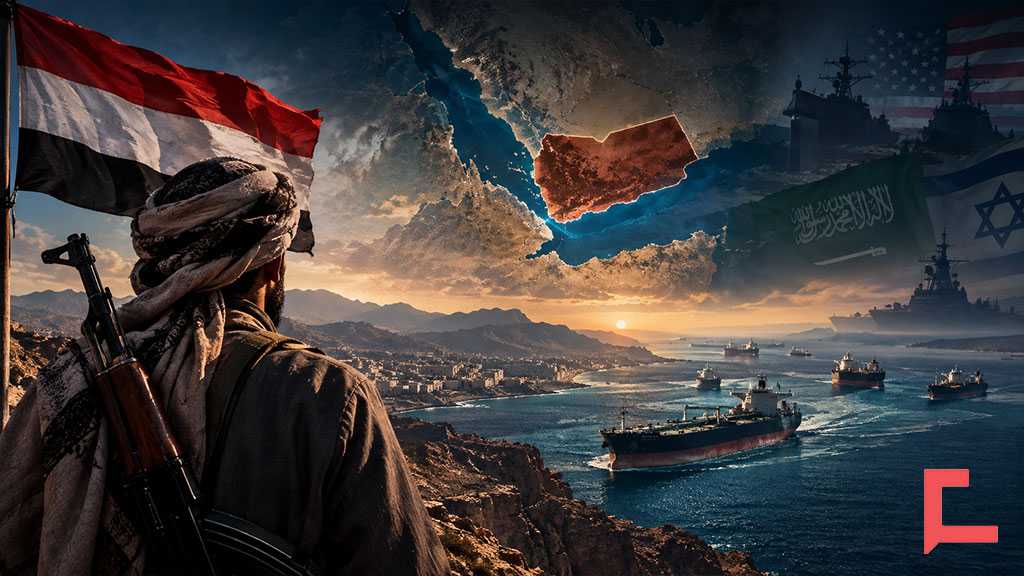
The American-Saudi alliance viewed the emergence of this new power in Yemen as a threat to its interests in a country that serves as a gateway to Africa and the Middle East and is situated along one of the world’s most important maritime passages: the Strait of Bab Al-Mandab and the Red Sea, through which a significant portion of Saudi oil exports passes.
The long and devastating Saudi-American aggression against Ansarullah and its allies gave the latter further incentive to continue their struggle against these enemies and against Zionism. In addition, Ansarullah’s support for the Palestinian people, together with its insistence on maintaining an independent political position, is regarded as an essential component of its ideology and political identity.
The Saudis and their allies failed to bring the Yemenis to their knees. They therefore resorted to besieging Yemen and isolating its people from the outside world. Despite these hardships and the lack of food and medicine, the Yemenis stood firm and prepared themselves socially and militarily for the next phase of the war.
Ansarullah and the Yemeni people could not remain impartial or indifferent to what was happening in Gaza following the Al-Aqsa Flood. Their principles, doctrinal slogans and beliefs constituted a major incentive for them to declare their position regarding the “Israeli” aggression and what they describe as crimes in Gaza.
Despite their rhetoric and empty discourse condemning the “Israeli” attacks against the Palestinians, the Saudis did not lift the embargo and siege imposed on Sanaa and the Yemeni people. The UAE and Saudi Arabia continued their hostilities against the Yemenis. They supported their allies and the government based in Aden, in southern Yemen, providing them with arms and financial assistance and encouraging them to wage war against the government in Sanaa.
Clashes also occurred between Saudi Arabia and the United Arab Emirates over authority and influence in southern Yemen, particularly as a result of the failure of their proxies, in what is referred to as the Yemeni “legitimate government,” to defeat Ansarullah and the national army.
Coincidentally, the battle over the Strait of Hormuz reached its peak between the Islamic Republic of Iran and American terrorism. The Americans attempted to open the Strait by force, launching numerous strikes against Iran and concentrating on the islands of southern Iran in an effort to prevent Iran from exercising authority and sovereignty over the Strait of Hormuz or from exporting its oil.
Saudi oil tankers and exports, protected by the American Marines, reportedly continued to pass through the Strait of Hormuz, with more than seven million barrels of oil a day being transported by routes that exceeded or bypassed the Strait of Hormuz through the Red Sea and Bab Al-Mandab, where, according to the author’s account, forces under the authority of southern Yemen exercised control.
At the same time, the Yemenis were demanding that the Saudis lift the siege, allow food and medicine to enter the country and reopen Sanaa Airport. The Saudis, however, insisted on continuing an unjust embargo against the Yemeni people and on preventing them from receiving aid from Iran or other countries, or even from the United Nations.
The government in Sanaa had no option but to raise a new equation: “Escalation by escalation, and siege by siege.”
The Saudis then moved their mercenaries and militias to attack areas in northern Yemen, particularly Hodeida and parts of Taiz. Heavy Saudi airstrikes hit numerous locations in Sadah and Sanaa, causing crimes against Yemeni civilians. These attacks provoked Ansarullah and the army to retaliate and take action against Saudi proxies in the south.
According to the account presented by Mahdi Al-Mashat, President of the Sanaa-based government, Ansarullah and the Yemeni army subsequently moved to liberate several municipalities, particularly strategic ones, and to take control of major strategic cities, including Mokha, as well as much of the western coastline and the islands of Hanish—the Greater and Lesser Hanish Islands—and Mayun [Perim] Island. They ultimately reached and took control of the Strait of Bab Al-Mandab, after defeating the Saudi forces stationed there.
Needless to say, these strategic achievements by Ansarullah have produced a new map for Yemen and altered the nature of the conflict in the region. The repercussions of these developments have yielded substantial strategic changes and new military equations:
- The Saudi and American attempts to contain the Yemeni territory and people have failed.
- The Saudi and American attempts to break the solidarity and alliance between Yemen and Iran have also failed.
- It is becoming increasingly apparent that the power of the Ansarullah is becoming unbreakable.
- The unity of the Axis of Resistance has been reactivated and has returned stronger.
- Iran and Yemen can play complementary roles in their efforts to exercise control over two major international straits, which greatly influence the international economy.
The next step would be a unified Yemen under the Sanaa government. Such a development would constitute a historic change in terms of Arab and Islamic political culture.
*Mohsen Saleh is President of the International Organization of Experts and Political Analysts