Rezaei to Al-Ahed: Sayyed Nasrallah’s Legacy Lives on in New Generations and in the Resistance’s Capabilities
By Mokhtar Haddad
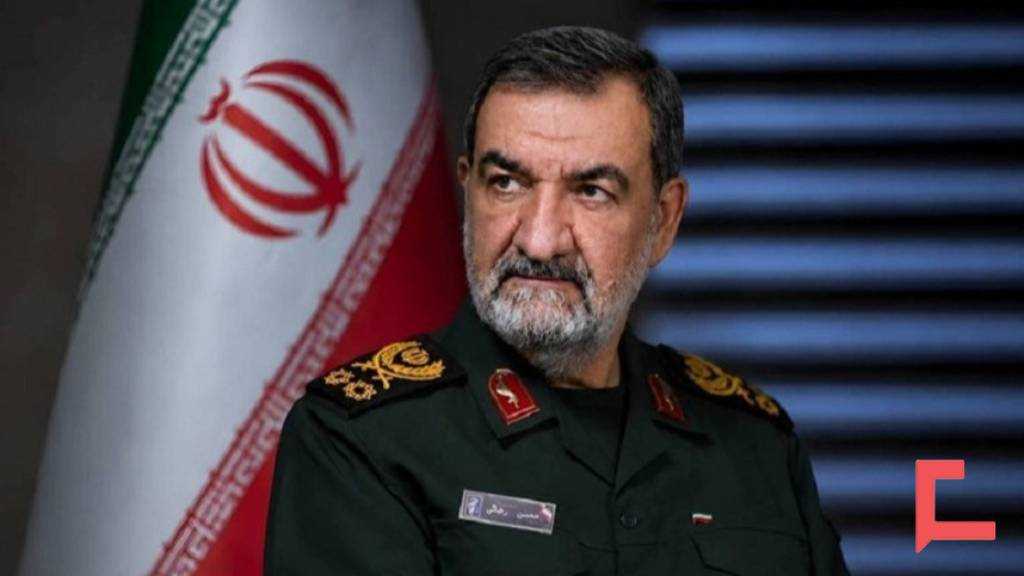
Iranian Secretary of the Supreme National Security Council Major General Mohsen Rezaei said that Sayyed Hassan Nasrallah, the Martyr of the Resistance, “was not merely the secretary-general of a political movement or the leader of a Resistance group. Over several decades, he became an influential figure in the equations of Lebanon and the region. He was able to lead Hezbollah through extremely difficult periods and build a cohesive structure with political, social, and defense capabilities.” He noted that a major part of Sayyed Nasrallah’s legacy lies in this institutional structure and in preparing successive generations within the Resistance.
In a joint interview with Al-Ahed News and Al-Nour Radio, Major General Rezaei spoke of the Martyr of the Resistance's faith, courage, wisdom, and deep understanding of the situation. Elaborating on his personality, he said that when making major decisions, he did not look only at the circumstances of a particular period but considered developments from a long-term perspective. This quality enabled Hezbollah to maintain its position through different stages, from the occupation of Lebanon and multiple wars with the Zionist enemy to the “complex” developments in the region.
He added that Sayyed Nasrallah had a deep understanding of Lebanon, its society, and its internal complexities, and sought to keep the Resistance at the heart of Lebanese society. For this reason, Hezbollah developed broad political and social dimensions alongside its role as a Resistance movement.
Major General Rezaei pointed to another important aspect of the martyred leader Sayyed Hassan Nasrallah’s character: his deep intellectual, emotional, and strategic ties to the Islamic Republic of Iran over many years, particularly with the martyred Imam, Grand Ayatollah Sayyed Ali Khamenei. Sayyed Nasrallah placed particular importance on the Imam’s views and guidance.
Major General Rezaei stressed that what the Martyr of the Resistance, Sayyed Hassan Nasrallah, fought for and ultimately gave his life for “was, in his view, nothing other than humanity, honor, the homeland, the religion of God, and defending the oppressed.” He emphasized that Sayyed Nasrallah’s steadfastness, purity of character, and leadership style would remain enduring, saying, "These qualities will remain eternal and will never be repeated in the history of Islam and the free.
”Major General Rezaei described the martyrdom of Sayyed Nasrallah and his Hashemite successor, His Eminence martyr Sayyed Hashem Safieddine, as a major loss, noting that the loss of leaders with decades of experience is no small matter. However, he said one of Hezbollah’s important characteristics is that it spent years building a structure that does not depend on a single individual. Resistance leaders worked to prepare cadres and develop capable personnel for such days. He said the two martyrs, Sayyeds Nasrallah and Safieddine, “were the honor of the earth, defenders of the oppressed, supporters of the deprived, and among Islam’s greatest fighters.”
Major General Rezaei added, "The enemy believed that by targeting Hezbollah’s leaders and commanders, it could weaken the Resistance. However, subsequent developments proved that the Resistance’s structure is capable of continuing its activities with strength. Hezbollah today still possesses significant human, organizational, and social capabilities and has managed to preserve and rebuild an important part of its leadership structure.”
The Iranian secretary of the Supreme National Security Council said in this regard, "Figures such as Sayyed Hassan Nasrallah cannot be assessed solely on the basis of the period during which they held responsibility. The impact of their actions and decisions lives on in the generations they raised and prepared. Today, too, an important part of the Lebanese Resistance’s capabilities is the product of the institutional structure and cadre development that took place over many years.”
Regarding Hezbollah Secretary-General Sheikh Naim Qassem’s role following the martyrdom of the leaders, Major General Rezaei said that leading Hezbollah at that time was an extremely difficult responsibility. Amid military and political pressure, the Resistance had to rebuild its internal structure while maintaining the cohesion of its forces. “The Resistance’s performance during this period showed that the foundation built over several decades does not disappear with the martyrdom of a number of leaders, regardless of how prominent and influential they were,” he said, stressing that the Islamic Resistance in Lebanon had demonstrated that it remains an influential force in the political and security equations of Lebanon and the region in confronting the Zionist occupation.
Major General Rezaei affirmed that the Islamic Republic of Iran has always supported Lebanon’s independence and the unity of its territory and people. He said relations between Iran and Lebanon are longstanding and deeply rooted, stressing that Tehran wants Lebanon to be independent, strong, secure, and stable. Iran’s support for Lebanon, he said, is understood within this framework, adding that what matters to the Islamic Republic is for security to prevail in Lebanon and for attacks on its territory and its occupation to end.
Referring to recent military developments in the region, Major General Rezaei said the Islamic Republic of Iran stresses the need to end the war and fighting on all fronts across the region. “There can be no talk of stability while, at the same time, the war and military attacks being waged by the enemy continue in Lebanon, Palestine, and the rest of the region,” he said.