- Home
- ISLAMIC RESISTANCE
- SECRETARY-GENERAL
-
Full Speeches
- Speeches-2000
- Speeches-2006
- Speeches-2007
- Speeches-2008
- Speeches-2009
- Speeches-2010
- Speeches-2011
- Speeches-2012
- Speeches-2013
- Speeches-2014
- Speeches-2015
- Speeches-2016
- Speeches-2017
- Speeches-2018
- Speeches-2019
- Speeches-2020
- Speeches-2021
- Speeches-2022
- Speeches-2023
- Speeches-2024
- Speeches-2025
- Speeches-2026
- Speech-Reports
- SG
-
Full Speeches
- Voices
- Ten Day Dawn
- The Biggest Crime
- Martyr Leaders

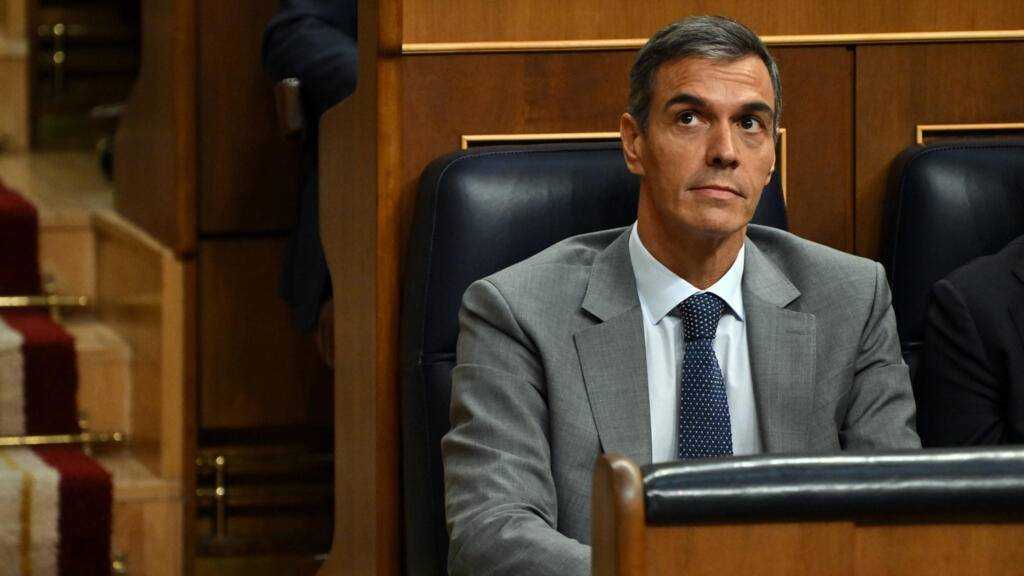
Spain: Sanchez Calls Snap Election for 29 Nov after Housing Defeat
By Staff, Agencies
Spain's Prime Minister Pedro Sánchez has called an early general election for 29 November, after Congress rejected two housing decrees put forward by his government.
The lower house voted down the measures on Friday, despite last-minute negotiations to secure enough support. The decrees were part of the government's response to Spain's housing crisis.
Sánchez then spent the weekend consulting ministers and senior figures in his Socialist Party [PSOE] before deciding whether to continue governing until the end of the parliamentary term or call an election.
The decision comes after a difficult few months for the coalition government, which has struggled to secure support in Congress amid corruption cases involving figures close to the PSOE and a severe migration crisis in Ceuta.
The Spanish enclave in North Africa came under unprecedented pressure at the end of July, when tens of thousands of migrants crossed the border from Morocco.
The scale of the arrivals prompted the government to deploy additional resources and, weeks later, declare a "situation of interest for national security" for the first time in Spain's democratic era.
The response has sparked a political row. The conservative People's Party [PP] and far-right Vox have accused the government of acting too slowly and questioned its policy towards Morocco. Sánchez has defended the actions of the security forces and his government's response.
Several corruption cases and other legal proceedings involving people in the prime minister's political circle have also intensified pressure on the government.
Meanwhile, its fragile parliamentary majority has become increasingly difficult to manage. The government has had to negotiate much of its legislative agenda vote by vote with its partners and has suffered several defeats in Congress.
Comments
- Related News