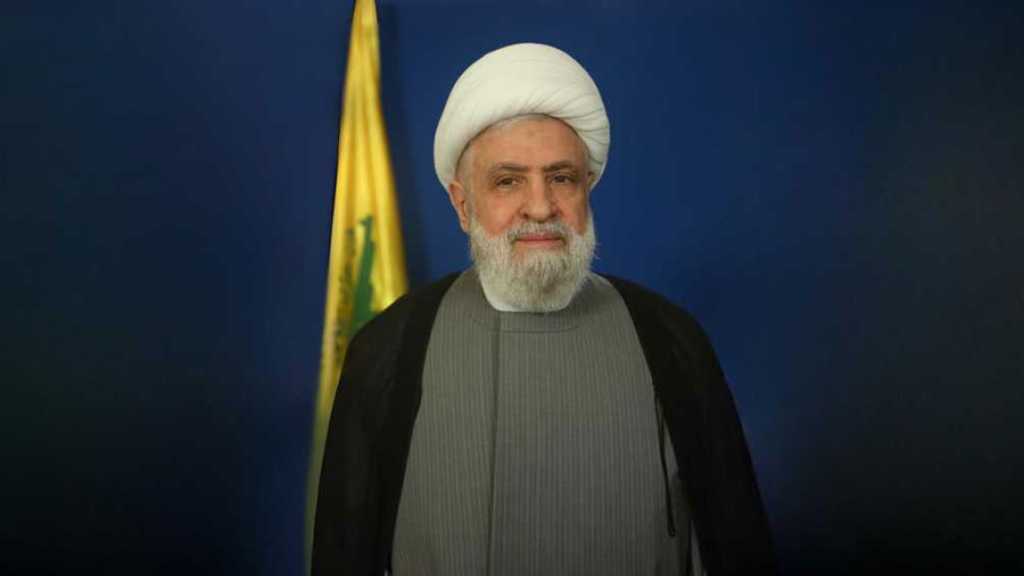
Sheikh Daamoush at the Scout Gathering: Resistance Is a National Necessity to Liberate the Land
Translated by Al-Ahed Staff
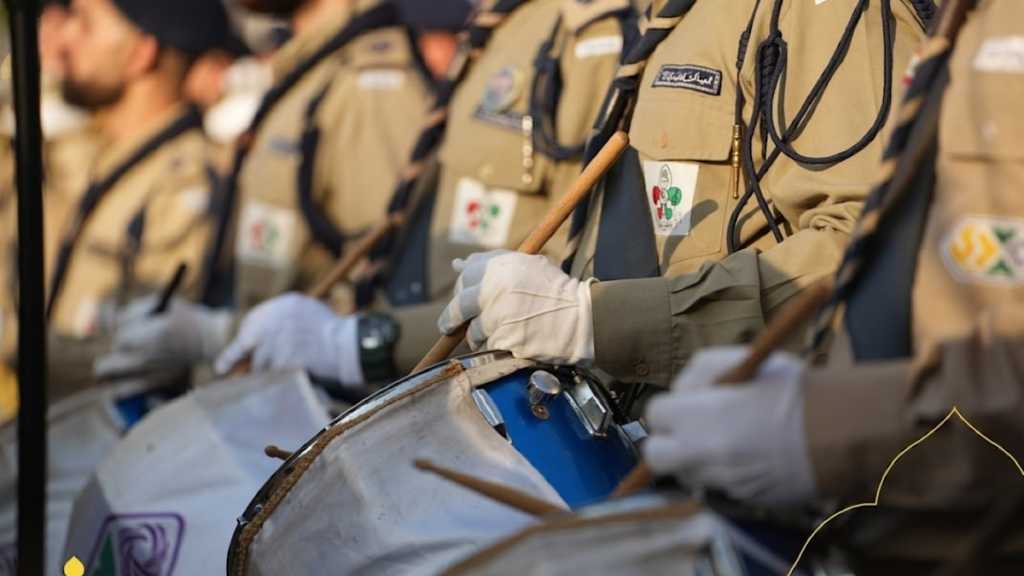
Speaking at a scout gathering organized by the Beirut Commission of the Imam al-Mahdi Scouts in the Ashura Courtyard, Hezbollah Executive Council Chairman Sheikh Ali Daamoush said that, amid the occupation and ongoing aggression against Lebanon, the destruction and bulldozing of border villages, and the erasure of civilian life there, coupled with the enemy’s ambitions over Lebanese territory and the state’s past and present failure to fulfill its responsibilities, the Lebanese people have had no choice but to defend their land and remain committed to their “Heroic Resistance.”
He said the country’s central cause today is the South, which should be a concern for the entire nation. Liberating the land, enabling its residents to return, and rebuilding it are a shared national responsibility involving the state, the Resistance, and all those committed to the country.
Sheikh Daamoush added that the Resistance is sacrificing the blood of its finest youth for this cause, stressing that its top priority is the people and that it will spare no effort to serve them and alleviate their suffering.
“We tell our people that no one will be able to undermine your dignity, pride, or presence in this beloved country. If we are going through a difficult period and facing major challenges, we have overcome many hardships through cooperation, solidarity, and adherence to our values and land. We will emerge from this crisis with a stronger presence and greater strength, holding firmly to our rights and national partnership,” he said.
Sheikh Daamoush added that, amid the current campaign of disinformation and distortion of facts surrounding the Resistance and decisions of war and peace, “We tell everyone that our people have always been defending their land. The enemy is the one that launched wars, carried out aggression, and occupied the land.”
He went on to say that the Resistance is not a regular army but a popular Resistance with its own means and methods of exhausting the enemy and forcing it to withdraw from Lebanese territory.
Sheikh Daamoush further stressed that even if the enemy has managed to reoccupy some villages, towns, and areas, this does not mean that its project has prevailed or that Resistance is no longer necessary.
“Quite the opposite,” he said, arguing that Resistance becomes even more of a national necessity to liberate the land and restore sovereignty.
Sheikh Daamoush said the Lebanese authorities have failed to present a political option capable of liberating the land, returning residents, and rebuilding affected areas. Instead, he said, what was offered amounted to a dangerous concession of part of Lebanon’s territory, an abandonment of sovereignty, and the formalization of the occupation through an agreement.
He described this as the greatest blow to the concept of a state responsible for protecting its sovereignty, arguing that it stripped the state of one of its most important powers: sovereignty over its own territory.
He said the agreement is rejected by most Lebanese and that the authorities have found no one willing to defend it because it obviously serves the enemy’s interests entirely.
As an alternative, Sheikh Daamoush called for a return to the true concept of the state, based on the Constitution and the National Accord Document, bringing Lebanese together rather than dividing them, and reversing measures taken by the authorities against the Resistance.
He said this would open the door to internal dialogue aimed at reaching a national consensus.
“We are not against dialogue; we are people of dialogue because we have the argument, evidence, and logic. But we see no benefit in resuming dialogue with the authorities unless they reverse their decisions criminalizing the Resistance,” he stressed.
He added that Hezbollah supports meaningful dialogue preceded by goodwill and concrete steps rather than promises. Without correcting the authorities’ hostile course toward the Resistance and its people, which began from the outset and culminated in the framework agreement, he said, there is no hope of achieving anything.
Any meeting without addressing the causes of the rupture, he argued, would appear as though the Resistance had accepted all the outcomes, decisions, and positions adopted by the authorities.
“We cannot accept that,” he said, calling on the authorities to stop compounding their failures and reverse unjust decisions against the Lebanese people so that dialogue can take place on clear foundations.
Comments