“Israel” and the Horn of Africa: A Forgotten Connection
By Fatima Haydar
The latest rift between Ethiopia and Eritrea is being seen as just another episode in a long and bitter history between two neighboring countries.
But that is only part of the story.
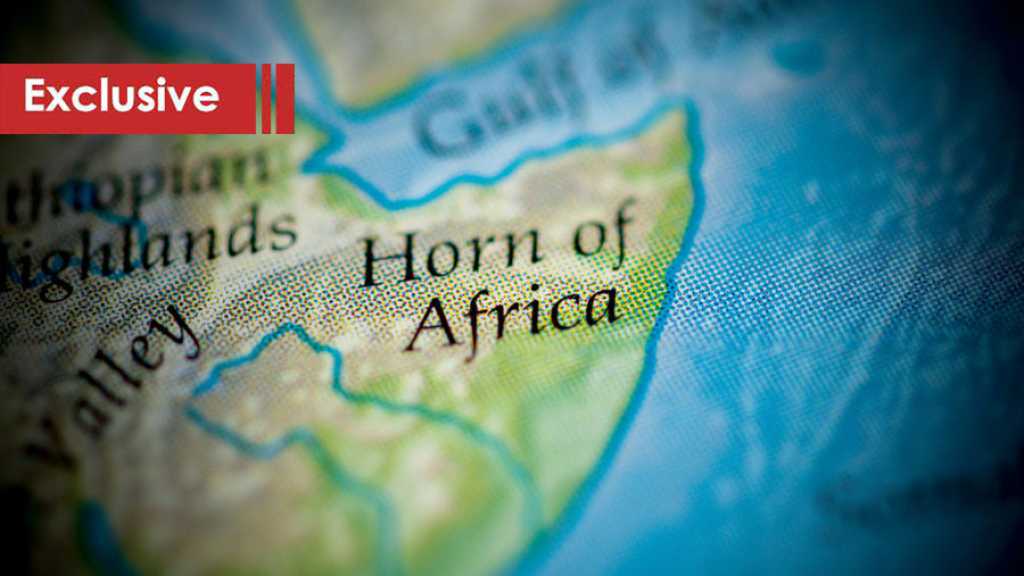
But what lies beneath this dispute is a wider struggle over territory, ports, military might and access to the Red Sea, one that has drawn in outsiders in the Horn of Africa for decades.
The “Israeli” entity is one of them.
On October 1, 2026, Eritrea announced that it was cutting diplomatic ties with Ethiopia after Addis Ababa closed the Ethiopian embassy in Asmara and expelled 10 Eritrean diplomats. Ethiopia accused Eritrea of backing an armed opposition alliance led by the Tigray People’s Liberation Front, which Eritrea denied. As fighting intensified in northern Ethiopia, there were fears that another regional conflict would erupt.
But the story of Ethiopia and Eritrea is not only about their own disputes.
For decades, outside powers have sought a foothold in the Horn of Africa because of its location on the Red Sea. Among them, the “Israeli” entity, which has had a military and strategic alliance with Ethiopia since the Cold War, plays a significant role.
That part of the history is often overlooked.
Ethiopia: A Gateway to the Red Sea
Declassified US State Department records offer a revealing look at how Washington viewed “Israel’s” relationship with Ethiopia.
A 1975 US assessment described Ethiopia as “the cornerstone of ‘Israel’s’ East African policy.” It noted that the “Israeli” entity had provided Ethiopia with economic assistance, military training and advisers.
But the reason was not simply goodwill toward Addis Ababa.
The same assessment said “Israel” was concerned about the Eritrean insurgency because an Eritrean victory could create another hostile power on the Red Sea.
The geography explains much of it.
At the time, Ethiopia still had a coast and ports on the Red Sea. The waterway leads to Bab Al-Mandeb, the narrow passage connecting the Red Sea with the Gulf of Aden and the Indian Ocean. For “Israel,” keeping access to this route and limiting the influence of hostile forces around it was an important strategic concern.
Ethiopia was therefore not simply another partner.
Its location made it valuable.
While Eritrea Fought for Independence
There was, however, another side to that relationship.
As Eritreans fought for independence from Ethiopian rule, “Israeli” advisers were involved in training Ethiopian forces, including in counter-insurgency methods, according to declassified US records.
This placed the “Israeli” entity on the side of the Ethiopian government during a conflict that Eritreans viewed as a struggle for independence.
That does not mean “Israel” created the Eritrean conflict. Eritrean demands for independence had deep historical and political roots of their own.
But it does show that “Israel’s” strategic interests were tied to the outcome of that struggle. An independent Eritrea could alter the balance along the Red Sea, while a strong Ethiopia offered “Israel” a useful regional partner.
Eritrea eventually became independent in 1993.
And that would not be the end of the story.
From Independence to Another War
Five years later, Ethiopia and Eritrea waged another war – this time, they fought over the disputed territory of Badme.
The war was devastating: as thousands of people lost their lives, and both sides rushing to build up their military power.
Once again, “Israel” was involved.
During the fighting, the “Israeli” entity provided military equipment to Ethiopia, including assistance in the upgrade of Ethiopian MiG-21 fighters.
Other countries were also supplying weapons to the two sides, including Russia, Ukraine, China and Bulgaria. So “Israel” was not the only external actor, and it would be wrong to suggest that it caused the war.
But its role is still significant.
It shows that “Israeli” military cooperation with Ethiopia continued even after Eritrea had gained independence and while the two countries were once again fighting each other.
As the arms race continued, in 2000 the United Nations placed an embargo on both Ethiopia and Eritrea.
What Does This Relationship Reveal?
The question is no longer whether “Israel” was involved in the Horn of Africa. The historical record shows that it was.
The more important question is what drove that involvement and why it continued for so long.
From the Cold War onward, “Israel” supported Ethiopia through military training and assistance, closely followed developments in Eritrea, maintained its military relationship with Addis Ababa after Eritrean independence and supplied military capabilities during the 1998–2000 war.
This was not simply diplomatic engagement.
When an outside power trains a foreign army, helps develop its military capabilities, supplies it with weapons and builds long-term military ties in a highly sensitive region, it becomes part of the balance of power there.
“Israel” has presented such relationships in terms of security and its interests in the Red Sea. But the result was also a sustained military and political presence in a region far beyond its own borders, shaped by its own calculations.
A Forgotten Part of the Story
A forgotten part of the story in what is happening in Ethiopia is the fact that the same geography which made the country important many years ago is as essential today.
The Horn of Africa continues to be one of the gateways to the Red Sea, and Ethiopia continues to have its access to the sea questioned as well as Eritrea having a strategic coastline.
As tensions rise again between the two countries, the focus will naturally be on the immediate causes of the crisis.
But the longer history tells another story.
For decades, “Israel” intervened in the region through weapons, military training and strategic partnerships, pursuing its own interests around the Red Sea.
It was not simply observing events from the sidelines. It was building relationships that gave it a role in the region’s political and military balance.
That involvement did not determine every conflict in the region. But it was real, sustained and closely linked to one of the most strategically important waterways in the world.
And that is the part of the story that should not be forgotten.