Yemeni Army Spox: YAF Targets Saudi Airports, Aramco Facility and Military Sites in 3 Ops.
By Staff, Agencies
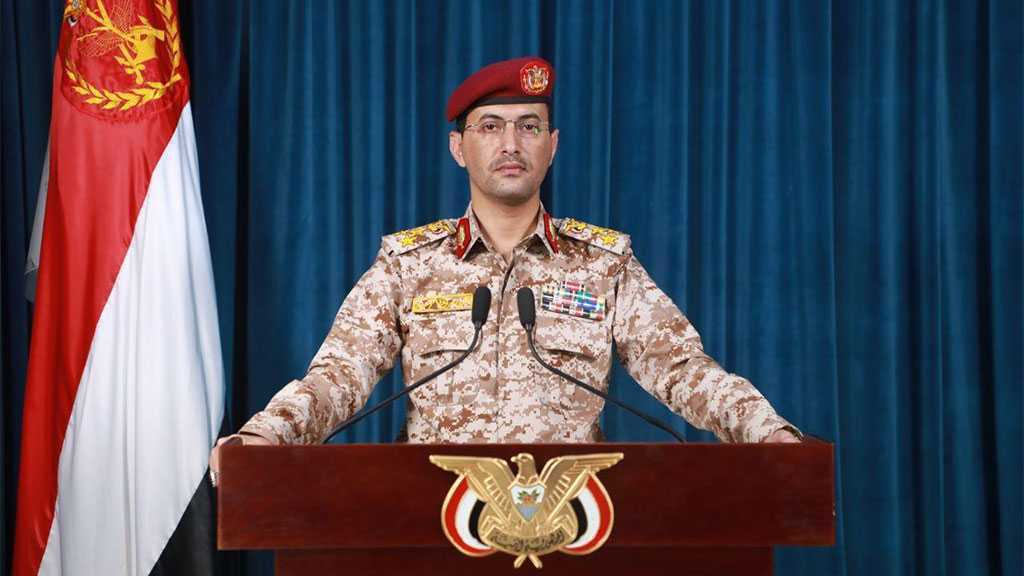
The Yemeni Armed Forces [YAF] carried out three operations targeting King Khalid International Airport in Riyadh, Abha International Airport, an Aramco refinery in Rabigh, and several Saudi military positions, YAF spokesperson Brigadier General Yahya Saree said. He described the attacks as a response to continued Saudi strikes against Yemen.
According to Saree, the operations involved ballistic and cruise missiles as well as drones and targeted King Khalid International Airport, Abha International Airport, the Aramco refinery in Rabigh, Khamis Mushait Air Base, the Akifah military camp in Asir, and what he described as sensitive sites in Najran and Jizan.
The first operation targeted King Khalid Airport in Riyadh. The YAF claimed the attack directly struck its target and disrupted air traffic.
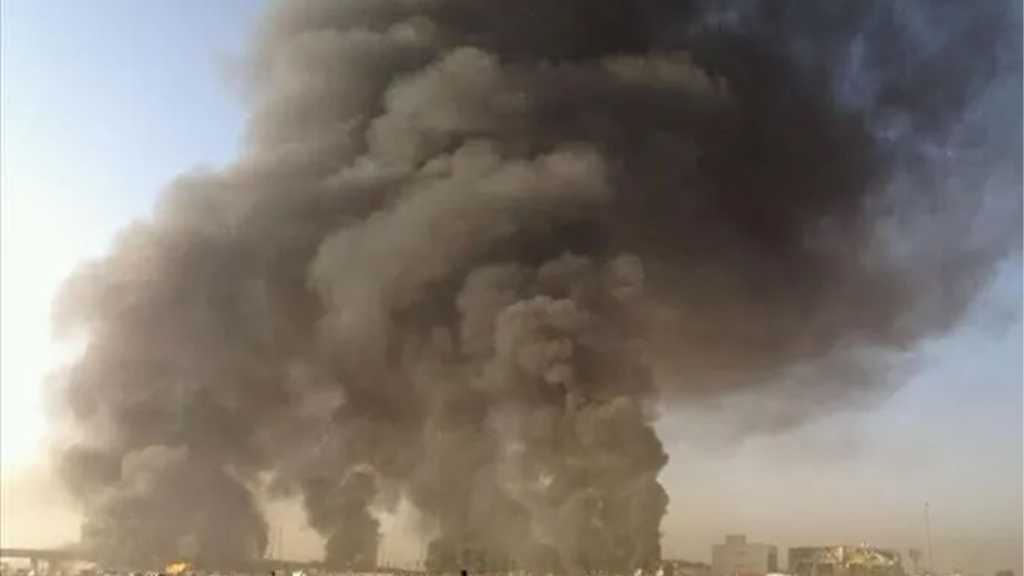
The second operation targeted the Aramco refinery in Rabigh, with Saree saying the site was directly hit and caught fire.
The third operation targeted Abha International Airport, Khamis Mushait Air Base, the Akifah military camp in Asir, and other sites in Najran and Jizan. The YAF said the strikes accurately hit their intended targets.
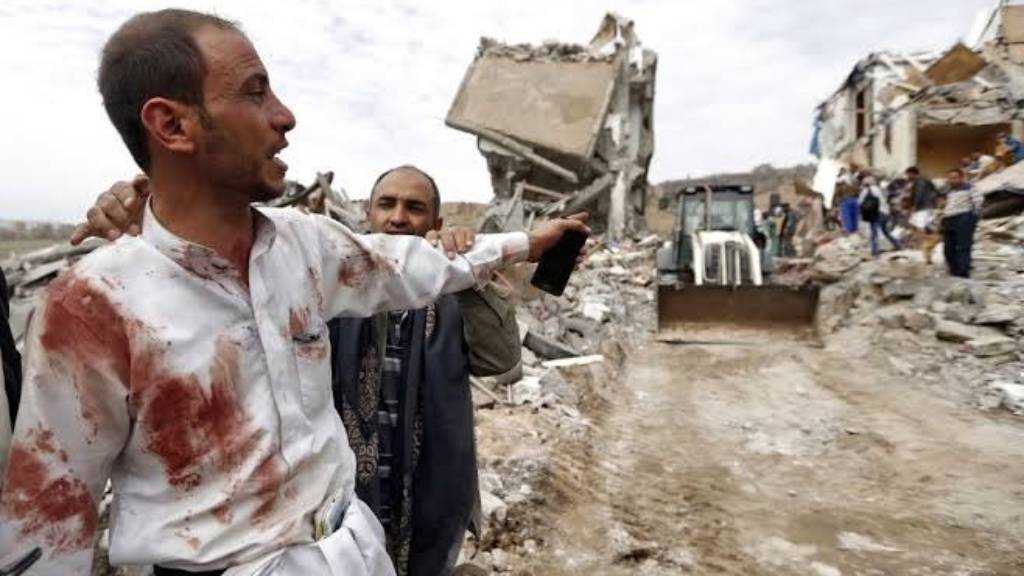
Saree said the operations were carried out in response to 60 Saudi airstrikes and missile attacks on Sanaa and the governorates of Al-Jawf, Taif, Hajjah, Saada and Marib over a 24-hour period. He said the attacks killed and wounded civilians, including women and children.
The YAF put the total number of Saudi airstrikes and missile attacks since the beginning of the latest escalation at 1,576.
Al Mayadeen reported Monday that a Saudi airstrike on Bait al-Haidah in the Sawwan area of Sanaa governorate killed one student and wounded two others. The Health Ministry in Sanaa separately said a woman was killed when a Saudi strike hit a farm in Bait al-Shatbi in the Sanhan district.
The reports followed a Saudi drone strike on Sunday that, according to the ministry, killed two people and wounded two others at the al-Ahyuq road junction in western Taiz’s al-Wazi’iyah district.
Taiz has also been the site of repeated attacks on civilian areas. On September 27, the Health Ministry said a Saudi strike on a market killed at least seven people and injured 40 others, including five children. The following day, it reported that another strike on a home killed three women and an elderly man.
Earlier Monday, Saudi-led coalition spokesperson Turki al-Malki said 100 fighter jets were supporting Saudi-backed forces involved in an offensive in Yemen.
Mohammad Abdul Salam, head of Sanaa’s negotiating delegation, accused Riyadh of openly resuming direct military aggression after setbacks suffered by forces allied with Saudi Arabia. He said Riyadh had continued to manage the conflict and blockade from behind the scenes and would be responsible for the consequences of the renewed escalation.
The YAF also warned international airlines against continuing to use Saudi airspace, declaring it a zone of military operations. The warning specifically excluded the airspace over the holy cities of Mecca and Madinah.
“We disclaim responsibility for the consequences of disregarding this warning,” the statement said.
The announcement came after Yemen’s Humanitarian Operations Coordination Center issued a similar warning to airlines, saying Saudi airspace could become a theater of YAF operations amid continued Saudi attacks.
Addressing the Yemeni public, the YAF said it had the capabilities and resources needed to confront the escalation and was prepared for further fighting.
The operations came as a senior military source told Al Mayadeen that Yemeni forces had taken control of more than 2,000 square kilometers in Taiz governorate and driven Saudi-backed militias from the Al-Ma’afer and al-Mawasit districts.
The source claimed that Yemeni army forces had reached the home of Rashad al-Alimi, head of the Saudi-backed Presidential Leadership Council. It said the areas captured remained stable and that a general amnesty in Taiz was still in effect.
The source also warned that Saudi military concentrations would be targeted wherever they were located and said Riyadh would face the consequences of its military actions.
Saudi-backed forces, meanwhile, claimed to have made gains around Dhubab and the Bab al-Mandeb Strait. A Yemeni military source cited by Sanaa’s SABA news agency rejected reports of an advance toward Dhubab, describing them as an attempt to conceal battlefield setbacks.
Separately, YAF spokesperson Brigadier General Yahya Saree said Yemeni air defenses had shot down a Saudi Wing Loong II armed reconnaissance drone while it was carrying out what he described as hostile operations over Taiz. Saudi Arabia had not confirmed the reported loss of the aircraft, according to the report.
The escalation also coincided with an emergency meeting in Riyadh involving Saudi, Pakistani and Turkish officials under the Mecca defense alliance.
In a joint statement issued Monday, the three countries announced that they would immediately begin implementing their collective defense commitments, including arrangements to provide agreed military forces and capabilities and facilitate their rapid deployment to Saudi Arabia.
The statement said implementation would take place according to existing arrangements and each country’s national laws. It did not provide details on the number of troops involved or when any deployment would take place.
The committee also appointed retired Pakistani Lieutenant General Nauman Mahmood as the alliance’s first secretary-general for a three-year term.
Comments