- Home
- ISLAMIC RESISTANCE
- SECRETARY-GENERAL
-
Full Speeches
- Speeches-2000
- Speeches-2006
- Speeches-2007
- Speeches-2008
- Speeches-2009
- Speeches-2010
- Speeches-2011
- Speeches-2012
- Speeches-2013
- Speeches-2014
- Speeches-2015
- Speeches-2016
- Speeches-2017
- Speeches-2018
- Speeches-2019
- Speeches-2020
- Speeches-2021
- Speeches-2022
- Speeches-2023
- Speeches-2024
- Speeches-2025
- Speeches-2026
- Speech-Reports
- SG
-
Full Speeches
- Voices
- Ten Day Dawn
- The Biggest Crime
- Martyr Leaders

France, Germany Push EU Toward Tougher Trade Powers Against China
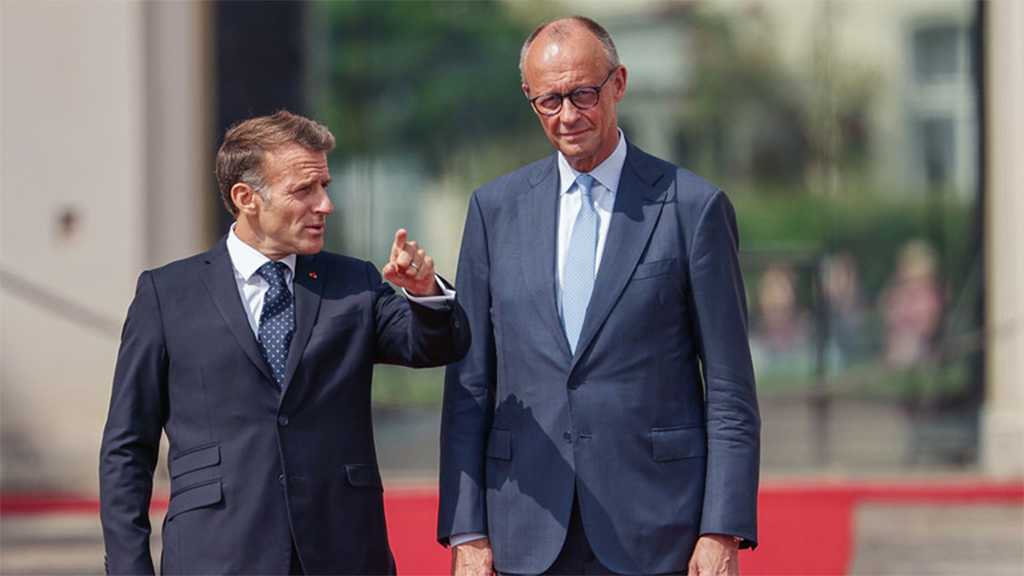
By Staff, Agencies
France and Germany are pressing Brussels to adopt tougher trade powers that could allow the European Union to rapidly shut foreign countries out of its internal market, amid growing tensions with China over trade and industrial competition.
In a letter to European Commission President Ursula von der Leyen on Monday, French President Emmanuel Macron and German Chancellor Friedrich Merz argued that existing EU trade defenses are no longer sufficient.
They called for a new instrument allowing the Commission to take “powerful measures up to an immediate cut-off from the internal market if needed.”
The proposed mechanism, described by the South China Morning Post as a potential trade “kill switch,” would allow Brussels to activate countermeasures unless a qualified majority of EU governments votes to block them.
This could make it easier for the Commission to respond despite opposition from individual member states.
The proposal does not explicitly name China as its target and would apply to foreign countries more broadly. However, its focus on government subsidies, cheap exports and alleged market distortions closely reflects European complaints about Chinese trade practices.
European manufacturers have accused subsidized Chinese imports of undercutting their businesses. The EU recorded a goods trade deficit with China of around €360 billion, or $400 billion, last year. Beijing has rejected the argument that government subsidies explain the competitiveness of Chinese exports.
The two sides have intensified trade investigations. Beijing opened a probe Saturday into a European chemical used in dyes, medicines and pesticides, following complaints from Chinese producers.
The move came after three recent EU investigations into Chinese chemicals. Anti-dumping investigations can result in additional import duties when authorities determine that goods are being sold at unfairly low prices and harming domestic producers.
The Franco-German proposal also addresses Europe’s dependence on Chinese raw materials. EU officials have accused Beijing’s export restrictions of harming European companies, while Paris and Berlin have called for a separate mechanism to reduce dependence on individual suppliers and prevent new strategic vulnerabilities.
The initiative marks a shift for Germany, which has traditionally been more cautious than France about imposing restrictions on China because of German companies’ reliance on the Chinese market.
Paris and Berlin acknowledged that potential retaliation could test the EU’s “political unity” and called for an assessment of how countermeasures might affect individual member states.
EU Trade Commissioner Maros Sefcovic is due to visit Beijing later this week for talks with Chinese Commerce Minister Wang Wentao. Brussels has set an October deadline for tangible progress on its trade concerns, with Sefcovic warning of “harsher measures” if no progress is made.
Beijing has warned that it will respond firmly to any new restrictions on Chinese companies or products, while China’s Commerce Ministry has urged the EU to address its own economic problems and resolve trade disputes through dialogue.
Comments
- Related News