Sheikh Qassem: Sayyed Nasrallah’s Legacy Is a Path of Islam, Resistance and Liberation
Translated by Al-Ahed News
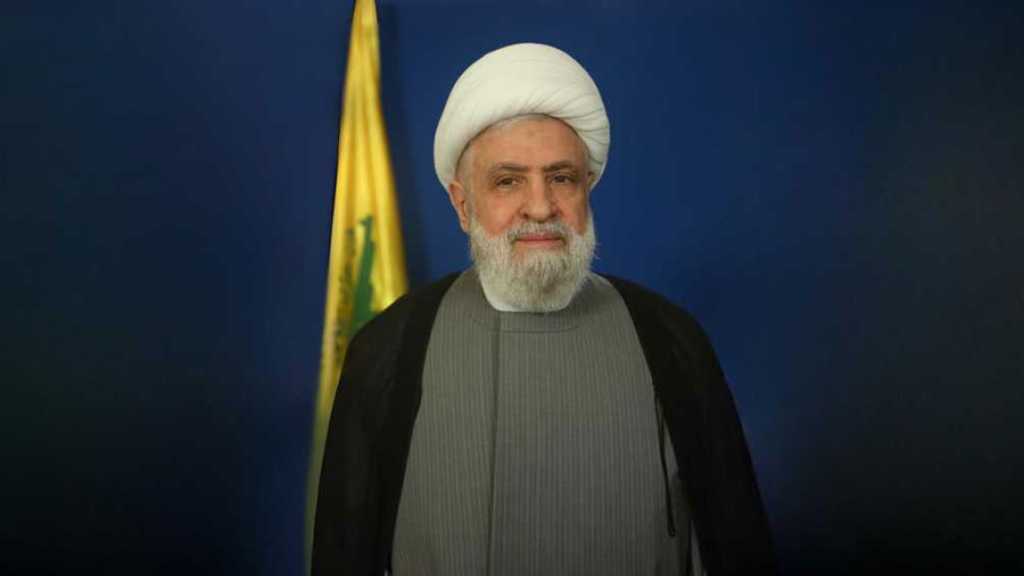
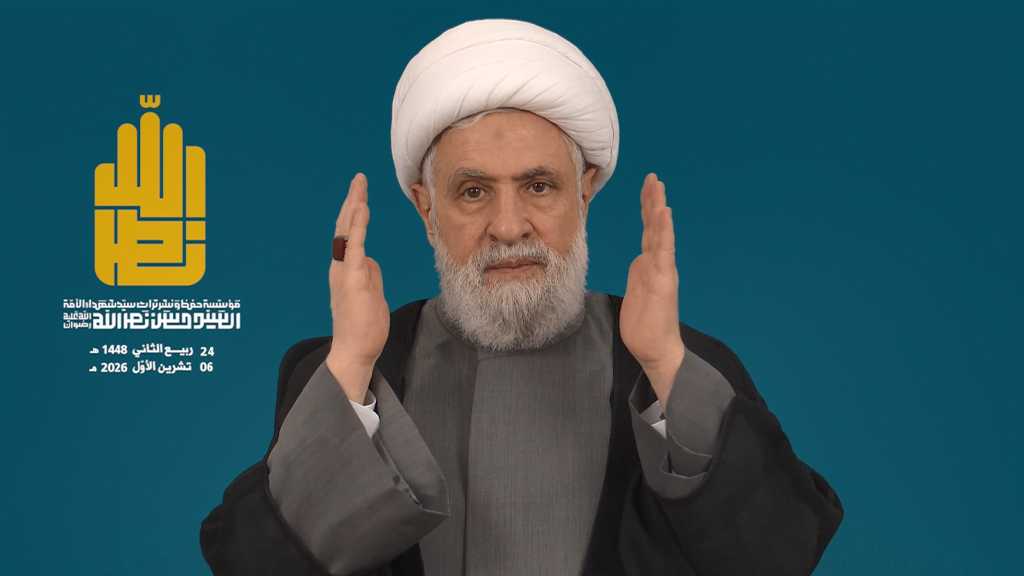
His Eminence Sheikh Qassem, Secretary-General of Hezbollah, announced Tuesday the launch of the Institution for the Preservation and Publication of the Legacy of Sayyed Hassan Nasrallah, describing it as an initiative to preserve and make accessible the extensive intellectual, political, cultural and organizational legacy of the late Hezbollah Secretary-General.
Speaking at the launch ceremony, His Eminence Sheikh Qassem said the institution was established by Hezbollah’s Shura Council and will operate under the supervision of the Secretary-General. He said it would collect, archive and publish Sayyed Nasrallah’s speeches, interviews, dialogues, written works, meeting records and oral history, making them available to researchers, universities, institutions and the wider public.
He identified six major themes that he said formed the foundations of Sayyed Nasrallah’s legacy: adherence to Islam, education in jihad, allegiance to religious authority, connection to Imam al-Mahdi, Islamic unity, and defense and resistance.
On Islam, His Eminence Sheikh Qassem said Sayyed Nasrallah worked throughout his leadership to present Islamic concepts, beliefs, values and political guidance in a contemporary manner while preserving what he described as the religion’s essential principles.
He said jihad was another central element, particularly through the Karbala and Ashura tradition and the example of Imam Hussein. He also highlighted Sayyed Nasrallah’s emphasis on allegiance to religious authority, including Ayatollah Ruhollah Imam Khomeini and Ayatollah Imam Ali Khamenei, as well as his focus on the concept of awaiting Imam al-Mahdi.
Sheikh Qassem also emphasized Sayyed Nasrallah’s efforts to promote Sunni-Shia unity, national unity and cooperation among the Lebanese Army, people and resistance. He described resistance as a defining element of Nasrallah’s legacy and referred to the influence of Imam Khomeini, Imam Khamenei, Imam Musa al-Sadr, Sheikh Ragheb Harb, Sayyed Abbas al-Moussawi and martyr commander Qassem Soleimani.
Turning to regional developments, Sheikh Qassem praised the Iraqi people, religious leadership, Popular Mobilization Forces and other armed and political forces for what he described as the expulsion of the US occupation from Iraq. He said Iraq had demonstrated its ability to confront both extremist groups and foreign powers seeking control over the country.
Regarding Lebanon, Sheikh Qassem said the resistance would continue until "Israel" withdraws from southern Lebanon. He rejected calls for Hezbollah to surrender its weapons as a condition for an "Israeli" withdrawal, arguing that the solution must begin with the withdrawal of the occupying forces and accusing the US of supporting "Israeli" aggression.
On domestic Lebanese issues, including the weapons debate, the economy, employment, coexistence and depositors’ funds, he said Hezbollah was ready to cooperate within the constitutional and legal framework, without what he called American or other foreign dictates.
Sheikh Qassem also expressed support for Palestinians in Gaza, the occupied West Bank and occupied al-Quds, saying their sacrifices would ultimately lead to victory. “Wars are fought in rounds, but the final round belongs to the people of the land and the right,” he concluded.
Comments