- Home
- ISLAMIC RESISTANCE
- SECRETARY-GENERAL
-
Full Speeches
- Speeches-2000
- Speeches-2006
- Speeches-2007
- Speeches-2008
- Speeches-2009
- Speeches-2010
- Speeches-2011
- Speeches-2012
- Speeches-2013
- Speeches-2014
- Speeches-2015
- Speeches-2016
- Speeches-2017
- Speeches-2018
- Speeches-2019
- Speeches-2020
- Speeches-2021
- Speeches-2022
- Speeches-2023
- Speeches-2024
- Speeches-2025
- Speeches-2026
- Speech-Reports
- SG
-
Full Speeches
- Voices
- Ten Day Dawn
- The Biggest Crime
- Martyr Leaders

Pezeshkian: Western Double Standards Exposed by Minab Massacre
By Staff, Agencies
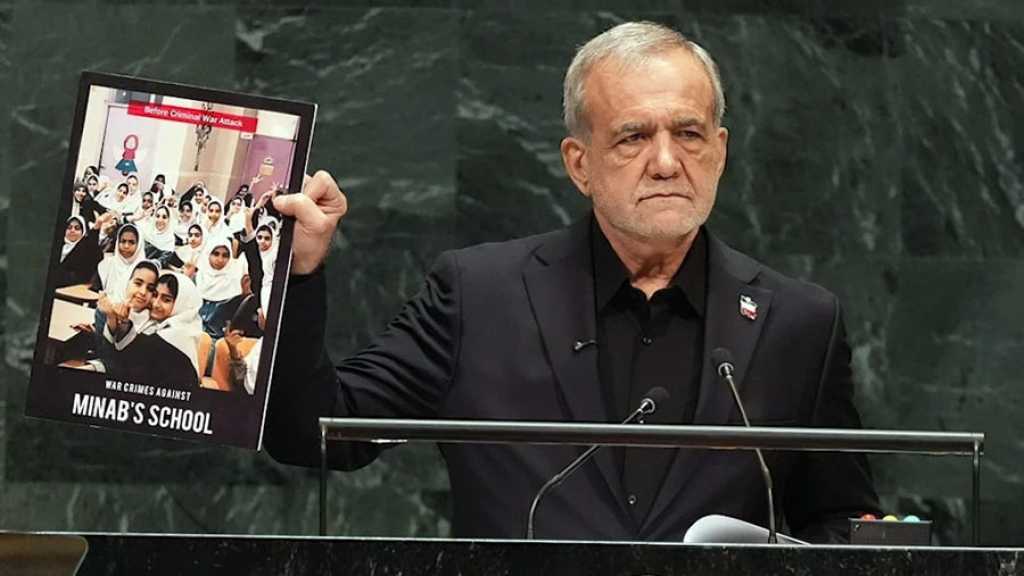
Iranian President Masoud Pezeshkian on Monday accused Western governments of applying double standards on human rights, condemning the killing of 168 children in what he referred to as the Minab massacre and questioning the value of negotiations amid continued US military pressure on Iran.
“For what crime did they kill 168 innocent children in the Minab massacre?” Pezeshkian asked.
He criticized those he said were responsible for the killings, arguing that they continued to present themselves as defenders of human rights despite the deaths of civilians. He said the disparity between Western statements on human rights and their actions demonstrated what he described as a clear contradiction.
Addressing US policy toward Iran, Pezeshkian said the main obstacle to diplomacy was that negotiations had repeatedly been followed by military action.
“Every time we sit at the negotiating table, war is immediately imposed on us,” he said.
The Iranian president also said that international inspectors had helped identify Iranian nuclear facilities and scientists who were later targeted. He stated that inspections were followed by attacks on nuclear sites and the assassination of Iranian scientists.
Pezeshkian said Iran would not accept negotiations conducted under coercion, threats and broken commitments.
“There is no point in negotiating with an enemy that carries out assassinations, imposes sanctions, exerts pressure, issues threats and breaks its promises every day,” he said, adding that the Iranian people rejected such an approach.
His comments came a day after Iranian Foreign Minister Abbas Araghchi said Tehran would respond more forcefully to any future military aggression.
At the same time, Araghchi maintained that diplomacy remained an option for ending the conflict, rejecting the idea that military action or additional sanctions could provide a lasting solution.
Comments
- Related News