Iran to US: Hit-and-Run Era over
By Staff, Agencies
Iran announced that it will respond to any fresh attack, while remaining open to diplomacy, identifying excessive US demands as the main obstacle to progress in diplomatic efforts.
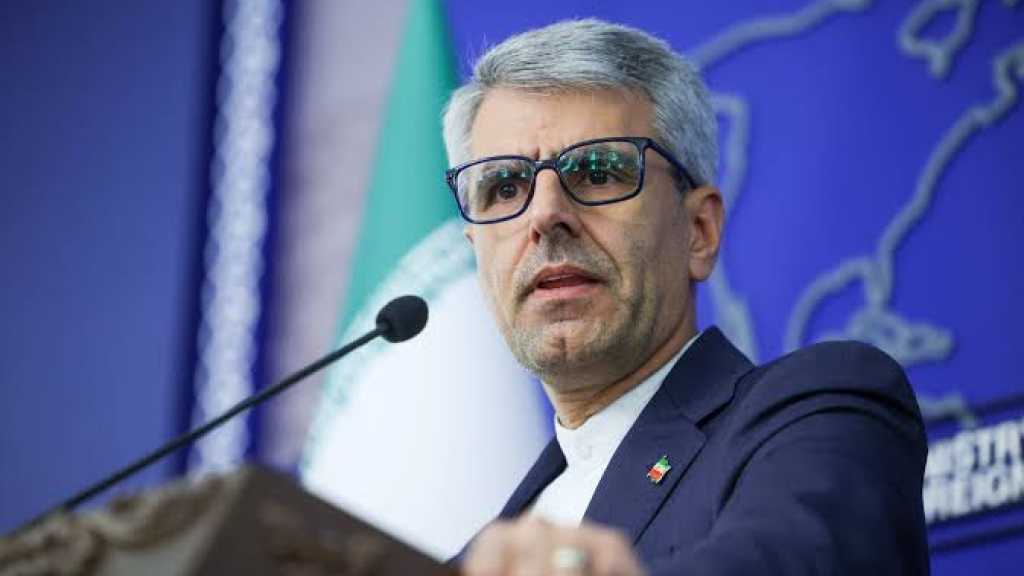
“The hit-and-run era is over,” Foreign Ministry spokesman Esmaeil Baghaei said during a press conference on Tuesday, noting, “We have demonstrated in practice that we will not leave any attack unanswered. We will respond in equal measure, if not more forcefully.”
He was reacting to reports pointing to the potential of a US attack on Mount Kolang in the central Iranian province of Isfahan, where the US claims Iran keeps its highly enriched uranium.
“Our armed forces are prepared to repel any action by aggressors,” Baghaei reasserted.
Baghaei said Tehran had conveyed its demands to Washington through Qatar, but considered the response insufficient.
“Our demands were clear. The message received from the United States was insufficient,” he said, adding that the Islamic Republic continued to pursue the same “seven conditions.”
Last month, Iran’s Supreme National Security Council Secretary Major General Mohsen Rezaei said Tehran had conveyed the seven conditions to Washington through Qatari mediators and that it was awaiting US President Donald Trump’s response.
“Our conditions are an end to the war on all fronts, the release of our frozen funds, and an end to the naval blockade,” Baghaei added. “It is in Washington’s interest to accept these conditions.”
Baghaei described the removal of the blockade and cessation of war on all fronts as reasonable demands, saying Washington needed to make a decision.
He also pointed to a “Seven-Day Plan” Iran has forwarded for conditional reopening of the Strait of Hormuz – which the Islamic Republic has closed in retaliation for unprovoked US-“Israeli” aggression and persisting American violations.
The spokesman identified Washington’s “excessive demands” as the main obstacle to the plan’s implementation.
However, despite Washington’s record of breaking its commitments, Baghaei said Iran would not abandon diplomacy if it offered a chance to prevent further escalation.
In parallel, Baghaei rejected allegations that Iran sought dominance over the Strait of Hormuz, saying its approach was oriented towards peace rather than regional hegemony.
Addressing tensions surrounding the strategic waterway, he said the fundamental problem was military aggression by the United States and the “Israeli” entity against Iran.
He also urged Gulf countries to prevent their territories from being used for staging military aggression against the Islamic Republic, arguing that hosting forces involved in such aggression undermined good-neighborly relations.
“Regional countries have witnessed that the US military presence does not create security. On the contrary, it creates insecurity,” he said, and reiterated Tehran’s support for dialogue among regional countries.
Commenting on a recent ministerial meeting of the Organization of Islamic Cooperation, Baghaei said Iran had prevented two paragraphs concerning Yemen from being included in the organization’s final statement, arguing that they risked dividing Muslim-majority countries.
He maintained that the crisis in Yemen had to be resolved through dialogue rather than force and opposed further intervention by regional countries.
He also described Iran’s relations with Russia and China as based on mutual respect and shared interests.
The official described relations with Russia as “very good,” saying Russian Foreign Minister Sergei Lavrov’s recent visit to Tehran formed part of regular consultations.
Comments
Iran to US: Hit-and-Run Era over
12 hours ago