Knesset Elections Expose Deep Divisions Within the Occupying Entity
Ehab Shawqi
There is no doubt that any monitoring of the “Israeli” elections must be based on observation and scrutiny, rather than on placing hopes or expectations on their outcome. Those resisting the Zionist project are not concerned with who leads the entity; what matters to them is the condition of the entity and the state of its internal front, as these are among the most important factors in shaping strategies of confrontation.
Sheikh Naim Qassem summed up the position of the resistance fronts when he said: “We are not concerned with who governs the ‘Israeli’ entity. But let them understand that they will not be able to continue their occupation and must leave our land.”
A closer look reveals a major political crisis and deep divisions threatening the entity’s stability. Among the clearest signs of this crisis is war criminal Benjamin Netanyahu’s resort to casting doubt on the election results and accusing Qatar of interfering in the elections. Another particularly alarming indicator is the outbreak of deadly clashes between the Haredim and the Zionist police.
Why Should the Elections and Their Results Not Be Viewed as a Turning Point?
There is little doubt that Eizenkot is not merely competing with Netanyahu in the elections; he is also competing with him in war crimes. While Netanyahu has led wars of genocide, destruction and assassination, Eizenkot rose through the ranks of the Zionist military on the back of his own record of brutality.
He is the architect of the so-called “Dahiya Doctrine,” named after Beirut’s southern suburbs. The doctrine is based on destroying civilian infrastructure, employing disproportionate force and pursuing a scorched-earth policy to deter the resistance and its supporters. He was also a member of the “Security Cabinet” that oversaw the genocidal war in Gaza.
Moreover, the Zionist right and left are simply two sides of the same coin of occupation. There is a broad consensus on waging war against Iran and the resistance fronts. Any apparent differences are limited to presentation, rhetoric and political maneuvering. These distinctions are largely driven by political rivalry and mutual score-settling; they do not touch the substance of the matter or extend beyond the tactical level to the strategic one.
The Zionist Political Crisis and Its Broader Historical Context
Monitoring the election results as an indicator of the entity’s internal condition reveals a deep political crisis, one that forms part of a longer historical trajectory marked by the decline of the entity’s strategic standing.
It is worth recalling that the “Israeli” Knesset was dissolved five consecutive times between 2018 and 2022, amid a prolonged political crisis and severe difficulties in forming and maintaining governments. The 25th Knesset was also dissolved in 2026, paving the way for the latest elections.
Key Facts Emerging Directly from the Results
Before examining the implications of the latest results and analyzing the nature and severity of the divisions they reveal, it is important to outline the results and the distribution of seats among the political blocs.
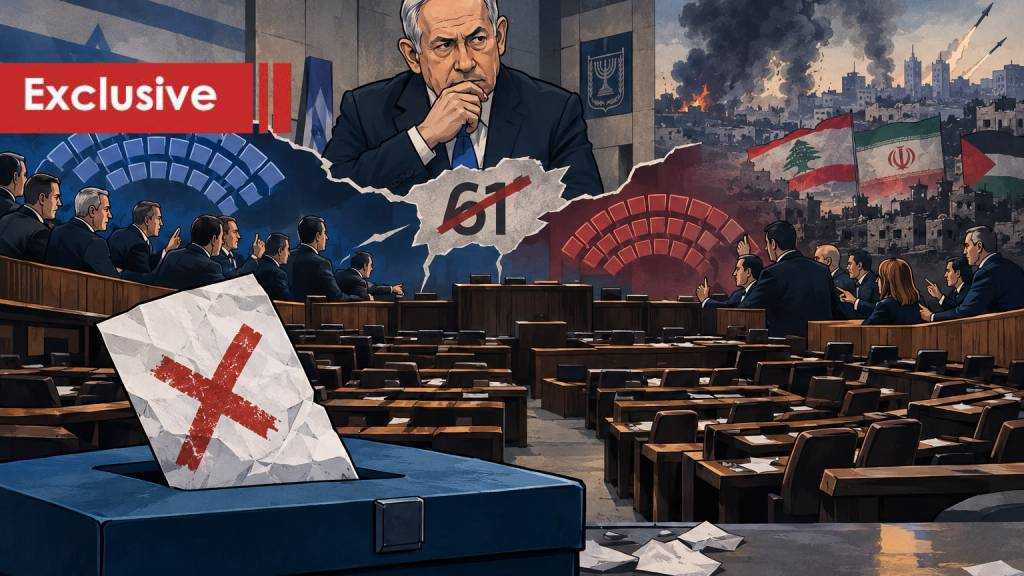
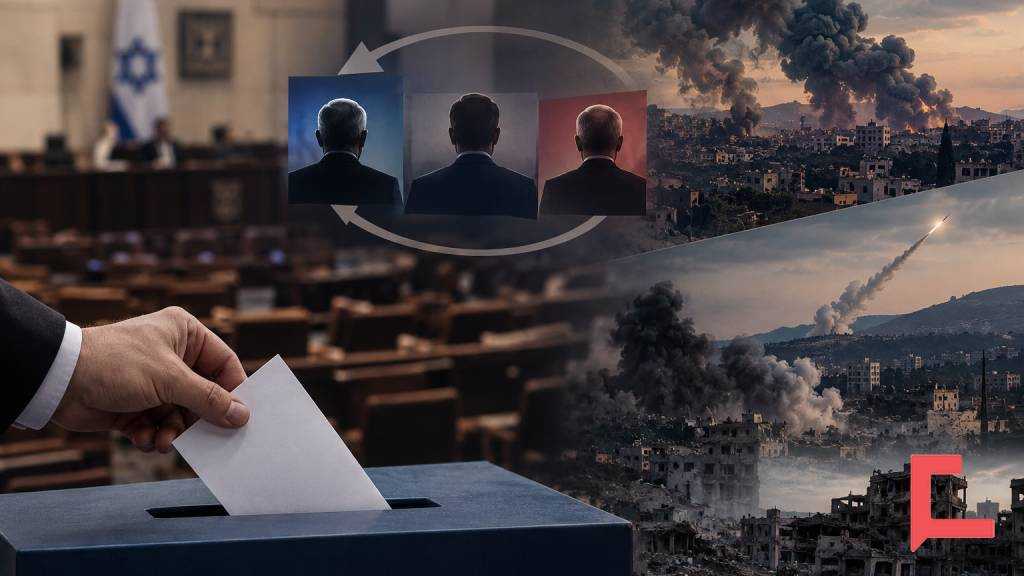
The “Israeli” Knesset elections resulted in political deadlock and parliamentary gridlock, with neither of the two main blocs securing the decisive majority of 61 seats required to form a government.
The Knesset seats were distributed among three main blocs:
Benjamin Netanyahu’s bloc [the right and Haredim]: 53 seats. It is led by Likud, with 27 seats, alongside ultra-Orthodox and religious parties, including Shas, United Torah Judaism and Religious Zionism.
The opposition bloc [the Change Camp]: 48 seats. It is led by former Chief of Staff Gadi Eizenkot through his Yashar party, which secured 21 seats, alongside the Together alliance led by Bennett and Lapid, as well as the Democrats and Yisrael Beiteinu parties.
Arab parties: 19 seats.
Several key conclusions can be drawn from these results:
The deepening vertical divide between Zionists and Arabs: The Arab bloc has emerged as a separate parliamentary force, while both Zionist blocs openly reject cooperation with it or relying on its support. This is compounded by extremist rhetoric and the practices that marred the elections.
Growing horizontal divisions among Zionist parties: The political landscape has reached a state of paralysis due to intense polarization, the difficulty of forming a national unity government and the inability of either camp to attract factions from the opposing bloc.
Divisions within the right itself: Some right-wing factions joined the opposition camp solely to bring down Netanyahu and his coalition.
A protest vote: This drove Arab representation to unprecedented levels and contributed to the formation of an alliance within the opposition camp. It also sends a clear message that Netanyahu faces widespread rejection and has become a direct threat to the entity’s security and stability, challenging the will of a majority of its population.
The decline of American prestige and influence: Trump’s open support for Netanyahu did not translate into electoral gains, nor did it alter the positions of the political blocs opposed to him.
The impact of the resistance and its resilience: The resistance, its steadfastness and Operation Al-Aqsa Flood played a major role in deepening these divisions, fuelling mutual accusations of failure, undermining the entity’s international image and contributing to the International Criminal Court’s pursuit of its leaders.
Possible Scenarios
The United States may exert pressure on certain political factions in an attempt to rescue the situation. However, current indications suggest that failure to form a government is the most likely outcome, making another round of elections the most realistic scenario.
This would mean Netanyahu continuing to lead the government in a caretaker capacity during the transitional period, while the political crisis could drive further extremism and aggression, as well as attempts to manufacture conflicts with Iran and the resistance in order to create pretexts and divert attention from political failure.
None of this, however, changes the underlying reality: the entity is deeply divided, its internal front is increasingly fragmented, and its contentious issues are growing more entrenched. The situation is also moving towards greater confrontation in the streets.
Early signs of this have already emerged in the clashes between the Haredim and the police, as well as in opposition statements hinting at a possible confrontation with Netanyahu’s plans. This is compounded by the hostility of Itamar Ben-Gvir and Bezalel Smotrich and their apparent intentions to exact revenge on the Arab community.
All of this points to something far more serious than political deadlock: the possibility that the conflict will spill over into the streets and escalate into internal civil strife.